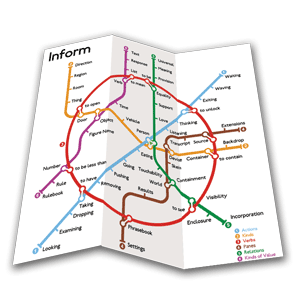
 A good deal of my IF-related time in the last couple of months has gone into Inform, and I’m pleased to say that the new build is available today for Windows and Mac (and other apps to follow shortly). There’s an introductory blog post here that gives an overview of what the new build does; there’s also a change log, which is absolutely mammoth, here.
There are loads of new things going on, but I’m particularly excited by Inform’s new adaptive text, which I see as a partial step towards making the system more capable of doing interesting things with procedurally generated text output. The adaptive text allows Inform to inflect verbs according to the current tense and viewpoint of the story, automatically turning “[We] [walk]” into “You walk” or “He walked” or “We will walk” according to the current settings.
But it goes considerably beyond this. The new example “Narrative Register” shows how to associate verbs with different actions, then have the narrator automatically describe what has just happened with a verb that is appropriate to a current “diction” setting. The “Relevant Relations” example associates verbs with relations as well, and shows a way of doing room descriptions in which the author tells Inform which relations ought to be described to the player, leaving the system to assign appropriate verbs and construct sentences around them.
These are all fairly early-days things; there’s a lot that would still need to be done in order to get from here to the kind of text generation I would one day like to see, including (especially) some code designed to do a good job of sorting and concatenating related sentences before printing them.
But Inform can now track the meaning of its output more deeply than it did before, and perform more grammatical functions automatically, and that’s a helpful step.



 Emily Short's Interactive Storytelling