 Video Game Writing from Macro to Micro. This book bills itself as “four books in one,” and this is not wrong. Part I covers a history of games with a focus on story and storytelling. Part II concerns day-to-day concerns of game writing as a career — the fact that Part II starts with briefs, contracts, non-disclosure agreements gives some idea of the granularity and the focus on the nuts and bolts of doing business as a freelance games writer. Part III, “Beyond the Basics,” backs out again and looks at the theoretical basis of the discipline — why should games have stories? — as well as craft considerations like how we fill a story world with dramatic potential. And Part IV, the briefest and most varied section, pulls together statements from working game writers about what their job is, how it functions, and what the lifestyle is like.
The summary in Part I goes from the 70s, with Colossal Cave, through a year or two ago, landing on Her Story and Until Dawn. It’s a good overview, though most titles get no more than a paragraph or two, and the book is mostly interested in setting up some sense of market context, genre, and the major strengths, innovations, or weaknesses of each title. It doesn’t particularly dig into individual games to take apart how they worked as instances of narrative design. People who are already pretty familiar with the game industry and game history may find this to be largely review.
Continue reading “Video Game Writing From Macro to Micro (Marek Walton / Maurice Suckling)”

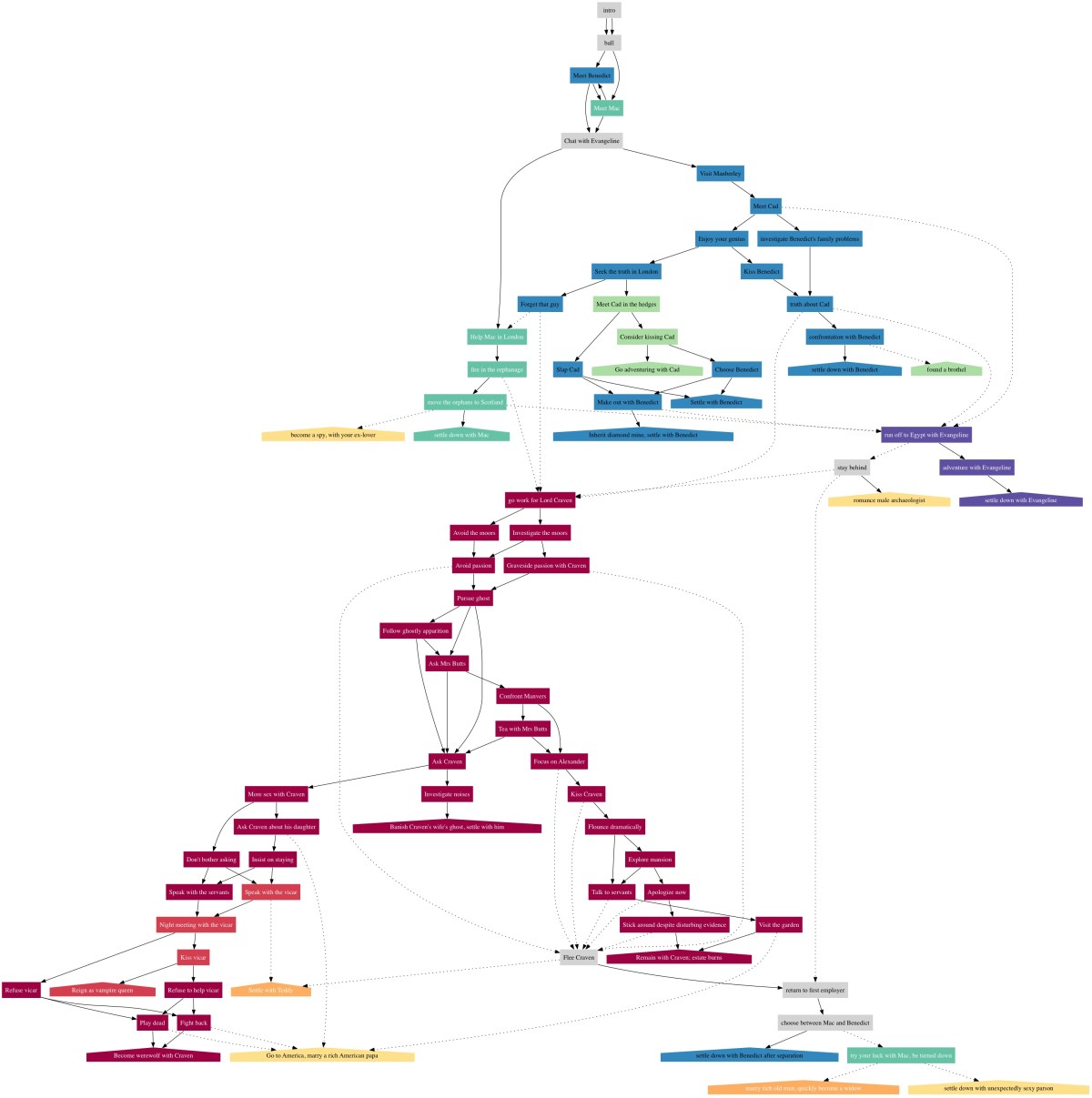
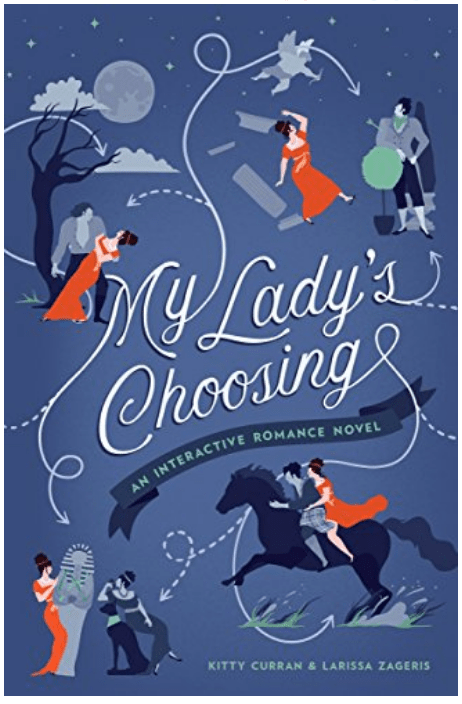 My Lady’s Choosing
 Raph Koster’s
 Emily Short's Interactive Storytelling