Terminator (Matt Weiner)

terminator

Terminator — not to be confused with Terminator Chaser — is a game from ParserComp that I didn’t get around to reviewing while the competition was running.

Low on story, high on simulation and experimental features, Terminator requires you to move a group of robot explorers across the face of an alien planet in order to collect unconscious astronauts from the surface and bring them to your ship, where they can receive medical attention. Meanwhile, the terminator line, representing the arrival of destructive sunlight, moves in steadily from the east. You have only so many turns before the encroaching light forces your spaceship to launch, abandoning any astronauts and robots remaining.

On my first tour I managed to rescue only three of six crew members; the other three were within sight of my spaceship but just hadn’t quite made it.

Continue reading “Terminator (Matt Weiner)”

And the Robot Horse You Rode In On (Anna Anthropy), with some thoughts about Spider and Web

robothorseWriting about Videogames for Humans, Robert Yang noted some ways in which he found it a useful but not comprehensive guide to the games it covers. His review includes this passage:

Or when Cat Fitzpatrick plays Anna Anthropy’s “And The Robot Horse You Rode In On” (merely one of TWO lesbian westerns featured in this book!) and Fitzpatrick does not know, or does not care, that this is probably a remake of Andrew Plotkin’s “Spider and Web” except with sexy lady fighting instead of overly intricate Cold War futurism. With that background, you can read Anthropy’s changes and simplifications to the original plot device as an admonishment of the hardline parser-based interactive fiction establishment and their historic ambivalence about accepting Twine as interactive fiction. It’s as if she’s saying, “look, Twine can do what the canon parser IF does, and with less bullshit and more style.”

[Edited to add: Anna says Robot Horse is not a remake; see the comments section. I’ve left the original discussion here, but it’s worth having that fact up front.]

I’d never played And the Robot Horse You Rode In On, and it had somehow escaped my awareness among Anna Anthropy’s games, so when I read this blog post, I immediately went to try it out. And —

Yes, this is the same story; also, it is not at all the same story. The contrast throws both Anna’s and zarf’s work into such high relief that it makes me grin. In addition to which, Robot Horse is possibly my favorite of Anna’s Twine work that I’ve played so far.

But to talk about this I will have to spoil both games a lot. If you haven’t played Spider and Web and you’re planning to do so one day, you don’t want it spoiled before you play, trust me; if you haven’t played And the Robot Horse…, it’s short and you should probably go try it now. (Subject to the usual warnings: like a lot of Anna’s other work, it contains references to sexual activity, and while its primary intent is not pornographic, it may not be suitable for workplace reading. However, this discussion will not itself be unsafe for work.)

Continue reading “And the Robot Horse You Rode In On (Anna Anthropy), with some thoughts about Spider and Web”

18 Rooms to Home (Carolyn VanEseltine): rooms 18, 17, 16

Carolyn VanEseltine is releasing a serial parser IF project called 18 Rooms to Home. The serial is working backwards in time: Room 18 was released first, than Room 17, then Room 16. So Room 18 represents the ending of the story, the point where the protagonist has arrived at home. Room 17 starts you in the room just before you get home, but includes the 18th room. Room 16 is a three-room game that, again, starts a bit earlier than Room 17.

This backwards, Memento-esque story structure might seem counterintuitive in IF, especially since it makes the player replay the story’s ending over and over. But Carolyn is doing something very ingenious with it. In Room 18, there is, as far as I can tell, only one way that the story can end. Room 17 introduces new information, skills, and possibilities, which in turn means a new possible outcome. Room 16 layers on yet a third (at least — it’s conceivable, I suppose, that there are even more variations I’m not aware of). Even when the player gets back to a room or prop she’s already seen in a previous episode, there are new possibilities.

This in turn does a great job of building up the player’s sense of consequence. Even when there are a lot of branches in a traditional-format story game, there’s no guarantee that the player will see all the variant endings, or that she’ll realize all the points at which branching could occur. But playing through 18 Rooms an episode at a time means learning exactly what is allowed to go differently, and why, as more and more past branch points are introduced.

As for the story itself, much remains shrouded in mystery at this point, but it seems to involve competing powers — whether superhero-style powers, or something more Nobilis-like and mystical, I am not yet entirely sure. I’m enjoying guessing, though, and staring at props in certain rooms that aren’t useful currently but that might become useful at some future date…

If you decide to play and speculate along with others, there’re a couple of related threads (hints, general discussion) on the intfiction forum. Selfishly, I am hoping that others will help encourage Carolyn to finish the project — I really want to see where it goes…

ShuffleComp, 2015 edition

ShuffleComp is an interactive fiction comp in which participants send in lists of songs; the songs are shuffled and redistributed, and each participant writes a game based on one or more of the songs they received. (Last year’s competition yielded some 34 games and is responsible for not one but two games titled Fallout Shelter.)

Here are some favorites from this year’s comp:

Continue reading “ShuffleComp, 2015 edition”

Spring Thing 2015: Toby’s Nose (Chandler Groover)

tobynose

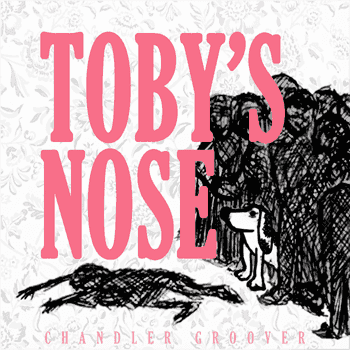
The premise of Toby’s Nose is that you are Toby, a dog belonging to Sherlock Holmes, and your task is to sniff out a murderer from a roomful of suspects. There are quite a few possible suspects to choose from, so while you could solve this by a process of elimination, it is more satisfying to try to work out the clues for yourself.

There are no intermediate puzzles per se: the entirety of gameplay consists of examining and smelling things until you’re satisfied that you’ve pieced together a backstory that makes sense of the whole. Playing the game well is about being very thorough; and though “explore a conceptual space via parser” is a relatively recent design trend, it reminds me of the exploratory aspects of old-school IF. It used to be — back ca. Curses or so — that authors considered it totally fair to hide things under beds and behind paintings without providing the player with any clue that they should look there. Thorough and relentless examining was just one of the things that a IF player was supposed to do.

Chandler Groover cites Castle of the Red Prince and Lime Ergot as inspirations, and indeed the influence of both is very clear. As Toby, you can not only smell things that are in the room, but you can dig deeper into the remembered and trace scents from other places; so, without moving, you can smell (and thus get descriptions of) other rooms of the house and indeed parts of the countryside and of London that turn out to be relevant to the mystery. The traditional locational model of interactive fiction melts away and is replaced by conceptual movement — just as, in Lime Ergot, it’s possible to zoom in on a particular remembered image, or in Castle of the Red Prince it’s possible to interact with far-off things and bring them instantly into scope.

Continue reading “Spring Thing 2015: Toby’s Nose (Chandler Groover)”

Spring Thing 2015, and Aspel

Spring Thing is now open, with nine new games: six in the main category, three in the “Back Garden” area for games that aren’t in competition for prizes and have somewhat looser entry requirements. There’s a mix of systems, too — Twine, Undum, Seltani, Glulx and z-machine, and Ren’Py.

My contribution is a Back Garden game called Aspel, which is a realm in the choice-based multiplayer Seltani platform. As my entry blurb says:

Aspel is an experimental interactive experience designed for multiple players, featuring asymmetric information and collective decision-making. The text you see on the screen won’t necessarily be the same as what everyone else sees, so you’ll need to communicate with your fellow players in order to experience it most fully. To make that easier, I’ll be around to participate/host at the following times:

Tuesday April 7 at 8 PM British/3 Eastern/noon Pacific
Sunday April 19 at 8 PM British/3 Eastern/noon Pacific
Friday May 1 at 8 PM British/3 Eastern/noon Pacific

…but of course people are more than welcome to arrange their own visiting hours.

At some point I’ll likely write something about the experience of writing for Seltani.