only it was really too inconvenient, you see,
not least when it shattered on the staircase
I was running up to catch the last train…
— Apologies for Breaking the Glass Slipper, Isabel Yap
When I’m drawn to adapt a traditional story to interactive fiction, it’s often because there’s something about the original that bothers me so deeply that I feel I need to address it. Part of the reason I rework fairy tales is that I have such a love-hate relationship with them: I was raised on them, read them avidly as a child, but consider them to have been terrible guidance in many many ways. Especially, especially, the Cinderella-style model of passive virtue for women that said, Don’t complain if people aren’t giving you your fair share. If people ask too much of you, comply anyway. Put yourself last in all circumstances. Endure anything that comes your way. Never speak up for yourself. In the end, your patience may be acknowledged and rewarded by someone else, but not, of course, at your own instigation.
This bit of feminine cultural programming is grotesquely unhealthy, not only because it subjects the model Patient Woman to a lot of unnecessary suffering, but because it actually makes it hard for other people to treat you well or for resources to be sensibly allocated. Other people cannot be expected always to guess accurately what’s a reasonable thing to ask of you and what’s an unfair imposition. When they ask something that’s an imposition, a lot of the time they’re relying on you to say no if no is the appropriate answer. If you don’t ever push back, you cast other people as the villains in your story without their necessarily ever intending to have that role. If you never say no, you allow your time to be spent frivolously on things that might not even matter all that much to the asker, instead of on things that might make a big difference elsewhere.
I’m still fighting to reprogram myself. I think maybe other women sometimes are too. Cinderella, I notice, gets retold a lot from the perspective of women who are trying to make the lead character a little less passive, a little less obedient. Rosamund Hodge’s novella Gilded Ashes explains Cinderella’s cooperation through a novel twist: the ghost of Cinderella’s mother still haunts the area, and reacts with such terrible vengeance towards anyone it perceives making Cinderella unhappy that the girl has to feign a good mood all the time, or face being responsible for the violence that will result.
Then there’s Cinders.
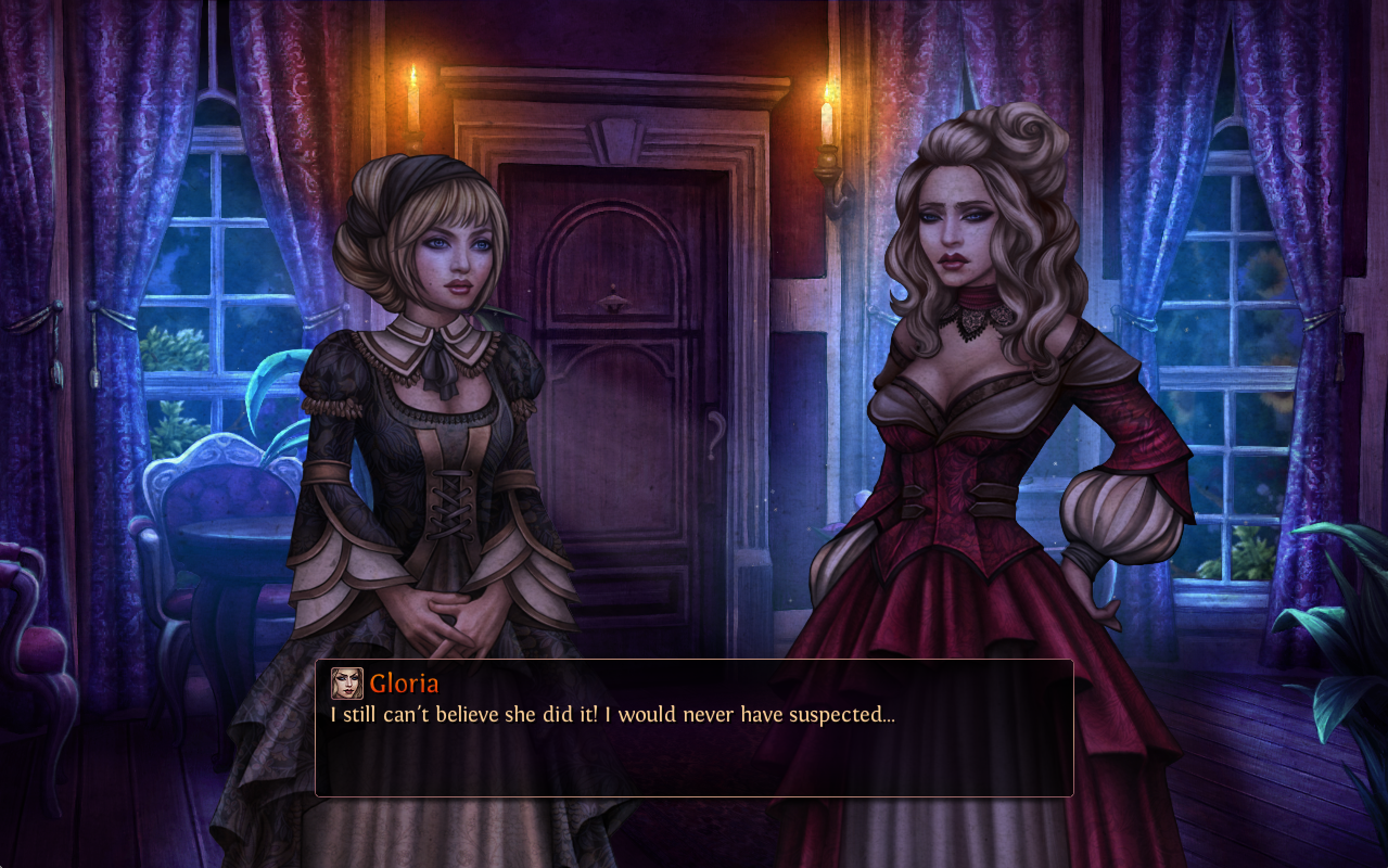
Cinders is a visual novel adaptation of Cinderella that takes a shot at this same issue. It’s been out for a few years, but recently a friend gave me a Steam key for it, so I only played a month or so ago. It has a lot to commend it: the art is very attractive while not belonging to the usual anime categories; the story offers a high number of branches and subbranches; and the whole thrust of both story and mechanics is to interrogate the “be quiet, put up with being bossed around, and eventually you’ll be rewarded with a man” message of the original fairy tale.
This Cinderella has the opportunity to be passively obedient (“good”), assertively selfish (“bad”), or “smart” (here’s a spoilery breakdown of how stats are distributed over the course of the game). Being smart is usually a third-way path that acknowledges nuance and complexity in interpersonal matters while rejecting fantasies and delusions about magic. The conventionally “best” outcome, where Cinders marries the prince and then presides over a happy kingdom, requires a balanced behavioral profile. And whatever happens, the Cinders in this story doesn’t get any outcome without working for it.
I think there’s still further to dig into the Cinderella problem — the difficult thing in my experience is not so much about whether one should sometimes stand up for oneself, but about when, and how, and how to balance other people’s needs with yours when you’re out of practice making that calculation, and how to deal with the emotional fallout of standing up for yourself when you’re still counting your own “virtue” in terms of the number of other people’s tasks you did today.
Nonetheless, I enjoyed the spin Cinders put on this old problem, and the fact that some of the happy endings didn’t wind up joining me with the prince at all, but let me have other lovers, or solitude, or even something approximating a career.




 Emily Short's Interactive Storytelling