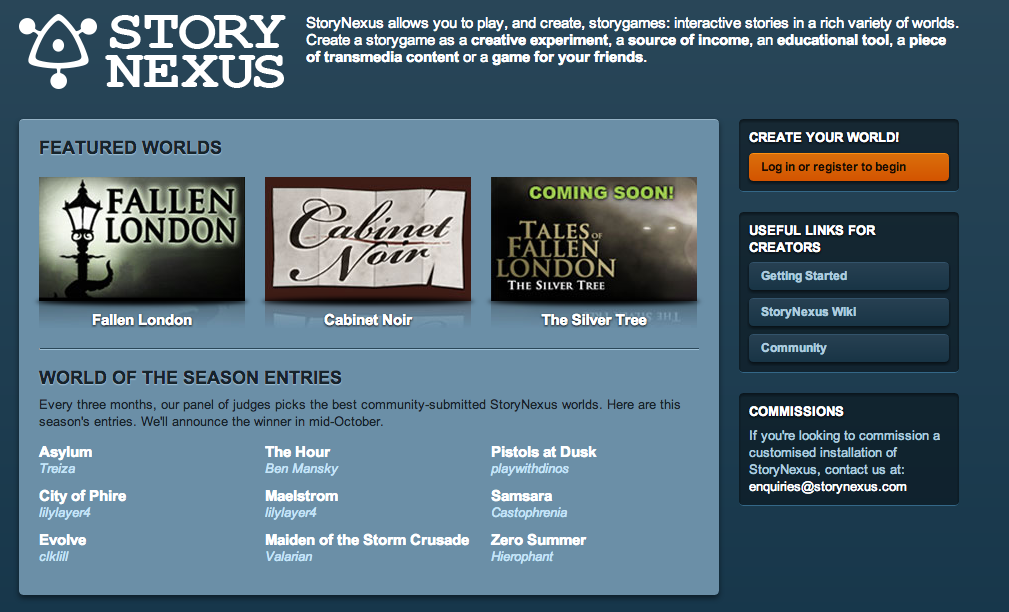
IF Comp 2012: The Sealed Room (Robert DeFord)

The Sealed Room is a short parser-based fantasy piece, using conversation and NPC interaction as the basis of several puzzles. As usual, the jump will be followed by non-spoilery comments; then if I have anything spoilery to say, there will be spoiler space.

Continue reading “IF Comp 2012: The Sealed Room (Robert DeFord)”

IF Comp 2012: Sunday Afternoon (“Virgil Hilts”)

Sunday Afternoon is a short, parser-based puzzle game set in Victorian England. As usual, the jump will be followed by non-spoilery comments; then if I have anything spoilery to say, there will be spoiler space.

Continue reading “IF Comp 2012: Sunday Afternoon (“Virgil Hilts”)”

IF Comp 2012: Escape from Summerland (Jenny Roomy and Jasmine Lavages)

Escape from Summerland is parser-based puzzle IF concerning an abandoned fairground, and lists a number of beta-testers. As usual, the jump will be followed by non-spoilery comments; then if I have anything spoilery to say, there will be spoiler space.

Continue reading “IF Comp 2012: Escape from Summerland (Jenny Roomy and Jasmine Lavages)”

My own personal Ada

When I was first old enough to realize my mother had a job, she was employed at JPL, processing images returned by the space program. Later she worked for a think tank coding complex simulations of geopolitical conflicts; then for a major aerospace firm, where she rose to the highest rank available to technical employees. In our household, it was my mother who talked at the dinner table about ARPANET and modems, about version control problems and root passwords getting into the wrong hands. It was my mother who taught me my first lessons in science, who set up the telescope on camping trips, who explained why candles burned or how to view an eclipse, who gave me graph paper and taught me how to plot a function when she thought math class wasn’t challenging me enough. I first heard of the world wide web from her, when it was still more of an idea than anything else.

When I was a kid, I had dolls and books and art supplies, and a play stove that Mom made (at my request) out of cardboard boxes and contact paper. But I also had a train set and blocks, a building toy with gears and motors, an electronics kit, a microscope, a fossil and mineral collection, plastic boxes for collecting bugs, a computer and training books about how to program it… No one in my family ever suggested that some of those things were somehow less appropriate toys for a girl than others.

It is, I think, because of my mother that I start out startled (before moving on to irritated) when I read some sexist joke about women and programming, or when I meet someone who assumes I must be frightened by math and code when they know nothing about me but my gender. I know that my mother had to deal with a lot more of this than I ever have — with overt and unembarrassed prejudice, with blatant decisions to underpay the women on her team.

There’s still a lot of work to do, but I have my mother to thank for the fact I find those assumptions so alien: the first programmer I knew was a woman.

StoryNexus is Open

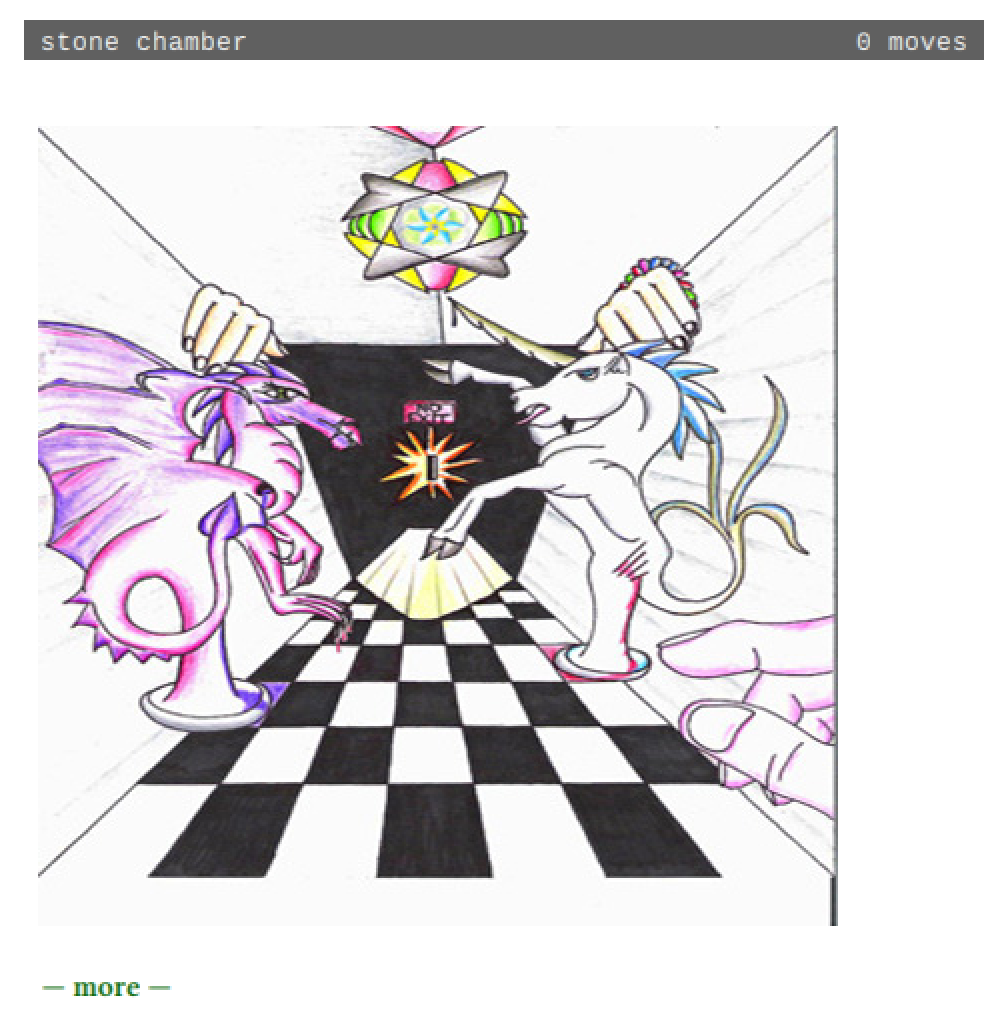
Trailed for some time as a new creative tool from the team at Failbetter responsible for Fallen London (aka Echo Bazaar), Cabinet Noir and the Night Circus, StoryNexus is now open for public use.

StoryNexus supports authors in building what Failbetter calls “quality-based narratives” — stories where the available nodes and choices depend on the player’s stats at that point in the narrative. The result is somewhat more fluid than the typical choose-your-own-adventure model, in that it doesn’t impose a strict order to the branch points, but allows the player to explore whichever of the available storylets happen to be open to him.

The only other tool I know of that currently supports this particular blend of world model and choice-based storytelling is Varytale — not entirely coincidentally, since Failbetter had considerable input about Varytale at the design stage. But where Varytale tends towards the more literary possibilities of the format, with long prose passages and a book-like presentation, StoryNexus aims more at RPG-like explorable worlds reminiscent of the original Echo Bazaar. The tool allows authors to select from artwork and theme options, and in the future will also allow authors to upload their own imagery to accompany their creations.

StoryNexus authors may offer their work for free, or may charge for it, as they like, using StoryNexus’s built in system for putting purchase gates on content. (This functionality is I think closed at the moment, but scheduled to open very soon, offering a 60/40 split with authors on any revenue a story may earn.)

Edited to add: there’s also some coverage at the Escapist.

Nightmare Cove, Coliloquy

Nightmare Cove is an interactive text horror game for Kindle Fire. I don’t have the right equipment to run it myself, but it looks to be illustrated, and its creator describes it as being choice-based with a “light inventory system” (which suggests something perhaps like the CYOA created with Adventure Book). There are also a couple of pre-defined characters to play with, which suggests a little less personal configuration than in the most open of the ChoiceScript games, but that the product does rely on some RPG features.

And speaking of new commercial choice-based work, the company Coliloquy is publishing a variety of interactive stories — 18 are already available on Amazon — including supernatural thrillers, mysteries, and interactive erotica where you can pick the characteristics of the hero.

There’s a long article about their work in The Atlantic. The description there focuses most on the reader-satisfaction qualities of this kind of book: Coliloquy uses analysis tools to track which choices are being selected and help authors write more of the content that readers want. I feel bit dubious when I read things like this, because I think it can lead authors down the wrong path: “everyone picked A therefore choices B and C were a waste to write” fundamentally misunderstands the way choice-based literature works. I also think reader gratification is sort of the least common denominator goal of interactive narrative, and that there are lots of choices to offer that are more interesting than letting the reader color in the eye color of the protagonist.

Still, having good stats on what readers are picking is a very interesting feature (see also Varytale) — and it’s extremely interesting to watch the expanding ecosystem of free and commercial textual games of all sorts.