Flash Charity Auction: 1, 3, 5 hours of work time

I am auctioning off some work time — 9 hours in total, in chunks of 5 hours, 3 hours, and 1 hour — in support of Donors Choose, a charity that provides educational supplies to underfunded classrooms in the US. Bidding runs through 5 PM Pacific today (1 AM British time) and the work is to be done this weekend.

How does this work?

Between now and 5 PM Pacific time, you can comment here to bid (in dollars, please).

Highest bidder gets the 5-hour chunk, second place the 3-hour, third place the 1-hour. So if you’re the only person to bid, you could wind up with the 5 hours for a super-low price. When time is up, I’ll determine who the winners are and comment with that information. It’s then up to you to fulfill your bid by donating here and letting me know what specifically you have in mind. I will start work tomorrow and will aim to have the tasks done by Monday evening.

That’s very little notice! Hardly any, in fact!

I know. It’s pretty unusual for me to know way in advance that I’m going to have a free weekend, though.

What if no one goes for this?

I make cookies instead. Mm, cookies. (Honestly, I have no idea whether this will produce any interesting results. It’s an experiment.)

What would that get me?

Some things you could have me spend time on include:

  • betatesting your WIP
  • giving feedback on a game design document or concept
  • making some (photo and text-based) cover art for a game
  • revising prose written by a non-native speaker
  • writing a review of a freeware game of your choice (it needs to be short enough that I can both play and review in the time slot, and needs to run on Mac OSX)
  • creating a custom I7 extension to tackle some irritating code problem (again, within limits — something like Threaded Conversation is not a 5-hour project)
  • curating a list of IF specific to an interest of yours
  • writing a short essay about an IF- or game-related topic
  • writing a tiny custom speed-IF (in the 1 hour slot this would probably need to be choice-based)

…but I’m open to other possible uses of time as well, if you have something else in mind.

So basically you’ll do what I say?

Er, within certain limits. Obviously: no illegal activities, no pornography, nothing unethical (such as having me write a glowing review of a work without disclosing the funding source). No hacks that aren’t really labor exchanges (“spend one hour mailing me your laptop”), or that would cost me additional money to perform unless we’ve talked it through first. If you have doubts about whether your request is reasonable, feel free to request clarification.

Why Donors Choose?

This gets long and is not about what this blog is usually about, but if you’re interested:

Continue reading “Flash Charity Auction: 1, 3, 5 hours of work time”
Assorted IF-related reading

I wrote a piece on the Best Individual Puzzle nominees from the 2013 XYZZYs. It is also an attempt to pull together some thoughts about how puzzles can be good in completely different ways and for different reasons — something I think last year’s spread of nominees demonstrates particularly stongly.

Meanwhile, Sam Ashwell has just posted a (long!) post about types of player agency in games. There’s lots there, but I’m especially interested in Sam’s ideas about the importance of author-player trust, and the effect that that trust can have on how well mechanics work for the player.

And speaking of off-site reading, it’s probably a good time to remind people about the Phrontisterion blog, which has a fair amount to say about IF despite not being aggregated at Planet-IF. It’s specifically taking an outsider’s view at the IF community and IF tools, from the perspective of people interested in Chris Crawford’s work.

Next Oxford/London Meetup: Oct 20, London

This time we’re experimenting with an unconferencey sort of setup where we break into interest discussion groups. The IF Comp games will be out by then, so that’s one thing we might talk about, but there’s room for lots of others. Join us!

More details here: http://www.meetup.com/Oxford-and-London-Interactive-Fiction-Group/

Transcript Posted (Game Audience discussion)

The transcript for the (admittedly brief) theoryclub meetup on game audience is here. Due to travel I was only able to be online for a bit in the middle, so thanks to Zach for logging the session.

What shall we take on next? The next meeting is Oct 11; proposed topics include

Puzzles and story: what puzzles are most satisfying, and most useful, from a storytelling perspective? Are there types of narrative experience that can be generated only through puzzles?

Replayable IF: what makes a game satisfying to replay, especially in an often narrative and puzzle-based genre?

Preferences and alternative suggestions welcome over the next week or so; then I’ll pick something.

Edited to add: We’ve now settled on replayability. Some possible starting points for discussion are as usual listed at the Discussion Club page.

The Ascent of the Gothic Tower (Ryan Veeder)

Screen Shot 2014-09-03 at 12.49.04 PM

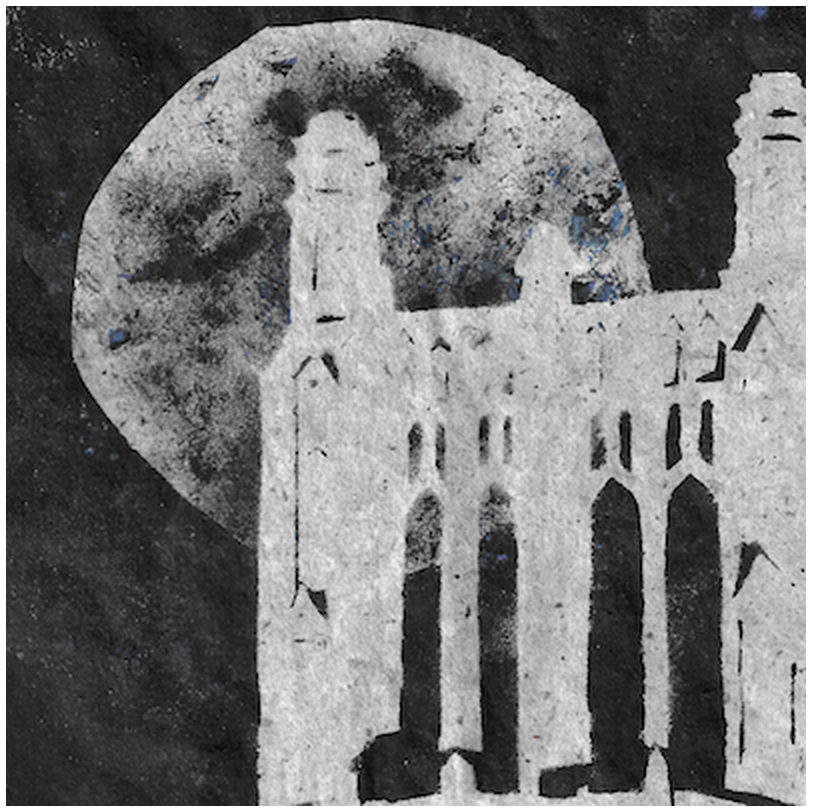
The Ascent of the Gothic Tower is a brief but evocative parser-based story by Ryan Veeder, originally released as part of Storybundle but now available to play for free.

It describes an exploration: the protagonist is trying to get into the titular Gothic tower, a difficult-to-reach space on campus. That impulse to enter and explore the forbidden spaces enclosed in public areas (especially college campuses) is one of the primordial urges behind the text adventure genre. Certainly at my college campus, there was quite a bit of hobby overlap: the same sorts of people who played and discussed text adventures were the ones who had accounts on the Unix system; organized small illicit tours of the college’s steam tunnels, attics, and basements; and who practiced recreational lock-picking.

The Ascent of the Gothic Tower concerns the longing to understand infrastructure and (most of all) to reach locations that are inherently interesting but perhaps off limits. It reflects on the transgressive behavior required to map out secret spaces, behavior (like taking objects and trespassing just because a door has been left unlocked) that classic text adventures usually reward unproblematically. Gothic Tower depicts a mentality that is isolated and even actively antisocial, furtive, made uncomfortable by ordinary human comings and goings. From the very first room of the game, the narrator indicates this distance and alienation:

A couple of kids are sitting on a blanket nearby, pawing at each other like there’s nobody else around—and wouldn’t that be nice?

>x kids
They stare into each other’s eyes; they whisper; at intervals they kiss.

By “wouldn’t that be nice,” you didn’t mean that it would be nice to be necking outdoors in front of everyone. The thing that would be nice is the hypothetical situation in which there’s nobody else around.

>talk to kids
You mutter a hello, and the two kids look up to you with apprehensive smiles.

These themes resonate with some of Veeder’s earlier work, but are more darkly presented here. The childlike, exuberant exploration of church spaces in Robin & Orchid gives way to paranoia and anxiety; the protagonist flinches from the presence of other people, and frets anxiously about each trespassing step taken on the path to the tower. The protagonist is also, incidentally, carrying a photocopied image of a monster that might be a cockatrice or might be a basilisk, and which can destroy with a glance — a strong figure for how much the protagonist does not want either to see or to be seen by other people.

Meanwhile there’s relatively little of the humor of Veeder’s lighter work. His characteristic narrative asides remain (“By ‘wouldn’t that be nice,’ you didn’t mean…”), but they’re somewhat more caustic than in many another context.

The result is curiously melancholy. There are any number of games that offer some metacommentary on the conventions of their own genres, and within these a smaller set of IF games that explicitly call out the antisocial behavior and implicit loneliness of the traditional IF protagonist. Most of the latter are meant to be funny (Zero Sum Game requires a misbehaving protagonist to put back an inventory of stolen treasures, for instance), though Endless, Nameless arguably reflects more seriously on the kind of people who are required to make and play classic text adventures. The Ascent of the Gothic Tower takes this a step further, however. Rather than focusing on the peculiarities of the genre convention, it depicts seriously a protagonist who truly feels like a Nameless Adventurer, a person for whom the abandoned building full of locked doors and mysterious signs is not only natural but almost the only kind of setting in which they can be at rest.

Upcoming IF Events

Some things you might want to know about:

September 1 is the deadline if you’re planning to sign up to participate in the annual IFComp. The comp has a new organizer this year, and a snazzy new website. Also, if you don’t plan to participate but would like to donate prizes, you can do that too.

September 13 at the Boston Festival of Indie Games, the People’s Republic of IF is hosting two events: a reading of Lynnea Glasser’s comp- and XYZZY-winning Coloratura, followed by an interactive fiction tutorial covering Inform 7 and Twine.

Also Sept 13 on ifMUD, at noon Pacific/3 Eastern/8 British time, there will be a discussion on IF and audience: how authors adjust their work for a particular audience assumptions made, etc. In the past the IF community has talked a lot about adjusting games for beginner players or for children, and somewhat less (but still a bit) about writing accessible games for visually impaired players — but there are a wide range of possible audience considerations to discuss.

October 11-12 at GeekGirlCon in Seattle, Jacqueline Lott is running an IF intro tutorial in Twine and Inform 7.

More distant, but worth knowing about in case you want to plan ahead:

November 8 in Toronto, Jim Munroe’s Wordplay Festival will be accompanied by additional IF events.

I myself will not be there; instead I will be speaking at ICIDS in Singapore, November 3-6, where I will talk about lessons from Versu. I will likely also be running a short workshop in IF creation. More about those things when the schedule is nailed down a bit.