Career-related News

I’m excited to say that as of Friday, I’m Chief Product Officer at Spirit AI. (The company website hasn’t had time to catch up with this yet, I know.)

I’ve been managing Character Engine for a couple of years now; I’ve been on Spirit’s board, and thus increasingly involved in the business side of the company, since the middle of last year. The promotion means that from here on I’ll also be directly involved with Ally, our product for detecting and responding to toxic interactions in online communities.

I am still doing a lot that’s directly tied to interactive narrative. (In fact, I’ve got a couple of blog posts lined up for this month about some of the interactive storytelling implications of Character Engine, for those who are curious about what we’ve been working on all this time.) And both products draw heavily on how we understand language, both its literal meaning and the social implications of words. Spirit employs some awesome talent in data science, natural language processing, and computational linguistics.

Meanwhile, Ally addresses a problem of how to build and protect healthy communities. That’s extremely important, and it’s an area where we need good technology and careful thought about the ethics of what we’re building. (And we’re hiring.)

So this continues to be a compelling job, and I’m working alongside some really terrific people. If you count the time I spent contracting before we had investment money, I’ve been working with Spirit in some capacity for nearly three years now — here’s hoping the next three years are as amazing as the last.
GDC 2019 Previews

GDC is coming up, and I will be there! If you’d like to speak, please do get in touch. (And if you’re interested in learning more about Character Engine from me or one of the rest of the Spirit team, please drop me a line about that too.)

Also, if you’re an IF person coming to GDC for the first time, I’ve written previously about GDC survival strategies (scroll down), and most of the advice there still holds. This year, there is also a GDC 101 event for people who are attending their first conference.

I am one of the advisors for the AI summit this year, so I’ll be in that room pretty constantly Monday/Tuesday, and especially: participating in the Ethics panel and the AI Devs Rant session, as well as MCing the Experimental AI Workshop. I’m very excited about that session, as we’re bringing together some exciting projects from several different corners.

Below the fold I’ve pulled out my picks of things that might interest readers of this blog. As usual, there are too many talks I wish I could go to, many of them scheduled opposite one another, so I’m going to have to rely on the Vault for a few things…

Continue reading “GDC 2019 Previews”

Bandersnatch (Netflix)

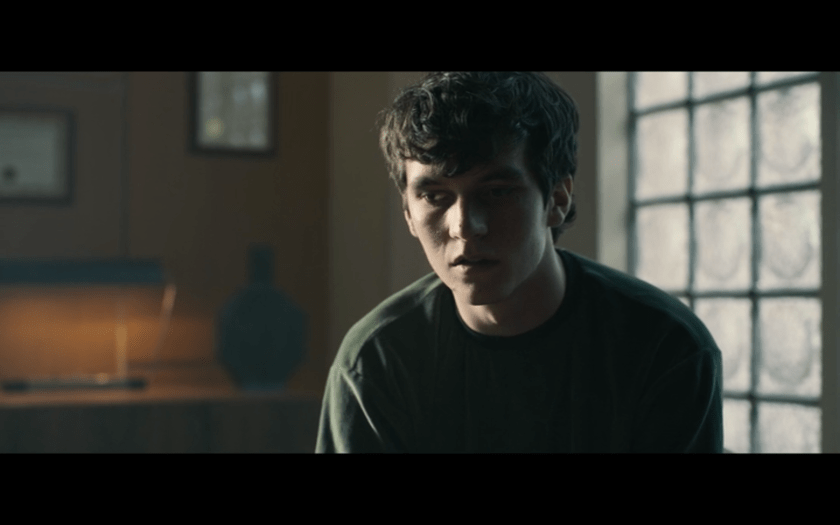
Screen Shot 2019-02-09 at 5.10.20 PM.png

If you work in interactive narrative at all, there was a period recently where you could not go anywhere without people asking your opinion of Bandersnatch, Netflix’s branching-narrative episode of Black Mirror.

Because I am ornery and/or busy and/or was sick part of the relevant time, I didn’t watch it then. Still, I was aware that IF folks felt

  • annoyed that people were treating this as massively innovative when there are tens of thousands of works, produced over the past fifty plus years, exploring the possibilities of interactive story, including quite a lot specifically of interactive film if we’re narrowing the gaze to just that
  • disappointed that a lot of the choices were kind of basic
  • weary at the prospect of yet another Author’s First Interactive Work about free will vs chance, fate, and external control — this theme being (for obvious reasons) not exactly new in the interactive narrative canon
  • excited by the hope that this meant big commercial possibilities for interactive story
  • like ignoring Bandersnatch and playing more Cragne Manor

I have now watched, and here is my opinion, now that no one is asking.

The short version: I found Bandersnatch slightly more satisfying than a lot of my friends did, perhaps because I happen to have landed on an ending that is, I gather, rare.

At the same time, I had various criticisms of it. Some amount to “this is a first interactive work by someone new to the possibilities, and it’s designed for an audience that is also not particularly literate in interactive fiction, and I guess that’s to be expected.” Others are more serious issues with the messages and themes.

Long version below the fold.

Continue reading “Bandersnatch (Netflix)”

Mailbag: Adapting IF Skills to Adjacent Media

This is a follow-on answer to a previous mailbag post, specifically the part in which the questioner asks,

Would you have any thoughts on how to… improve the adaptive skills needed for bringing IF to newer formats and into audio?

I take this to mean not “how do I port an existing work to an interactive format” (which is also an interesting question), but “how do I do IF-like interactivity in formats other than text, especially audio?”

Key challenges for this, in my experience, center on these areas:

Continue reading “Mailbag: Adapting IF Skills to Adjacent Media”

Sunless Skies: Carillon, Sky Barnet, et al

Failbetter Games’ Sunless Skies is out, as of January 31, and I contributed: Carillon, a port in which Devils work to refine the souls that come their way; Sky Barnet, the gateway to the Blue Kingdom; and the Repentant Devil’s officer quest. There was also some nightmare content, a story that you can fall into if your terror grows too great.

I’m going to talk a bit more about those stories; this will be light on any actual specific spoilers, but it will touch on the general lore of Sunless Skies and the Fallen London universe.

Continue reading “Sunless Skies: Carillon, Sky Barnet, et al”

Story (Robert McKee) and the Expectation Gap in Interactive Story

McKeeStory is one of a handful of screenwriting books that turn up constantly in the bibliography of game writing books. McKee himself gives courses — I’ve never been, but I hear they’re very good shows, whether or not they’re good advice. It’s advised at least as often as Save the Cat, and possibly more so.

It is also, I think, more applicable to non-cinema writing than Save the Cat: McKee is interested in structure, and he has a lot of formulaic rules to suggest, but he cares about content as well. At one point he has a speech about the need for emotional truth, and how this can only come from within the author.

There are aspects of the book that aren’t entirely to my taste. In support of his points, McKee often spends quite a while reprinting classic screenplays — he’s particularly enamored of Chinatown — with his own commentary interspersed. I did not generally find his comments to be that much more instructive than the original dialogue, undisturbed. And even when he’s not giving verbatim chunks of screenplay, he spends an awful lot of time summarizing the events of various movies you’ve probably seen. He’s also a bit grandiose with his rhetoric about the great imaginative work of writing.

Then, too, quite a lot of his advice belongs to the “add an appropriate amount of salt” school of recipe writing — warning that too little or too much of something will be bad, but offering no heuristics.

All the same, there is a lot of basic vocabulary about how plots are assembled and how scenes are designed, which this book introduces as well as or better than many another. Personally, I’d be inclined to go for e.g. Wonderbook instead, if you want an introduction to basic structure vocabulary, and you’re not specifically writing screenplays. For most purposes, Wonderbook is more varied and goes deeper than Story.

There are, however, a couple of points — the ideas of expectation gap and of internal subconscious conflict — where I think it’s interesting how those concepts carry over to interactive work.

Continue reading “Story (Robert McKee) and the Expectation Gap in Interactive Story”