Witch’s Brew: The Spellspinners of Melas County (Heidi Kling)

spellthumb

What’s Cool from Coliloquy: In Witch’s Brew, Lily and Logan’s fate is already decided, but Heidi explores several different possible pathways for how they get there. She shares scenes that wouldn’t normally fit in a book format and gives readers more precious moments between the two young lovers. As the series progresses, you’ll see some normal narrative forms, interspersed with smaller scenes, alternate points of view, and a lot of “what if” scenarios. (Source.)

Coliloquy was a company creating interactive ebooks for the Kindle, which was semi-recently sold to digital publishing platform Vook. Witch’s Brew is the first book of a YA fantasy line of theirs. I’d encountered some articles about Coliloquy in the past, which made it sound as though the main selling point of the platform was that it was able to deliver reader metrics, not that it supported a significantly richer or different reading experience than other interactive fiction platforms out there.

The premise of Witch’s Brew is that the teenage witch Lily is preparing for the Gleaning, a mystical contest/battle against an evil warlock. Long ago light magic was apportioned to witches and dark magic to warlocks, and the Gleaning makes possible a redistribution of powers, which everyone apparently accepts is necessary even though the witches and warlocks who lose are Never Seen Again. But when Lily meets a breath-takingly sexy teen warlock who is able to speak to her telepathically, she begins to question whether she has been told the whole truth, and whether she and her hunky counterpart might not be the key to saving the future of magic. There are enchanted tattoos.

Side-characters include the beautiful, wise, shape-shifting mother figures of the coven (though there are some hints that all may not be completely as it seems there); Logan’s voodoo-using warlock buddy Chance (seemingly sort of a nice guy, though he doesn’t get a lot of character development); Lily’s angelic little sister Daisy, whom I could not stop picturing as Dawn Summers; and Jacob, the lead warlock, who has red-rimmed eyes, exhales toxic dust, and eats eggs whole, like a snake. He runs a pharmaceutical company, in case you weren’t sure of his moral alignment.

Here are some representative quotes:

“Girls,” she addressed us with flashing Indigo eyes, “join me, please.”

After the long hike, the magic eucalyptus smacked my system like a jolt of espresso.

The smell of beer mixed with the jubilant sounds of teenage revelry…

It’s a genre exercise, and it’s directed at people who fantasize about moody 16-year-old boys with chiseled abs and about being able to speak magical Gaelic. I wouldn’t say that it’s quite as far out of my preference zone as zombie horror, but this is not a genre where I tend to hang out just to enjoy the scenery, and this book is very much for people who do want to linger there. The marketing quote above is actually a pretty clear explanation of what interactivity is for in this book: giving you more “precious moments” between Lily and Logan.

Continue reading “Witch’s Brew: The Spellspinners of Melas County (Heidi Kling)”
Bloom (Caelyn Sandel)

Screen Shot 2015-07-11 at 3.38.43 AM

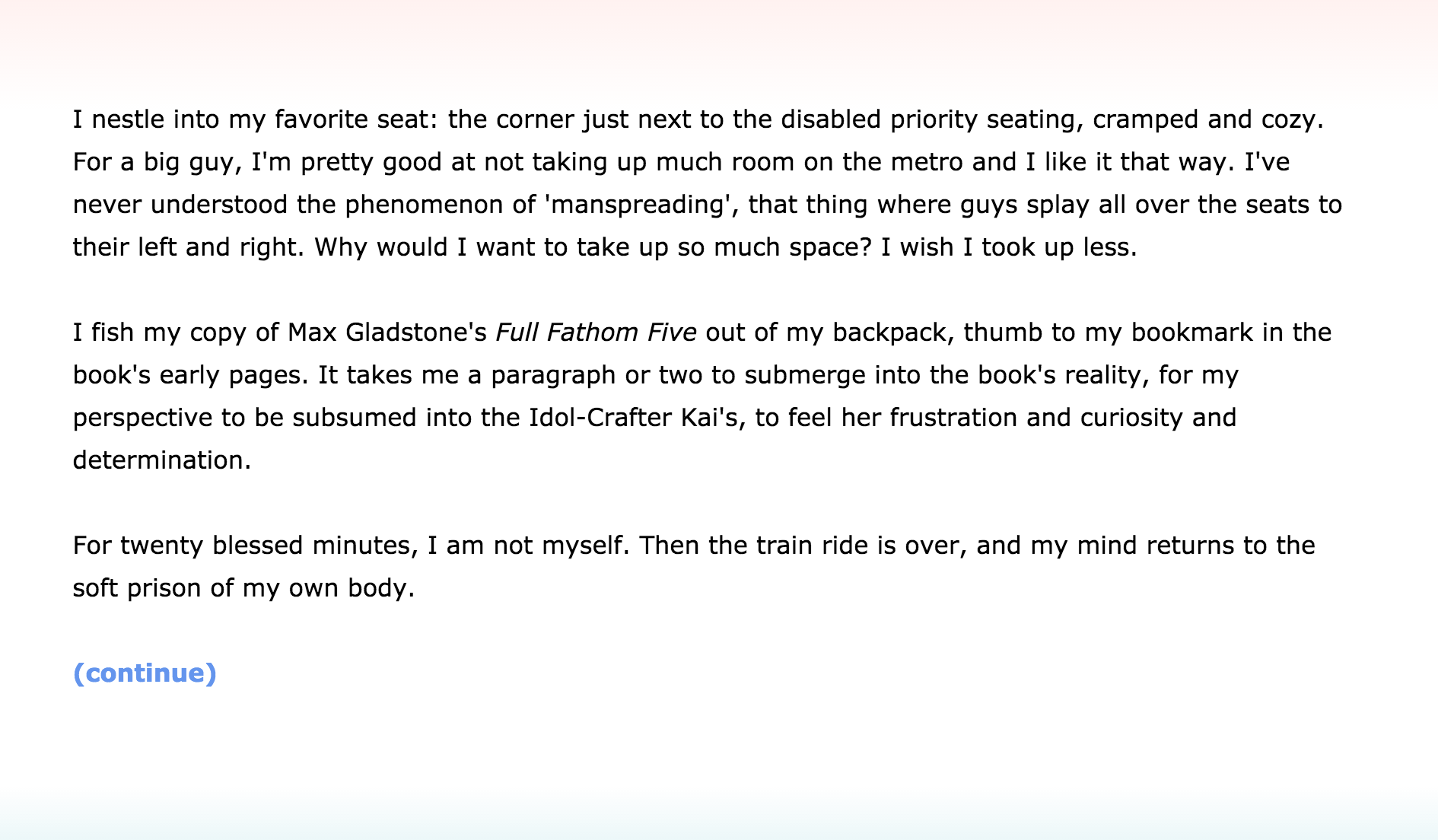
Bloom is a substantial Twine story by Caelyn Sandel, being issued in episodes. (Because I’m writing some blog posts in advance of travel, there are only the prologue and two chapters available at writing time, but by the time you read this, the third chapter may well be available.) It tells the story of Andy Blumenthal as he discovers that he is rightly a woman called Cordy.

It’s a longer, less visceral piece than Caelyn’s previous Cis Gaze, playing out as a more substantial series of scenes — though there are still some passages with a gut-punch effect, as when the protagonist encounters some particularly unpleasant humor that hits her vulnerabilities.

The protagonist is not just her situation, though. She also has a family with its own interesting dynamics; a roommate and coworkers who are rounded enough not to be mere markers. Both Cordy and her sister Rachel have endearing styles of eating, making sure that textures and flavors are properly distributed. Cordy’s mother is active in domestic violence prevention, laudably, but it’s not at all clear how she’s going to react to Cordy’s gender identity. Cordy herself has a hard time explaining what’s happening to her, since she barely understands it herself at first, and it doesn’t match with the trans narratives she knows; she feels like she should have recognized herself as a woman back in childhood or puberty, not at the age of almost 30.

The structure is very linear. The player can explore a bit, and can sometimes pick a flavor choice of more or less significance, but the plot doesn’t appear to branch significantly (which, frankly, might be the only sensible way to do an episodic Twine piece).

Nonetheless, the interaction lends quite a lot to the experience, especially the sensation of being on the spot when Cordy feels overwhelmed and doesn’t know what she wants to do.

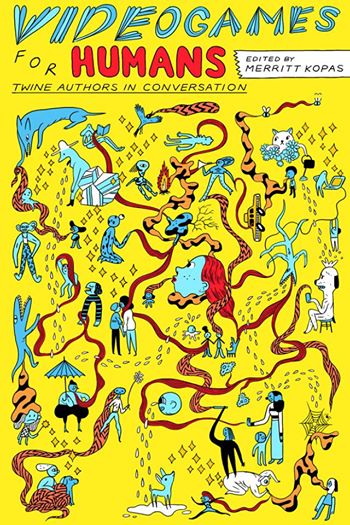
Videogames for Humans (ed. Merritt Kopas)

VFHcvrI’ve mentioned the existence of this book before, but only recently did I get my own contributor copies of Videogames for Humans, an anthology of Twine playthroughs annotated by their players. (Here’s Robert Yang talking about the anthology; here’s me talking about Robert Yang talking about the anthology.) It’s a big chunky paperback, devoted to the unexpected task of demonstrating an interactive art form on paper, through transcripts.

Here’s something excellent from this book: Naomi Clark’s playthrough of Horse Master. It takes much longer to read than the game takes to play for the first time, because it is digging into details of wording and implementation. It reveals the game’s innards and explains them. It is also both lovely and funny. You should absolutely play Horse Master yourself first: you’ll enjoy both the game and the analysis more if you experience them in that order.

Here’s another: Riley McLeod’s playthrough of Benji Bright’s Fuck That Guy, about the experience of being a queer trans man playing a game about cis gay sex, and the ways that that does and does not feel familiar, the things that are inviting and the things that are off-putting.

Or: Squinky on Jeremy Lonien and Dominik Johann’s The Message. “I don’t know what it is about pianos in slapstick comedy,” they write, and then go on to explain what it is, which is awesome.

Or: Patricia Hernandez on Elizabeth Sampat’s Nineteen, which is about a suicide attempt that failed, and if it hadn’t failed then, among many other more important losses, I would never have met Elizabeth and played Deadbolt with her.

Or: Anna Anthropy writes a charming response to Michael Brough’s Twine about losing a scarf, a story that sounds trivial but in fact carries considerable feeling, about the importance of things in our lives and the difference between the things that we work on and invest in personally and the things that are fabricated for us by the machines of industrialized capitalism. This resonated with me.

Continue reading “Videogames for Humans (ed. Merritt Kopas)”

Choose Your Own Autobiography (Neil Patrick Harris)

Screen Shot 2015-06-17 at 1.10.49 PM I’m not a big reader of celebrity memoirs, but this one came my way for Christmas: Neil Patrick Harris’ autobiography takes the form of a choose your own adventure book, in which Neil’s life story, together with some made up incidents clearly recognizable as fantasy, are narrated as happening to “you”.
This sounds like a gimmick, since the set of people who know of Neil Patrick Harris because of Dr. Horrible or How I Met Your Mother likely has a good overlap with the set of people who retain warm fuzzy nostalgia feelings about Choose Your Own Adventure books. But it turns out that it’s formally interesting as a CYOA piece, too.

Continue reading “Choose Your Own Autobiography (Neil Patrick Harris)”

Hollywood Visionary (Aaron Reed, Choice of Games)

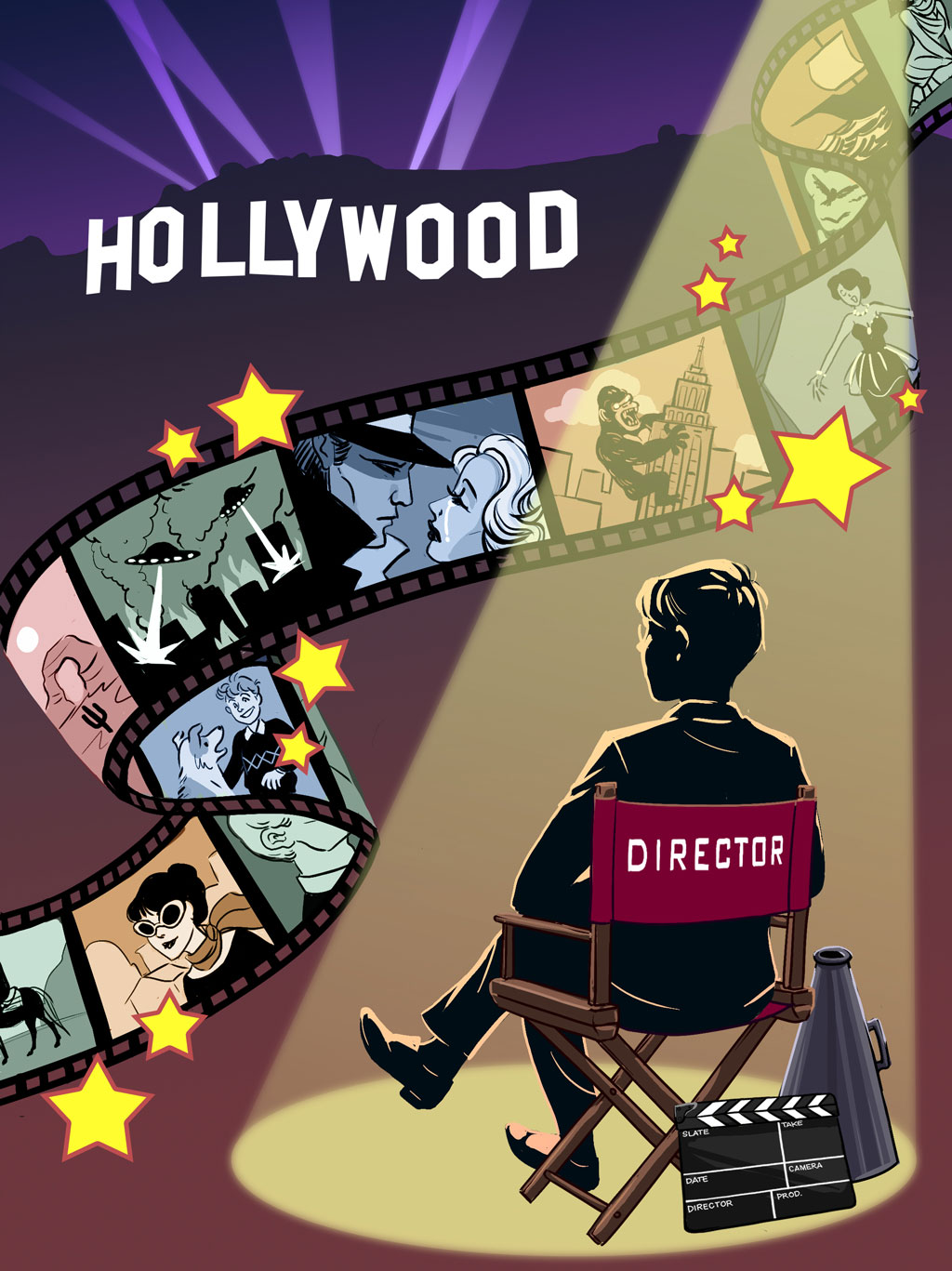
hollywood_visionaryHollywood Visionary is a game by Aaron Reed, published by Choice of Games. And before I say a lot more about it, I need to put up a big disclaimer, because a) I beta-tested the game; b) I am currently under contract to Choice of Games for a project of my own. For those reasons, I hadn’t been planning to write up the game at all. However, since its release I’ve found myself thinking a lot about a couple of things that it does. I’d like to write about those, just so long as you know how I relate to the project and that this doesn’t qualify as a disinterested review.

So. Hollywood Visionary is a game about artistic vision and realization in the context of both complicated personal loyalties and a tough political climate. It’s the 1950s, McCarthyism is in full swing, and you’re trying to find enough money and enough talent to put together the project of your dreams while at the same time avoiding any unfavorable attention.

To make the artistic aspect interesting, Visionary allows for a degree of combinatorial invention that most Choice of Games pieces don’t really attempt: you can combine genres, figure out how many leads you’re going to have and of what genders, give your movie its own title. You can also hire unknown or celebrity historical figures to direct and star in it — bring on Alfred Hitchcock, if you can afford him. The result captures some of the generative humor of Game Dev Story, but within a much more narrative setting.

At one point I set up to make a black & white racy religious fantasy set in a convent, featuring a nun at odds with forces beyond her control. I was picturing this as a Joan of Arc story that sexualized her religious passion. I didn’t really have a way to express the Joan of Arc concept within the game, but I had been allowed to pick enough details that they shaped how I imagined all the filming and decisions afterward.

Aaron’s mentioned that he’s gotten a lot of messages from people telling him about the different movies they created within Hollywood Visionary — a clear sign, I think, that there’s enough freedom in these choices to let people feel some creative ownership over their movie concepts. Which is a pretty cool thing for a game like this to achieve.

Now the more spoilery bit.

Continue reading “Hollywood Visionary (Aaron Reed, Choice of Games)”

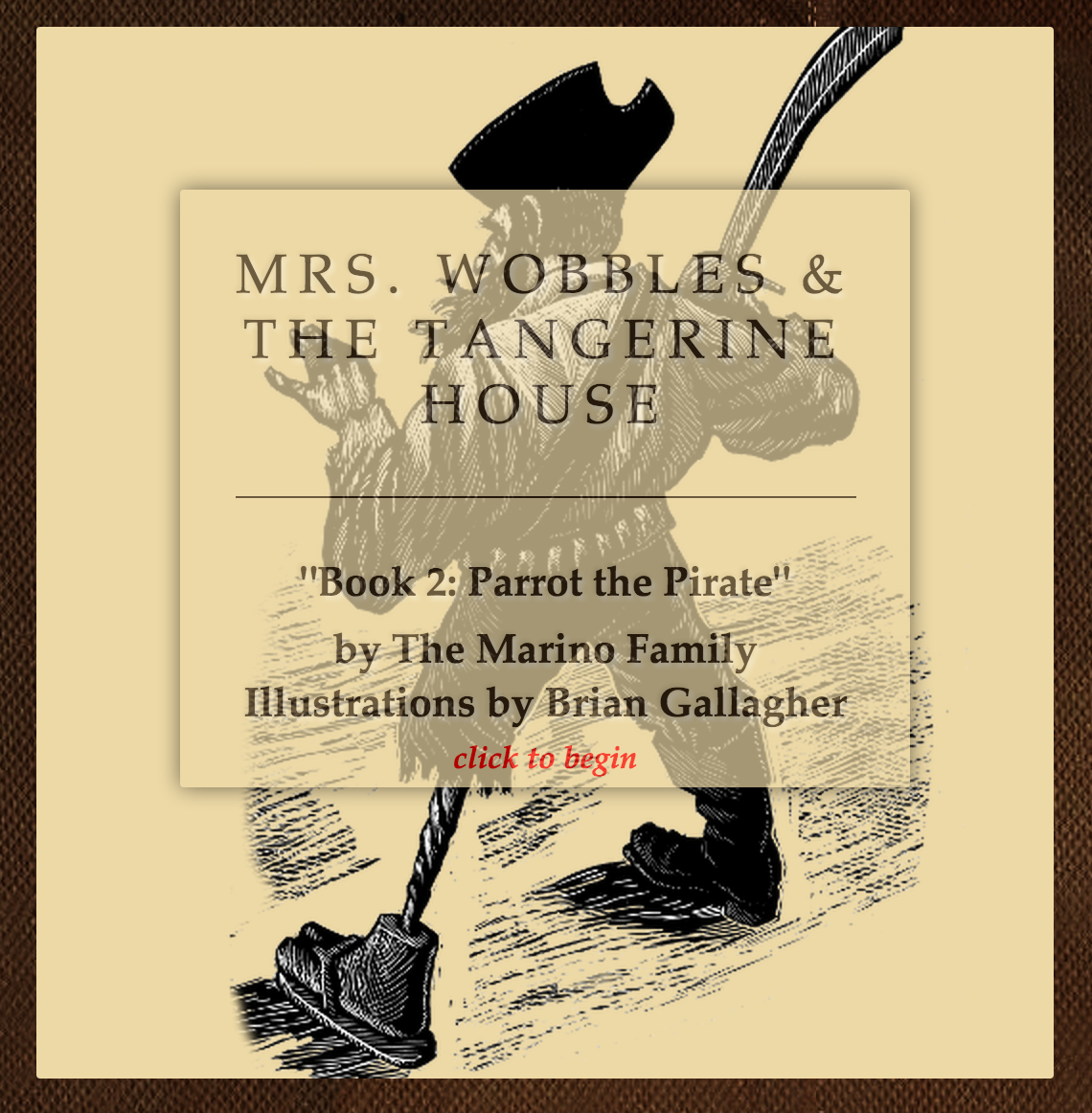
Mrs. Wobbles and the Tangerine House: Book 2 (The Marino Family)

Screen Shot 2015-06-16 at 6.53.48 PM

The first episode of Mrs. Wobbles and the Tangerine House was an IFComp entry in 2013. (Here’s my review.) It is a choice-based Undum children’s story about a group of foster children who go to live in the home of the eponymous Mrs. Wobbles, and the whole story is being told through a magical book. Reading as an adult, one has a distinct sense of not being the target audience, most of all because of the slightly teasing tone the narrator adopts towards the reader.

This installment, Book 2, picks up with the children transported to a pirate land. We again have the framing narrative of a magic book, and then at one point Mildred (one of the children) can herself tell about a memory of hers, so the layers of story and other-reality get fairly thick.

As before, Book 2 is fairly linear, with just a few points of significant branching, and a few others in which you’re effectively picking the order of operations for doing a series of tasks that all have to be completed. And as before, the story incorporates ludicrous poetry, elaborate similes, and wordplay. A few examples that give a sense of the narrative tone:

The front was guarded by a big pirate henchman, who looked like he wanted to be anywhere but there, as if he were missing his favorite TV show and perhaps even his favorite episode of his favorite TV show.

…and when it comes to the way things work in the sort-of-make-believe, sort-of-true universe of the children:

‘Take this, then.’ And Mrs. Wobbles handed Mildred a giant rubber heart. ‘It’s a shield,’ said Mrs. Wobbles, ‘and an eraser.’

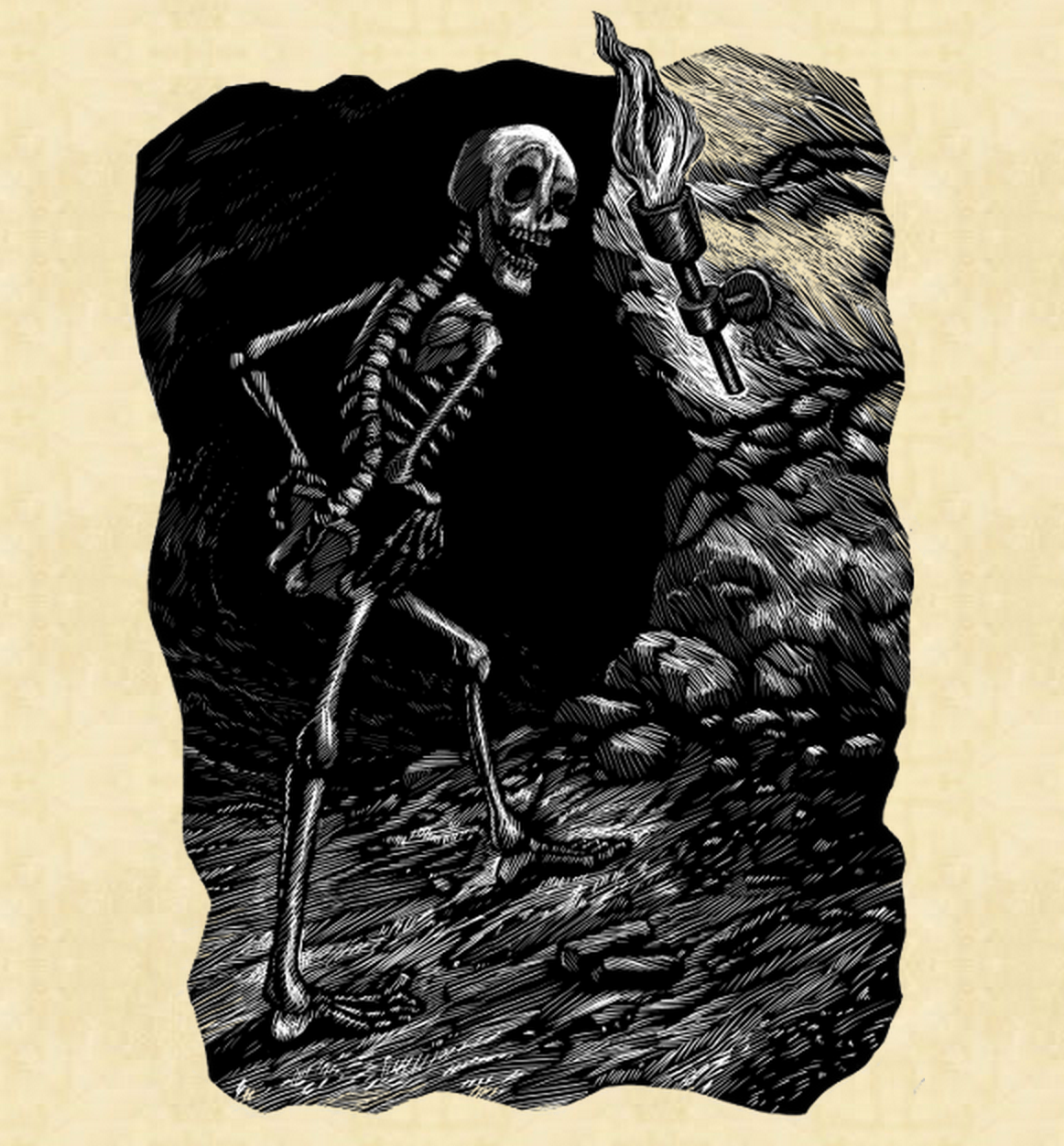
And there are quite handsome illustrations in a sort of woodcut style:

Screen Shot 2015-06-16 at 7.53.59 PM

Book 2 is not the end, either. There’s apparently meant to be at least one more in this series. All the same, Book 2 more or less stands alone, and it would be possible to read it knowing little more than I’ve just outlined.

To go into more detail about the story will require some spoilers, however.

Continue reading “Mrs. Wobbles and the Tangerine House: Book 2 (The Marino Family)”