Mid-April Link Assortment

Events

ParserComp 2022 is soliciting games that use keyboard input:

ParserComp defines a parser game as one where the primary input method is the keyboard, commands are typed in, the computer uses a parser engine to understand commands and then outputs text to screen describing the results.

Games for ParserComp may be submitted from May 1 to June 30.

May 7 is the next meeting of the SF Bay IF Meetup.

The annual Spring Thing festival is now open, meaning that you can play the games and submit ribbon nominations. Nominations will close May 10.

Articles and Videos

AI and Games has a great video on the making of Oskar Stålberg’s procedural toy/game Townscaper and the wave function collapse approach that supported the design.

What does your narrative system need to do?

This is a question that comes up very frequently in the narrative design conversations. This post is a tour of some possible answers.

Select or Generate Content

Content selection systems choose what piece of content to show the player next. They often function on the level of scenes or individual lines or barks in a more freeform story. 

I’m saying least about this one, not because it’s boring, but because it’s a field already under constant and extensive discussion. A majority of conversations about “procedural narrative” are looking at these possibilities.

Manage Player Options

Gating, filtering, and locking systems determine which specific actions are or could be available to the player right now, or that help the player surface possible options to take next if they have a very large possibility space of actions to work with.

They might do things like lock dialogue options or add elements to interaction menus.

  • This Inkle post goes into code-rich depth on their “conversation distributor” approach to generating choices in Overboard! The design and implementation here treats the problem as a content selection problem, but one looks at individual dialogue quips rather than larger units.
  • This post talks about Restless and its interface for accessing options; the relevant portion is towards the end of the talk.

Designers thinking about narrative consequence often think they need to deliver those consequences through content selection – “you did this thing, and therefore there’s a big consequence with story branching!” Unlocking new options is sometimes clearer to players and less expensive to build, though: “you did this thing, and therefore you have the option to take a variant approach later!”

Natural language input systems – whether a text adventure parser or an intent-recognition chatbot or voice interface – are typically trying to map the player’s freeform input to a fixed list of possible actions, or to a combination of possible actions and/or objects. (There are exceptions applying one continuous deep learning model to both understanding input and generating output, but those systems are unsurprisingly a lot harder to control.)

So the whole complex arena of understanding player expressive intent depends on also having a narrative model of what the player plausibly might intend, and what sorts of options the game is currently able to offer. (For added challenge, those two things don’t always match.)

If you’ve read much of this blog, these two categories are likely familiar. The thing I’m most interested in right now, after the fold.

Continue reading “What does your narrative system need to do?”

End of March Link Assortment

Events

April 9 is the next meeting of the SF Bay Area IF Meetup.

April 10 is the next meeting of the Seattle area IF Meetup.

ICCC, the computational creativity conference, is seeking short papers and demos. This can be a great place to send things that play with procedurality, including procedural text, art, and games — do have a look at their past contents if you’re not sure you’d be a good match. Submissions are due April 13.

Mid-March Link Assortment

Events

March 21, I’m speaking at the GDC AI summit (at a fairly silly hour of my morning, but a relatively normal time for US-based people) about the work underlying Mask of the Rose, and especially the way NPC decision-making is exposed as part of the story.

The Foundations of Digital Games conference will be September 5-8 in Athens this year; they invite papers and presentations on topics including game design and game technology, and they also accept playable games and demos to share. Their call for papers is up now: papers are due March 25, while game and demo submissions have until May 27.

The French IF Comp is ongoing, and you have until March 27 to vote on the games. If you are curious but don’t have the time or French reading skills to play, you may like these reviews in English.

March 30, I’ll be speaking as part of the University of Bedfordshire’s Beds Talks: Telling Stories event. The focus of that event is on writing rather than on games per se, so I’ll be talking about what I do from that perspective.

Spring Thing entries are due March 31 — as participating authors are probably keenly aware — but that means that for the rest of us, the new games will become available to play in early April.

April 2 is the next meeting of the SF Bay Area IF Meetup.

End of February Link Assortment

Events

March 5 is the next meeting of the SF Bay Area IF Meetup.

March 21, I’m speaking at the GDC AI summit (at a fairly silly hour of my morning, but a relatively normal time for US-based people) about the work underlying Mask of the Rose, and especially the way NPC decision-making is exposed as part of the story.

The Foundations of Digital Games conference will be September 5-8 in Athens this year; they invite papers and presentations on topics including game design and game technology, and they also accept playable games and demos to share. Their call for papers is up now: papers are due March 25, while game and demo submissions have until May 27.

March 30, I’ll be speaking as part of the University of Bedfordshire’s Beds Talks: Telling Stories event. The focus of that event is on writing rather than on games per se, so I’ll be talking about what I do from that perspective.

Spring Thing entries are due March 31 — as participating authors are probably keenly aware — but that means that for the rest of us, the new games will become available to play in early April.

NarraScope is back this year, and will run online July 30-31, 2022. If you’d like to submit something to it, the deadline for proposing a talk is 22 April 2022.

*

Other Conferences

Perhaps you like the idea of presenting about your interactive narrative work ata conference but none of the above options feels like the right timing or fit.

For academic conferences that take on interactive story and narrative proposals and/or game AI, keep an eye out also for ICIDS 2022 and AIIDE 2022 (I haven’t found a dedicated website for it this year).

Meanwhile, the call for full length papers is closed for ICCC 2022, the International Conference on Computational Creativity, as that conference is happening earlier this year, June 27-Jul 1, but they are likely to make a call for short-form papers soon – so if you think something you’re working on might be a good fit for a short presentation there, you’ll want to check back at their website.

Mid-February Link Assortment

Mask demo!

This month’s link assortment is a few days later than usual; that’s because I was focused in the first half of February on launching the demo for Mask of the Rose, the new game I’ve been working on at Failbetter.

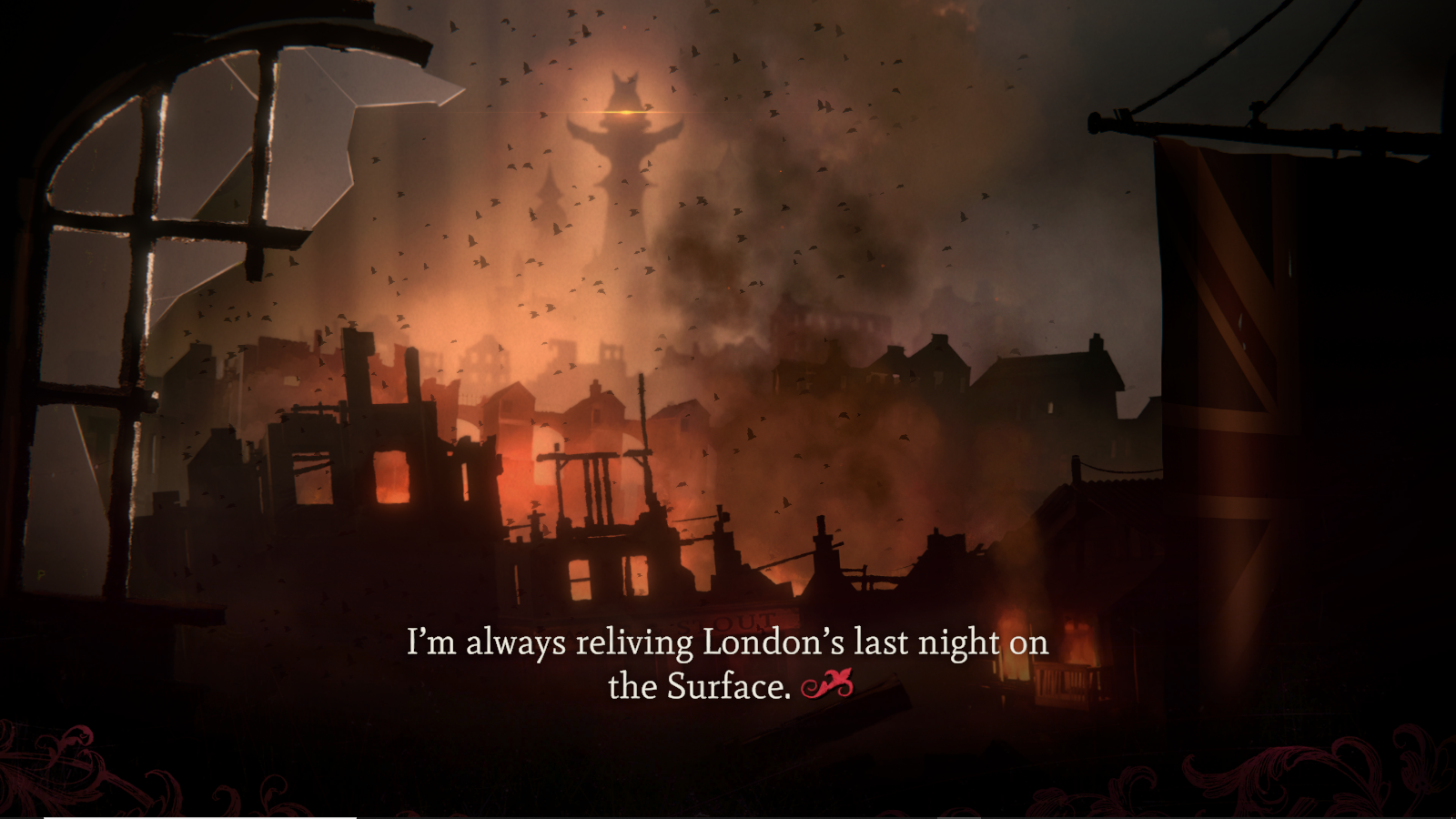
Mask of the Rose is set in the Fallen London universe, but decades earlier than the other games in the series: even if you don’t know the game universe, it would be a safe place to jump in. It’s also much more focused on relationships (romantic and otherwise). I spoke about the project with Fraser Brown for PC Gamer, and that article captures a lot of our thinking about what the game should do.

Mask of the Rose gives you a ground-level perspective on Fallen London.

Even if you’re not a fan of the Fallen London universe, if you are interested in my procedural narrative work, Mask might interest you. The fundamental narrative arc is designed rather than generated, and the vast majority of the text is also hand-written. But in between those layers are a host of systems that handle different aspects of

  • NPC responsiveness – from how they decide whether to honour your requests to how they pose and move during a scene
  • Protagonist characterisation, allowing the player to build out a social persona with different social “moves” available
  • Selection of narrative chunks (scenes and sub-scenes that happen automatically, and those that are offered to the player to explore)
  • Procedural text generation to describe the outfit you’ve chosen each day, or stories that you invent as part of gameplay

I’ll be going into more depth about Mask‘s internal features, and especially the way it makes NPC reasoning into part of the storytelling, for the AI Summit at GDC next month.

Continue reading “Mid-February Link Assortment”