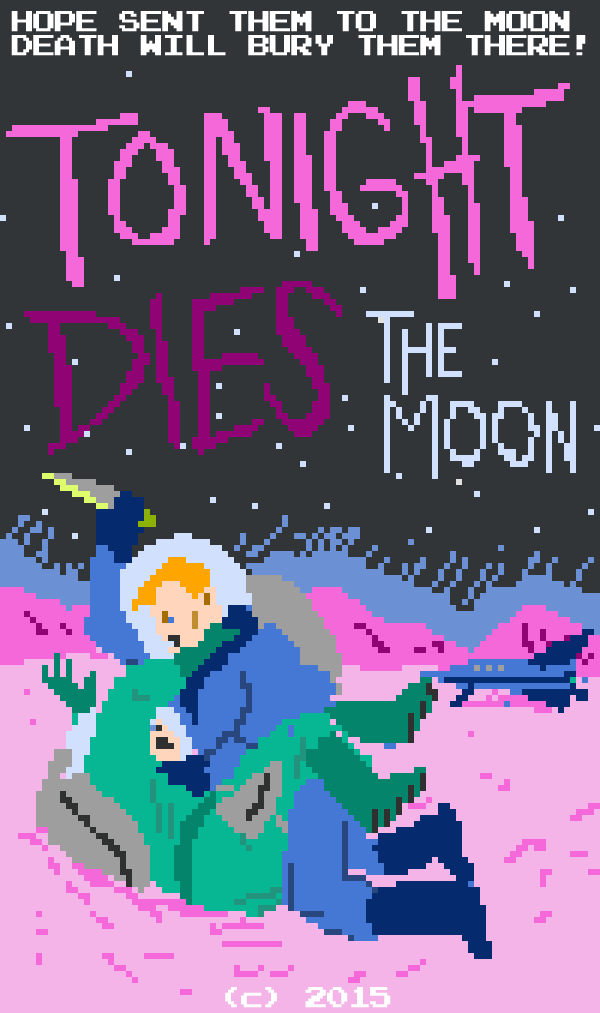
 Tom McHenry is familiar to people who follow Twine as the author of the grotesquely fascinating Horse Master. Tonight Dies the Moon is his Twine contribution to Antholojam, and is a diptych of stories about an ongoing Earth-vs-Moon conflict. It is less narcotically surreal than Horse Master, but it shows many of the same influences and artistic impulses. There is pixelated art, there is resource management more for the sake of the experience of managing resources than because the player can ever hope to gain anything thereby, there are small evocative hints of a large horrible dystopia.
At the beginning of the story, you’re allowed to choose which you come from, and have an entirely different experience depending on your selection.
If you choose the Moon, you live out your life as a space farmer in a roughly communist pod, obsessing over which of about a half dozen crops you should plant each year on your personal allotment. If you save up enough, you can buy a ticket back to Earth, but I’m not sure it’s possible to succeed. I managed to scrape together enough cash to buy a little extra land, but there are arbitrary crop failures and problems, and you periodically need to revamp your farm equipment or your yields drop, and you only have so many seasons available to you. At no point during your Moon life do you attack the Earth.
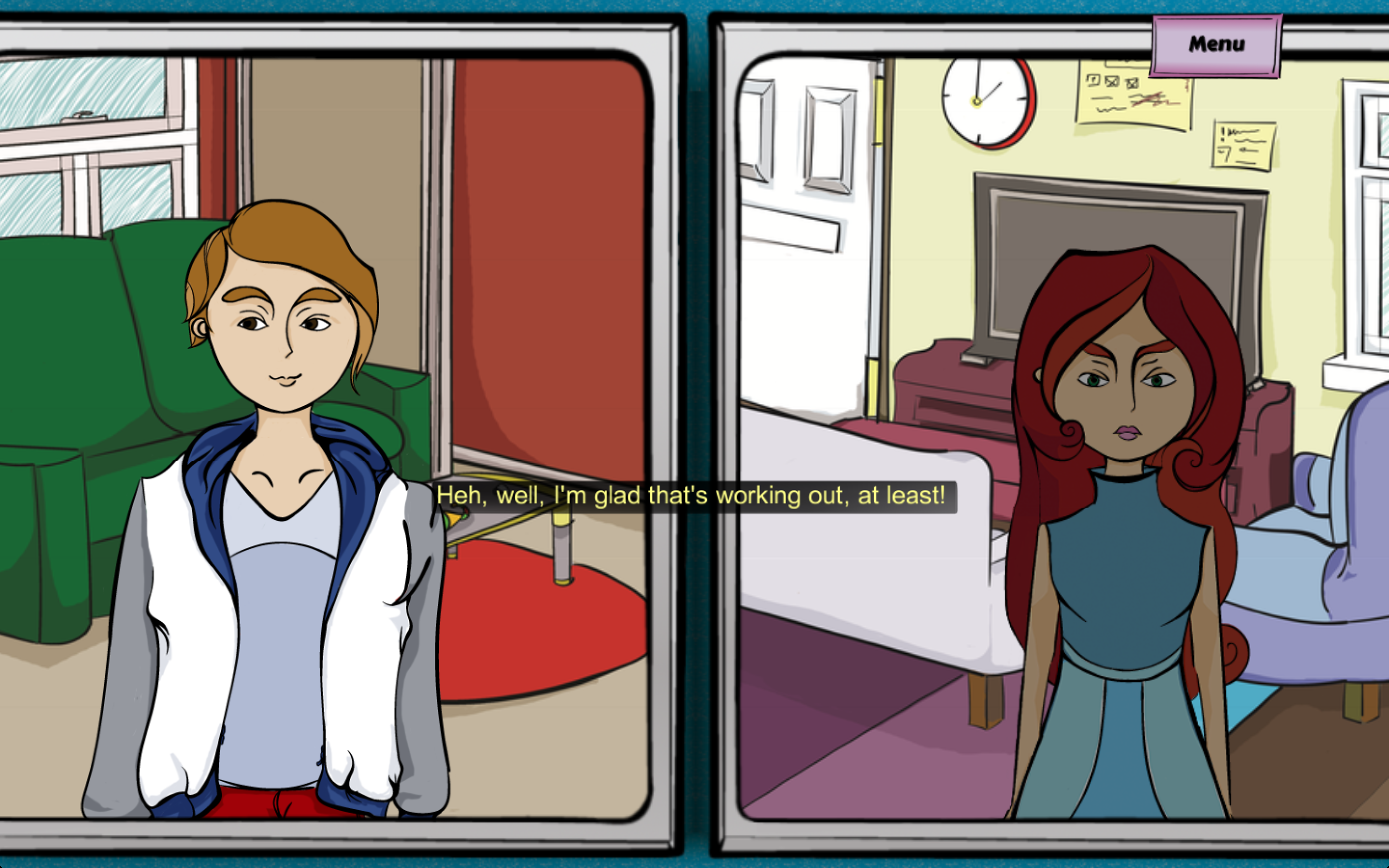
If you choose the Earth, you’re a young person living out a job both depressing and soul-numbingly boring, in which you control a combat drone attacking moon bases. You spend more of your time filling in spreadsheets than you do piloting your craft. Piloting the craft is slow and cumbersome but really easy anyway. It is the opposite of a first-person shooter, a videogame representation of combat that makes it boring and unheroic. Where Unmanned takes on the moral dimensions of drone warfare, Tonight Dies the Moon comes more or less from the starting point that it’s pretty horrible even without considering the experience of those being bombed. Though, of course, one should take that into account.
Both stories are less lonely than Horse Master. The Moon protagonist has fellows in ger living environment; the Earth protagonist has roommates and parents. This gives McHenry a little more scope for individual characterization, and he uses it well. The awkward conversation with the Earth protagonist’s parents is highly plausible, touched by love and anxiety and resentment in both directions. It can go well or badly, depending, though it may not be immediately obvious why, and this too feels accurate to family relationships, especially in transitional young adulthood.
Slightly more spoilery discussion after the jump, but for my tastes, this is one of the best Twine pieces I’ve played this year.

 Emily Short's Interactive Storytelling