18 Rooms to Home (Carolyn VanEseltine): rooms 18, 17, 16

Carolyn VanEseltine is releasing a serial parser IF project called 18 Rooms to Home. The serial is working backwards in time: Room 18 was released first, than Room 17, then Room 16. So Room 18 represents the ending of the story, the point where the protagonist has arrived at home. Room 17 starts you in the room just before you get home, but includes the 18th room. Room 16 is a three-room game that, again, starts a bit earlier than Room 17.

This backwards, Memento-esque story structure might seem counterintuitive in IF, especially since it makes the player replay the story’s ending over and over. But Carolyn is doing something very ingenious with it. In Room 18, there is, as far as I can tell, only one way that the story can end. Room 17 introduces new information, skills, and possibilities, which in turn means a new possible outcome. Room 16 layers on yet a third (at least — it’s conceivable, I suppose, that there are even more variations I’m not aware of). Even when the player gets back to a room or prop she’s already seen in a previous episode, there are new possibilities.

This in turn does a great job of building up the player’s sense of consequence. Even when there are a lot of branches in a traditional-format story game, there’s no guarantee that the player will see all the variant endings, or that she’ll realize all the points at which branching could occur. But playing through 18 Rooms an episode at a time means learning exactly what is allowed to go differently, and why, as more and more past branch points are introduced.

As for the story itself, much remains shrouded in mystery at this point, but it seems to involve competing powers — whether superhero-style powers, or something more Nobilis-like and mystical, I am not yet entirely sure. I’m enjoying guessing, though, and staring at props in certain rooms that aren’t useful currently but that might become useful at some future date…

If you decide to play and speculate along with others, there’re a couple of related threads (hints, general discussion) on the intfiction forum. Selfishly, I am hoping that others will help encourage Carolyn to finish the project — I really want to see where it goes…

Cinders (Moacube)

only it was really too inconvenient, you see,
not least when it shattered on the staircase
I was running up to catch the last train…
Apologies for Breaking the Glass Slipper, Isabel Yap

When I’m drawn to adapt a traditional story to interactive fiction, it’s often because there’s something about the original that bothers me so deeply that I feel I need to address it. Part of the reason I rework fairy tales is that I have such a love-hate relationship with them: I was raised on them, read them avidly as a child, but consider them to have been terrible guidance in many many ways. Especially, especially, the Cinderella-style model of passive virtue for women that said, Don’t complain if people aren’t giving you your fair share. If people ask too much of you, comply anyway. Put yourself last in all circumstances. Endure anything that comes your way. Never speak up for yourself. In the end, your patience may be acknowledged and rewarded by someone else, but not, of course, at your own instigation.

This bit of feminine cultural programming is grotesquely unhealthy, not only because it subjects the model Patient Woman to a lot of unnecessary suffering, but because it actually makes it hard for other people to treat you well or for resources to be sensibly allocated. Other people cannot be expected always to guess accurately what’s a reasonable thing to ask of you and what’s an unfair imposition. When they ask something that’s an imposition, a lot of the time they’re relying on you to say no if no is the appropriate answer. If you don’t ever push back, you cast other people as the villains in your story without their necessarily ever intending to have that role. If you never say no, you allow your time to be spent frivolously on things that might not even matter all that much to the asker, instead of on things that might make a big difference elsewhere.

I’m still fighting to reprogram myself. I think maybe other women sometimes are too. Cinderella, I notice, gets retold a lot from the perspective of women who are trying to make the lead character a little less passive, a little less obedient. Rosamund Hodge’s novella Gilded Ashes explains Cinderella’s cooperation through a novel twist: the ghost of Cinderella’s mother still haunts the area, and reacts with such terrible vengeance towards anyone it perceives making Cinderella unhappy that the girl has to feign a good mood all the time, or face being responsible for the violence that will result.

Then there’s Cinders.
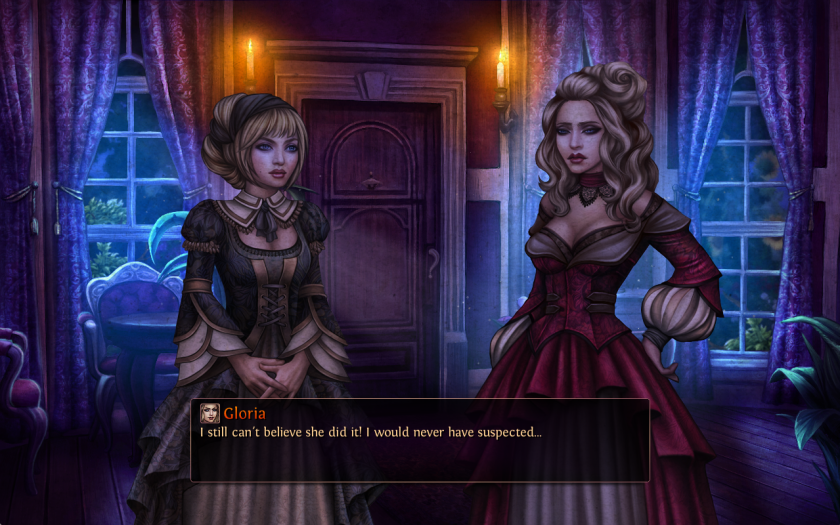
Screen Shot 2015-05-06 at 6.21.50 PM

Cinders is a visual novel adaptation of Cinderella that takes a shot at this same issue. It’s been out for a few years, but recently a friend gave me a Steam key for it, so I only played a month or so ago. It has a lot to commend it: the art is very attractive while not belonging to the usual anime categories; the story offers a high number of branches and subbranches; and the whole thrust of both story and mechanics is to interrogate the “be quiet, put up with being bossed around, and eventually you’ll be rewarded with a man” message of the original fairy tale.

This Cinderella has the opportunity to be passively obedient (“good”), assertively selfish (“bad”), or “smart” (here’s a spoilery breakdown of how stats are distributed over the course of the game). Being smart is usually a third-way path that acknowledges nuance and complexity in interpersonal matters while rejecting fantasies and delusions about magic. The conventionally “best” outcome, where Cinders marries the prince and then presides over a happy kingdom, requires a balanced behavioral profile. And whatever happens, the Cinders in this story doesn’t get any outcome without working for it.

I think there’s still further to dig into the Cinderella problem — the difficult thing in my experience is not so much about whether one should sometimes stand up for oneself, but about when, and how, and how to balance other people’s needs with yours when you’re out of practice making that calculation, and how to deal with the emotional fallout of standing up for yourself when you’re still counting your own “virtue” in terms of the number of other people’s tasks you did today.

Nonetheless, I enjoyed the spin Cinders put on this old problem, and the fact that some of the happy endings didn’t wind up joining me with the prince at all, but let me have other lovers, or solitude, or even something approximating a career.
So You Want to Write IF: A Party Game for LudoLunch

LudoLunch was a game designers’ picnic lunch held in Christchurch Meadow yesterday by Simon Roth, Nia Wearn, and compatriots. (Edited to add Nia — apologies for leaving her out initially, as I hadn’t realized she was co-organizer here.)

Simon asked if I would talk about interactive fiction, and it only really hit me after I accepted that the parameters of a family picnic ruled out most of the kinds of intro IF talk I usually give. We wouldn’t have computers or projection screens or wifi, so I couldn’t teach Twine or inklewriter or Inform. I couldn’t run Lost Pig or Aisle, or do a slideshow overview of recent or canonical IF. Even some non-techy options were out too: it can be fun playing through good paper CYOA books in a small group, taking turns reading passages aloud, but that’s more a 2-6 person activity, and ideally done someplace quiet enough that no one has to shout. Besides, I wanted to communicate something about the diversity of current IF and the appeal of creating it. This was a dev crowd, after all.

Finally, this was a family event including small kids, which meant a) attention spans were likely to be shorter and b) it wasn’t the ideal place to do a presentation on, say, Horse Master, or queer sexualities in interactive fiction, or IF explorations of the problems with late-stage capitalism.

Below is what I came up with: a casual party game meant to give a partial taste of what IF writing involves, and hint at the diversity of IF games out there in the world, while being as flexible as possible about the audience size and composition.

Continue reading “So You Want to Write IF: A Party Game for LudoLunch”

Language and the Interface exhibit

Galatea at Coimbra

Language and the Interface was part of the international conference “Digital Literary Studies” hosted by the School of Arts and Humanities at the University of Coimbra, May 14-15, 2015. They showed off a number of text-based interactive works, including Galatea, 18 Cadence, and Facade.

The website offers extra background on all the exhibits shown, and links to many of them to play online. I was particularly amused by the underachiever’s platformer Nothing You Have Done Deserves Such Praise, which offers explosions and lavish compliments when the player manages to do things like falling off a ledge — but there’s a lot else to check out here, especially for those interested in interactive poetry and the less game-like relatives of interactive fiction.

Interactive Fiction Fund Titles

The Interactive Fiction Fund is a patron-supported initiative run by Javy Gwaltney to commission new works of interactive fiction each month. Because of the amount of funding and the timeframe, these tend to be short, choice-based pieces. Patrons get access to each new piece as it is finished, and the author then has the option of arranging to sell it on otherwise. If you too would like access to these when they’re published, though, you can sign up to the Patreon.

So far, there have been five IFF works, one for each month from January to May of 2015.

Continue reading “Interactive Fiction Fund Titles”

May Link Assortment

Carolyn VanEseltine has an excellent post on techniques for debugging ChoiceScript projects, both using ChoiceScript’s own tools and adding some hacks of Carolyn’s invention to display possible stat ranges.

*

Issue 3 of IFography is out, including reviews of a number of the ParserComp games, a detailed overview of which IF systems play best with mobile devices, an interview with Carolyn, and various other treats.

*

Meanwhile, the venerable SPAG has published its 62nd issue — the first full issue in quite a while — featuring capsule reviews of a number of recent IF releases, as well as articles on (among other things) translating English-language IF to German and the links between IF and improv theatre.

SPAG also seeks articles for future editions, so if you have an IF-related article in you, check out information on how to pitch.

*

sub-Q is a forthcoming magazine for F/SF/horror interactive fiction; they pay pro rates and are open to submissions starting June 1. The editor-in-chief is Tory Hoke, whom some may know from Ziva’s Conjury Mart.

*

The IGDA Game Writing SIG (Special Interest Group) is running a contest/jam for writing in games, running from June 1-30. Twine, inklewriter, and other IF engine games are welcome, and the games will be judged primarily on their text. Details here.

*

If you want a cameo appearance in a Choice of Games piece, they’re auctioning off the naming rights to four characters in different upcoming stories. The funds raised go to support services for homeless youth.

*

Porpentine has a big collection of her work from the past few years, compiled together and enhanced with director’s notes, on Steam Greenlight.

*

The Art of IF Collective blog talks about art for visual novels, and I was particularly interested by this post on a kinetic-novel recasting of Faust with both Faust and Mephistopheles pictured as female.

*

There’s a good intfiction thread on how to build hints into game puzzles — Jenni Polodna’s post is particularly worth checking out.

*

Andrew Plotkin has a teaser up for something called The Flashpaper War, coming “later this year”. There is not a huge amount of information available at this time, but it’s something to keep an eye on if you are a fan of zarfian works.

*

Here the Short Game podcast covers IF, especially the Spring Thing entrants.

*

If you’re looking for an IF engine, Matt Chelen has provided a big spreadsheet of options, including information about the formats they’re able to build, rights to release stand-alone games, level of complexity, and how recently the tool was last updated.

*

Here’s Mike Lazer-Walker on creating games with specialized, custom controls — in this case, 19th century telegraph hardware. While interactive fiction has mostly moved in the direction of greater accessibility and play on a wide range of devices, there are a handful of projects that have gone the other way: the Choosatron, the Automatypewriter, the original suitcase version of the Black Crown Project. It’s hard to deny the appeal of this kind of project despite all the challenges of getting it in front of an audience.

*

Here is a piece about Rust, the online game that assigns skin tone arbitrarily-but-permanently to players. This strikes me as a fascinating experiment, though one whose results are depressingly pretty much what I would have expected.

*

Austin Walker writes about what it means for Twine to be accessible, and the ways in which it is still not entirely so.

*

Catt Small writes about how to organize diversity-focused events.