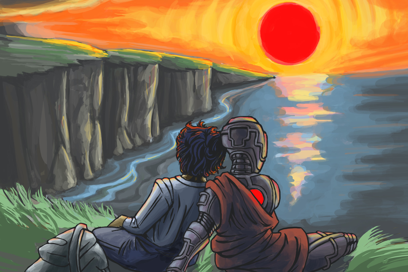
Choice of Robots is a recent large-scale Choice of Games piece: you take the role of a gifted young graduate student in robotics, about to make significant breakthroughs in your field, generating a line of robots that might become surgeons, soldiers, companions, factory workers. Your choices include design decisions for the robots and business decisions about how to manufacture and sell them, but also personal decisions about how to relate to your robot creations, and what you think it all means. The scope of your activities is such that you may find yourself flying to Shanghai to take meetings, or spending months in a military jail, or preventing the invasion of Taiwan — and along the way it’s pretty likely that you’ll also make a considerable personal fortune, which you can choose to spend on luxuries, philanthropy, or a mix of things.
Category: Reviews
Choice: Texas (Carly Kocurek, Allyson Whipple, Grace Jennings); The Spare Set (Rob Sherman)
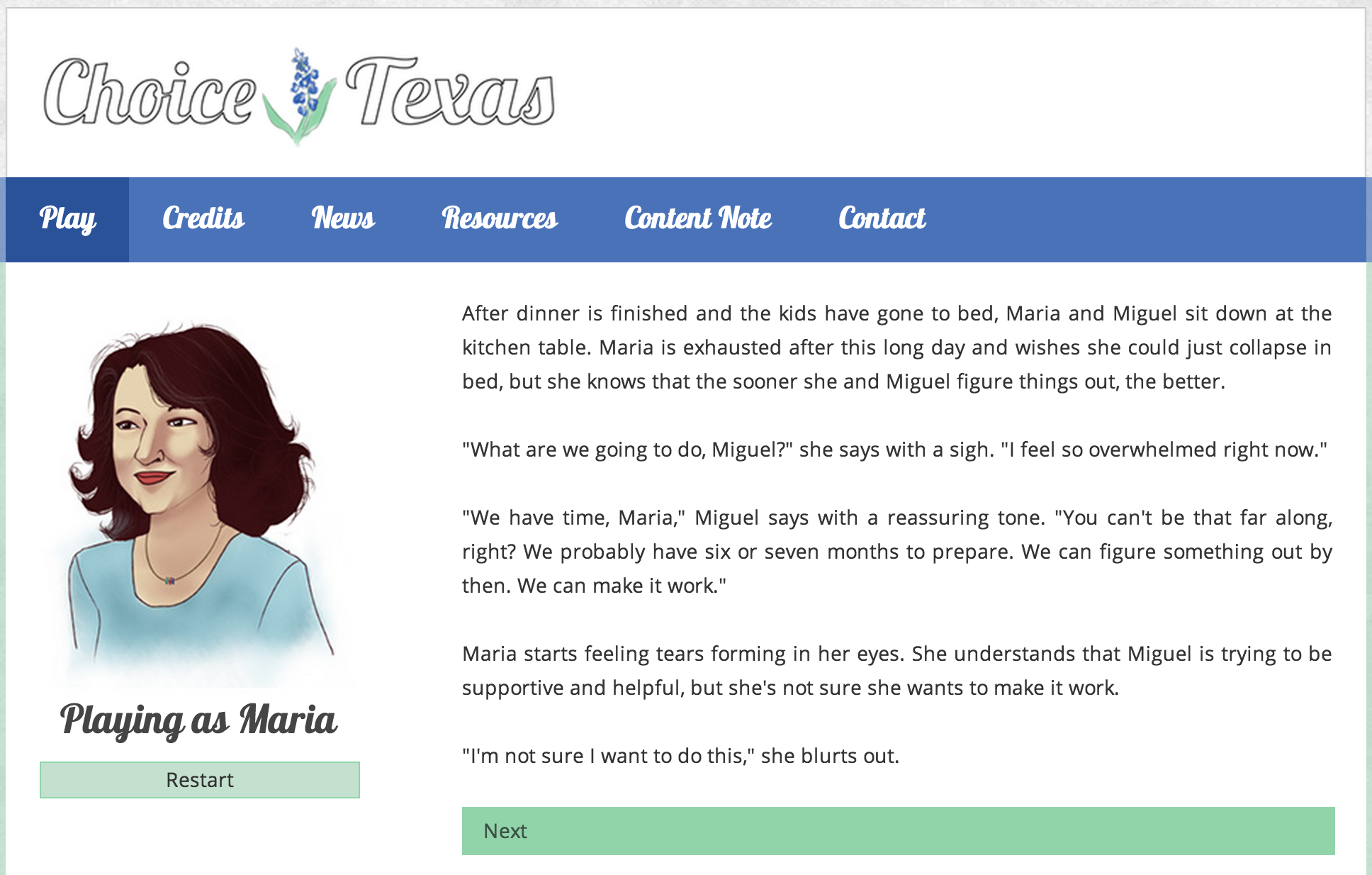
Choice: Texas is a game about options for women in Texas who are facing unwanted or problematic pregnancies. It’s carefully researched and non-generic: there’s lots of information about costs, complications that apply to different situations, the rules for open and closed adoptions, the legal requirements that determine access to abortion, and quite a bit else.
There are five different protagonists, each with her own unique and branchy tale: a Hispanic mother who already has three children, a career-oriented black woman who faces a loss of opportunities at work if she stays pregnant, a teenager whose parents are anything but supportive, a victim of sexual assault, and a woman whose planned and longed-for pregnancy has turned up serious fetal abnormalities. Some of these characters have loving partners and good health care options. Some don’t, so much.
Life’s Lottery (Kim Newman)
I mentioned Life’s Lottery a few times in my article on Nicholas Bourbaki’s If. Like If, Life’s Lottery is predominantly a novel rather than predominantly a game; it too concerns the many possible directions a life can take.
Life’s Lottery is an older piece, first published in 1999; it tells the story of a young man growing up in southern Britain. The details of his life chime with stories I hear from my in-laws: the critical importance of the Eleven-Plus exam in deciding which school you’ll be tracked into, Doctor Who on television, decisions about O-levels and colleges and universities, the Falklands war and the ascent of Thatcher.
A(s)century (Austin Walker)
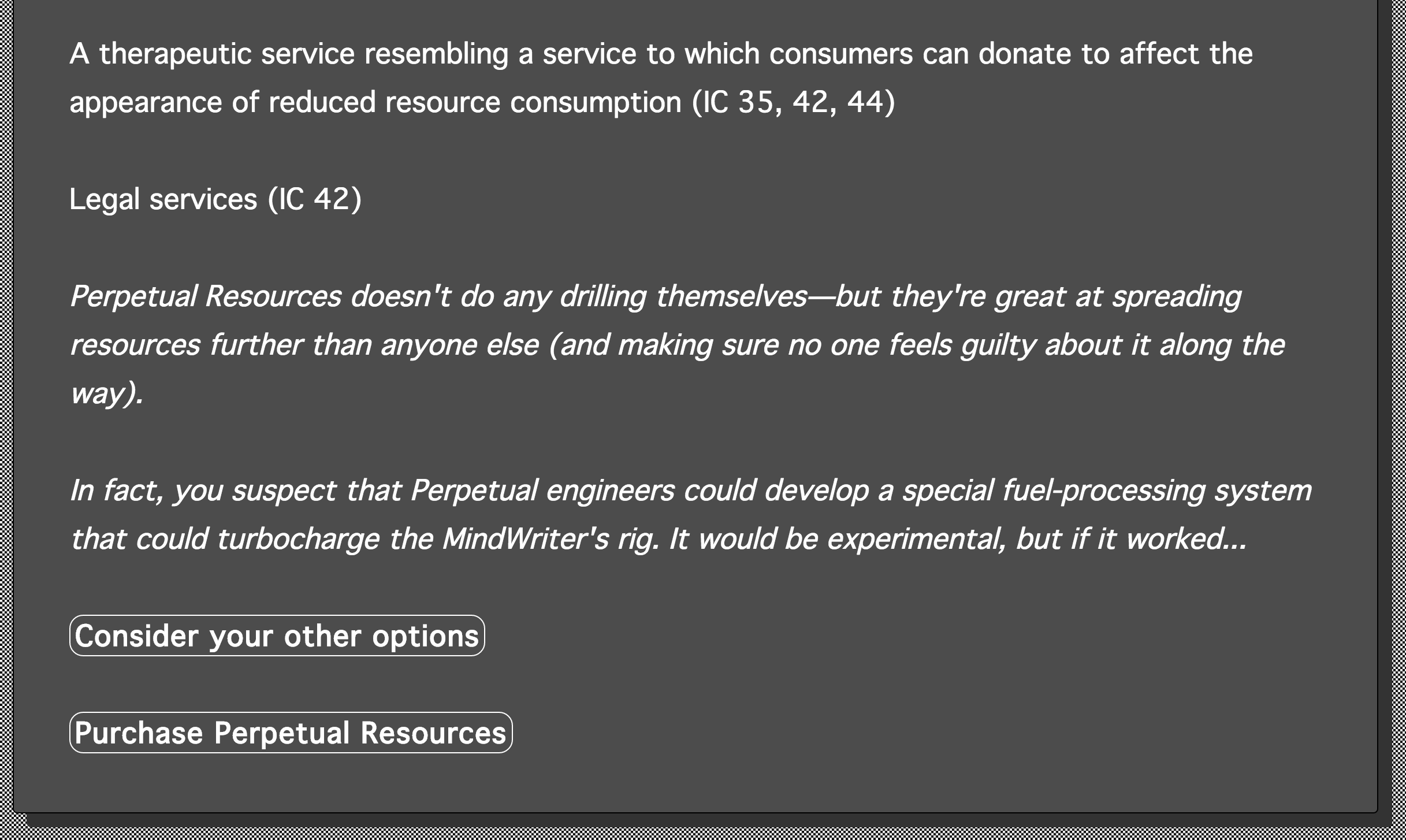
A(s)century is a cyberpunk Twine piece about a dystopian future in which the line between corporation and government has been wholly erased, and your job (at least initially) consists of writing ghastly corporatese copy for various advertising purposes. It’s dark satire — often very dark, with companies that offer tourist services to view the end of a species going extinct, and “therapeutic services” where people can donate to pretend to themselves that they’re doing something to help the world, even though their donations do nothing and mean nothing. Workers are interchangeable and disposable, the line between human and AI gradually erased. Creative workers are referred to as “crates” and are treated about as well as that naming might imply.
Hatoful Boyfriend
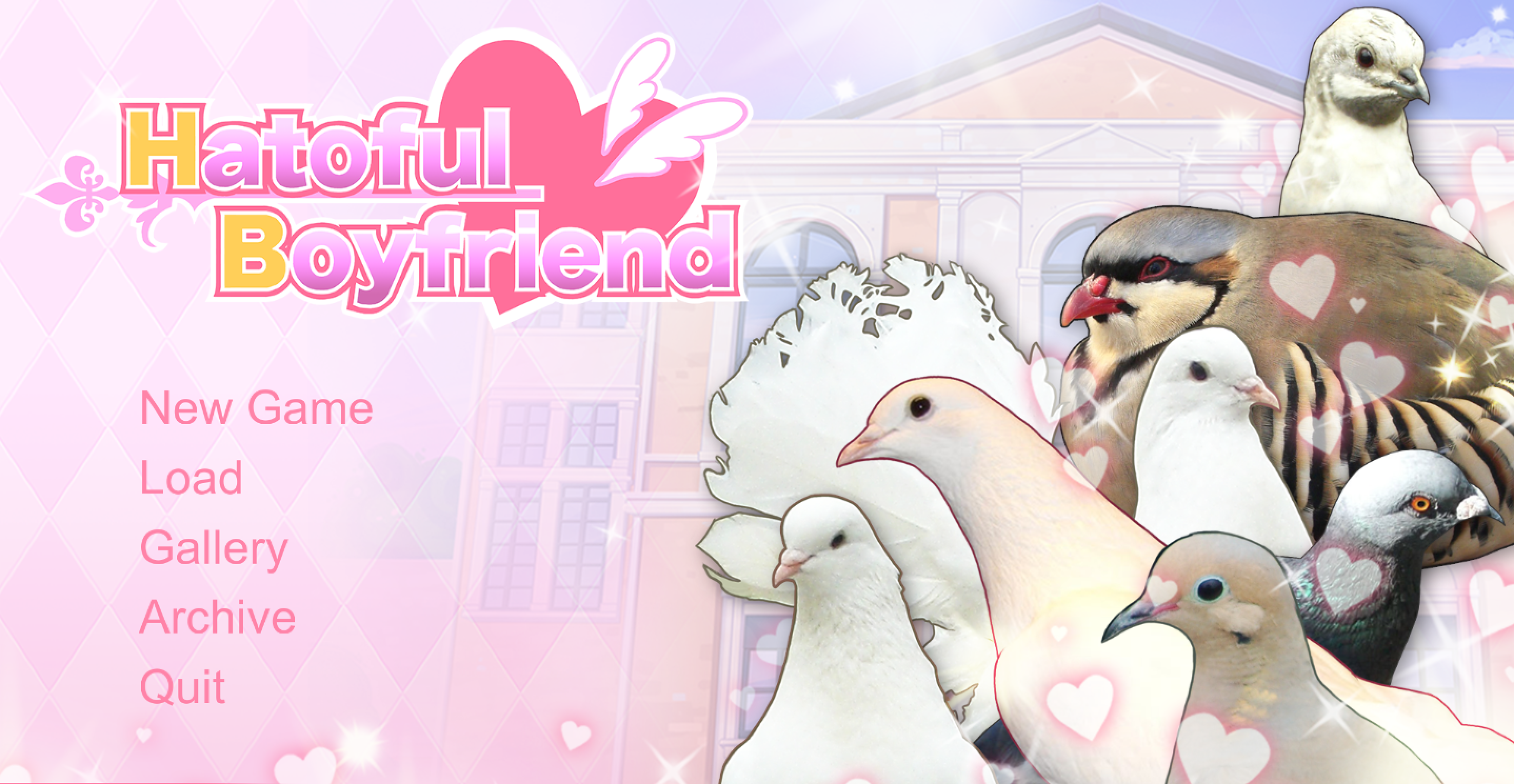
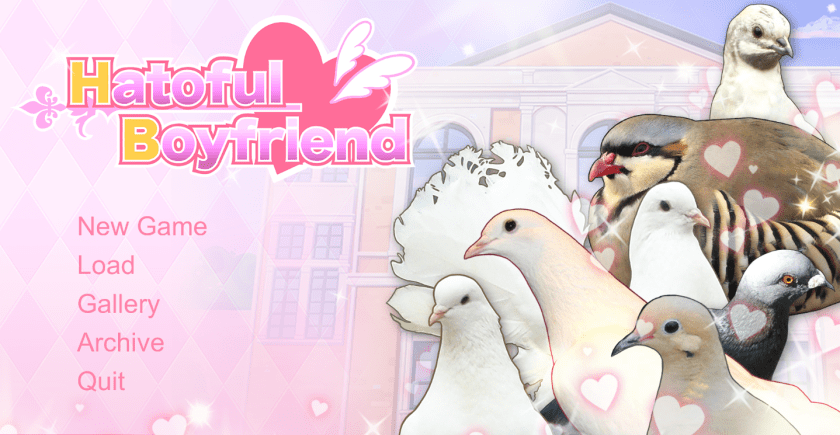
Hatoful Boyfriend is a visual novel of the dating sim genre(ish), in which all of the possible romantic leads are birds. You are a female human attending an otherwise all-bird school, and you have your choice of pigeons, quails, and doves, each possessing a characteristic personality. What initially seems like a whimsical premise gradually develops a bit more depth; there’s even a website devoted to the writings of a prominent in-world pigeon blogger.
Quite a lot has already been written about Hatoful Boyfriend, often by people more familiar than I am with visual novel conventions — though the visual novel community, like the gamebook community, often seems so relevant to interactive fiction that it’s a little mystifying that there isn’t more communication. As with many other dating sims, the game is designed to be replayed to unlock new content: you begin by romancing different suitors and finding out their secrets, which then allows you to access a different ending to the story. In contrast with a lot of “ultimate ending” finales, though, the unlockable content in Hatoful Boyfriend is both much longer than the per-suitor stories, and of a different genre: a horrific mystery, rather than a romance, and one that does a lot to explain how a world of sentient pigeons has come about.
I couldn’t help thinking as I played about some of the arguments in Creatures Such as We, especially the idea that it’s hard to explore consent in a game in which all NPCs are prizes for the protagonist. With Hatoful Boyfriend, I felt that I was experiencing the opposite effect of this: the game expects you to play many times, and each time you must mold the protagonist in order to suit the tastes of the bird she’s pursuing. There are only a few characteristics of hers that remain absolute, such as her vitality and love of running (and that proves to have an important plot relevance, eventually). Otherwise, a lot of the potentially freighted moral choices dissolve with repetition and the fact that she has to take different sides of each issue depending on whom she wants to impress. The cumulative effect, at least for me, was that the protagonist came to seem less and less important, even as my playerly understanding of the other characters increased.
But then — well, let’s give this a spoiler jump first.
Necklace of Skulls, The Sinister Fairground (Cubus Games)
Cubus Games is a maker of gamebook apps, and they have released a version of Necklace of Skulls by Dave Morris as well as a game called The Sinister Fairground.
In both cases, I felt that the UI was a bit clumsy and a bit unpolished, compared with the sleekness of 80 Days and inkle’s other work, or the splashy dynamism of Tin Man Games’ Appointment with FEAR. When you encounter new objects in the text — things that you might write down as keywords in a paper gamebook — you have to tick off a checkbox to acknowledge them as part of your inventory. I didn’t realize this in my first playthrough of Necklace of Skulls and got really confused about why I seemed to be missing objects that the text said I possessed; and indeed it’s not quite clear to me why it’s useful to make the player do this.
Along the same lines, the navigation through the helper pages for Necklace of Skulls (map, items, journal, checkpoint, table of contents) had me thoroughly confused and tapping in circles: there isn’t a clear hierarchy of how these pages relate to one another, and the icons and back buttons don’t all do quite what I would have expected.
Continue reading “Necklace of Skulls, The Sinister Fairground (Cubus Games)”