Odyssey Jam


The Odyssey Jam was an itch.io jam running through March 26 for works based on The Odyssey, drawing ten games, predominantly interactive fiction and visual novel entries. Here are some thoughts on the entries:

islands & witches (Inform) has the player wander a maze of evocative locations from the Odyssey, occasionally collecting items, but mostly drifting from place to place. As the title islands & witches somewhat implies, there’s a focus also on the female characters of the story, many of whom have at least a few lines of dialogue when you encounter them in their various homes.

>s
Underworld
The air smells of lilies and blood. It is always just past sunset. There is a three-headed dog, spotted like a hyena, lying nearby. A iron double axe-head with dried blood on its blade is sticking out of the rocky ground.
Persephone is still here. All men must come to the realm of the dead one day, but you had hoped to find your way home first, even perhaps to know your name would live glorious beyond you. “How lovely to see you.” Persephone announces, as if to her court. You feel welcomed, perhaps excessively.


Although I did eventually reach Ithaka, I never figured out how to make Penelope pay attention to me, or work out what I should do with much of the game’s inventory, including a beehive and a rosemary branch. (I did make a makeshift torch, but it didn’t seem to matter that much?) So I wasn’t able to finish the game, and I’m not sure if there is a conclusion, or if I left some puzzles unfinished.

For writing and feel, though, this was one of my favorite submissions, and I could see it being expanded and polished if the authors are so inclined. It reminded me a little of Victor Ojuel’s Pilgrimage: large areas contained in a single room description, and vast sea-spanning voyages undertaken in a single move.

Continue reading “Odyssey Jam”

Choices: And the Sun Went Out (Tin Man Games)

IMG_0330Tin Man Games has an app called Choices — rather confusingly, since there is another well-known mobile IF platform called Choices that I wrote about recently. Tin Man’s Choices app contains two episodic stories: And the Sun Went Out and And Their Souls Were Eaten. [As always, I should frame the rest of this by saying that I have done some work with companies that compete in this space. Be warned, if that is a concern to you.]

Like the other Choices and Episode, Tin Man’s content is initially free to play, but handles monetization differently: after a certain point, you’re invited to subscribe to the app to receive additional chapters, rather than paying to unlock specific choices in the body of the story. You can buy a monthly, quarterly, or half-yearly subscription, but they all are subscriptions, with recurring payments — something that generally puts me off unless I’ve decided I definitely want to commit. I tend to forget to cancel subscriptions I no longer want and then six months later remember to go clean up, having accidentally spent $40 on an eFax service I only wanted to use once. On the other hand, it’s a clear pay-for-content model rather than pay-to-win or pay-to-seduce-Chris. So I approve in theory while still being a little hesitant about committing money to it in practice.

IMG_0329Tin Man’s Choices also borrows some Lifeline-esque features: in And the Sun Went Out you have an assistant AI called Moti who tells you what to do, forming a conversational interaction; apparently if you have an Apple Watch, Moti’s messages can appear there as well. (I don’t.) There’s a conversation partner in And Their Souls Were Eaten, too — one I found considerably more surprising and entertaining. But I won’t spoil that.

Tin Man has polished their interface a bit less than any of the competitors I just listed: one of the major challenges for me was simply the font size: tiny white writing on a black ground meant that I had to hold the phone pretty close to my face. There is a settings option to turn up the font size, but I only discovered this after quite a lot of squinting — I mention this now so that other readers have the opportunity to make that change early on. And in contrast with the other Choices and Episode, there are occasional facial animations for Moti, but otherwise, you don’t see the characters you’re interacting with, let alone get full-color background images.

And what of the content? It’s comparatively branchy and plot-heavy, focused more on how you navigate various dangers than on either role-play or relationships. And the Sun Went Out branches hard right at the beginning — do you visit this character or that one? — and you don’t have time to reach both of them before the story starts to move along.

It is also huge. Felicity Banks was one of the several writers on this project, and wrote to me:

It’s a near-future sci-fi story with literally thousands of choices for the reader to make including where to travel around the world (featuring, among other nations, the US, Peru, Canada, Kenya, Italy, China, Russia, Indonesia, Australia, Japan, and Egypt) and who to fall in love with (or not). It is just over 600,000 words, and each read-through is about 150,000 words. It’s a branch and bottleneck structure, with around 2-6 branches happening simultaneously between bottleneck choices.

For comparison, even large Choice of Games pieces like Choice of Robots are typically in the 200-300K word range, while Choices and Episode pieces are generally much shorter than this.

Continue reading “Choices: And the Sun Went Out (Tin Man Games)”

Mid-March Link Assortment

Events and Deadlines

March 17, Atascadero, CA, there is the first of several classes for students 9-16 in writing IF.

March 22 and 23 in Montreal, there are two performances of Bad News, a human-mediated interactive drama that relies on information generated by a Dwarf-Fortress-esque simulation. The simulation is rerun each time someone plays the game.

March 25, Brussels, I will be speaking at the Passa Porta festival as part of a panel with Joost Vandecasteele and Gaea Schoeters about digital literature.

Odyssey Jam, a text game jam which takes inspiration from the Homeric epic, is running from now until March 26.

March 29, 7:30 PM, Cambridge UK, Rob Chant leads a meetup of the Camcreatives group on creating interactive fiction. The group meets at Hot Numbers.

April 1, 1 PM, the San Francisco Bay Area IF Meetup gathers at MADE.

April 2 is the deadline for games to be submitted for Spring Thing.

Also April 1, at the V&A in London, there is Contemporary Board Games Study Day, coordinated by James Wallis and offering curated games to play and talks from designers. It runs from 10 AM to 4 PM and costs £20 to attend.

April 5, 7 PM, the Oxford-London IF Meetup hears from Ian Thomas on the art of LARP and lessons we might draw from that for interactive fiction. We’ve chosen a central location in London for this event.

April 6, Spring Thing games become available for everyone to play.

And it’s some way off, but indie games conference/festival Feral Vector will run in Yorkshire June 1-3. If you go, I recommend booking a place in the adjacent hostel: most other accommodations are further away, more expensive, and less fun. (Exceptions: if you sleep badly in shared rooms, or if you have small children, that might not be a good fit. But evening conversations with fellow hostel-goers are a highlight of the conference.)

Text Club, an IF reading group, has launched over on imzy. They plan to make their way through several games per month and discuss them both separately and in relation to each other. Text Club’s first readings for March are Chandler Groover’s Midnight, Swordfight, S. Woodson’s Magical Makeover, and Emily Ryan’s Secret Agent Cinder.

Announcements and Releases

StoriesUntold.jpg

Stories Untold, by Devolver Digital, has been released on Steam.

Astrid Dalmady has released Role for Resistance as part of #ResistJam; there are several other text-based entries, though I haven’t had a chance to look through extensively.

inkle has announced their forthcoming game Heaven’s Vault, which looks frankly gorgeous.

DINE is an interesting experiment in text-input IF without a traditional parser or world model. As it’s picking the next best answer from a sequence of authored outputs, it’s not particularly designed to handle complex puzzles of the classic Infocom style. Anyone can add to the collection.

And François Coulon’s delightful The Reprover is available to play in a web-based form. This piece is a mix of interactive video, text, and music, available in French or English, about a world in which people hire professional reprovers to disapprove when they go off their diets or indulge other bad habits. The piece is very much its own thing; I wrote a lot more about it back in 2008 when it came out, but it’s been hard to recommend to people recently because it’s been a challenge to get running. Now you can play it again!

Podcasts and Articles

Netflix is bringing out shows with branching narrative, and journalists are reacting with loads of Ebert-fallacy responses. This is not to say that Netflix’s application of interaction is guaranteed to be good, but there are a lot of ways in which it could be good. This article from Thomas McMullen gives a somewhat deeper dive based in more knowledge of interactive stories in games.

Austin Walker’s Idle Weekend podcast for March 6 talks about Aisle and Galatea along with a number of other story-related games.

Here’s Emily Gera on the nostalgia factor in Stories Untold.

And Alastair Horne on various types of interactive and location-based fiction.

Here’s a free GDC 2017 Vault talk where Christine Love talks about the dev process for Ladykiller in a Bind (starting about 31:30), including a brief view of the tool she used to write for the unusual dialogue system.

I didn’t write this piece on being female and post-35 in the game industry, but oh boy does it resonate.

Choices, Episode

There are several thriving brands of inteThe_Freshman,_Book_1ractive fiction on mobile that tend not to get a huge amount of coverage in the traditional IF community, despite their large player base. They’re placing well on the app store, though, and GDC talks increasingly cover them — so I went and had a look at a couple of the main contenders.

I should preface further discussion by saying that I have occasionally worked with mobile IF companies that might be considered to be competitors in this space. I did not spend any money on either of these games, though this does not mean I had review copies: they’re free to play with pay-to-unlock options in some places (and I’ll come back to that later).

Choices, from Pixelberry Studios, is a library app containing a bunch of different stories aimed at teenage girls. The top promoted story is The Freshman, and details the main character’s dating options in college.

IMG_0308It’s immensely trope-y stuff, especially if you got your tropes from 1955: running into a boy and having your luggage pop open, revealing (gasp) a bra! Exploring your suite, meeting suite-mates, and deciding whether to wear a bikini in your first encounter with your classmates. Playing getting-to-know-you games, deciding whether to drink or not. At least in the first few chapters, it’s an entirely social and low-friction vision of what college might be like, without the intellectual challenge, the self-discovery of being away from home and family, or the stickier kinds of interpersonal conflict.  (Perhaps it gets more complex later — I only played the first few chapters.)

Gender roles are stereotypical, and although I was able to choose a black protagonist, it looked as though the character art still featured her mom as a middle-class white lady at one point — which is of course possible, but it didn’t feel like an intentional storytelling choice at the time.

crownflameVanilla college is not the only option. Choices also offers several other books. There’s Rules of Engagement, in which the protagonists are aboard a cruise ship and forced to try to find love there thanks to the terms of a wealthy grandmother’s will. While that sounds pretty silly, I’m not sure it’s really a lot more ridiculous than many a romance novel I’ve encountered.

The Crown and the Flame is a fantasy story of a dispossessed princess and the male sidekick who remains loyal to her: there are still some romance choices, but also strands of combat, espionage, and political alliance. I managed to get myself killed a couple of times, but the game allows you to rewind instantly to the last choice point and pick another direction, so my political bumbling didn’t cost me too dearly.

The gameplay is reminiscent of a visual novel. Each area has its own background illustration; in-game text mostly takes the form of short pieces of dialogue from the various characters, shown in a box with the character’s face and expression visible as well. And, as in a dating-focused VN, the games take a lot of their initial startup time on introducing the cast of characters. On the other hand, the Choices stories felt comparatively linear, and they’re broken up into short chapters — targeted to the kind of constrained attention span one often has when interacting with a mobile device. And, unsurprisingly, the gameplay in The Crown and the Flame is nowhere near as complicated as in something like Long Live the Queen: the player isn’t necessarily expected to replay, let alone replay multiple times to find a survival strategy.

Then there’s the monetization.

Continue reading “Choices, Episode”

End of February Link Assortment

Events and Deadlines

March 4 sees the SF Bay Area IF meetup.

March 9 is the deadline for intents to enter Spring Thing, which welcomes a diverse range of interactive fiction and allows entrants to participate in the Back Garden if they don’t want to be ranked against other participants.

March 16 is the People’s Republic of IF meetup for those in the Boston/Cambridge area.

April 14 is the deadline to submit content to the Computational Creativity and Games workshop, which describes its aims as follows:

Papers may cover a variety of topics within computational creativity in digital games, including but not limited to:

+Generative techniques that focus on creativity in either approach or content (e.g. procedural content generation (PCG) or automated game generation)
+Automatic evaluation of game content or gameplay
+Automatic gameplay (especially work that focuses on gameplay as performance)
+Co-creative game design tools
+Cultural issues relating to generative software and games or game design
+Surveys, ontologies and reports of computationally creative software in games

New goodies and tools

George Buckenham has packaged up Tracery for use within Unity: this is fairly barebones, but means that if you want to pull Tracery-style text gen into a Unity project, you can.

Bruno Dias now has a Patreon, if you’re interested in supporting his work and getting access to his writing.

New work

Closetroscovian.png
You catch a faint whiff of something familiar.
The stuff in this room must be useless even by artists’ standards, as it hasn’t been disturbed in a while. You note some blocks of wood, a roll of wire, and a huge glass case. Someone’s tool chest is here as well.
The way out of the closet is north; up at the top of the wall is a narrow window leading to the sculpture garden.
>smell
Oh! Um. Sorry to mislead you, but this isn’t really a game about smelling stuff.

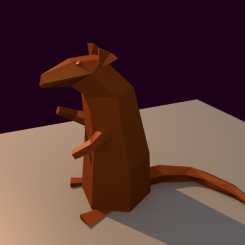
Ryan Veeder’s new piece The Roscovian Palladium belongs to that special Veederish genre, Games About Rats. Does it sound like I’m being dismissive? This is the subtitle of the game: “Another game about talking rats by Ryan Veeder.”

It’s pretty charming, and ran me around 15-20 minutes to play, I think. Not nearly as complicated as Captain Verdeterre, but as usual, some great humor in the descriptions and the parser responses.

*

Nicholas Brakespear has a new parser-based IF game, The Pilgrimage, on Steam Greenlight. It’s Windows only, so I can’t comment on content, but there’s a free demo available.

*

mantis.png

Don’t Make Love is a forthcoming game using freeform natural language input, in which you have to help a mantis couple with their difficult decision about whether or not to mate:

Assume the role of a praying mantis in a couple. Try to maintain the balance between the mutual love and the instinct to have sex to avoid terrible consequences: eating your own partner or being eaten alive. Type your words and lead the conversation, your partner will answer and behave accordingly. Use expressions or actions to convey your feelings in a situation without solution.

Other reading

Liza Daly on ethical AI and procedural generation.

Evan Narcisse on the challenge of portraying blackness in video games.


Where the Water Tastes Like Wine

Screen Shot 2017-02-24 at 12.37.50 PM.png

Where the Water Tastes Like Wine is a forthcoming game from Dim Bulb Games that describes itself as a “bleak American folktale.” Or here, just watch the trailer:

The game explores many experiences of America, and many voices — so Dim Bulb brought on different game writers to research and create dialogue for each of the major characters. I’m honored to have been one of them.

wtwtlwscreen.png