IF Comp 2015: Two Short Parser Puzzle Games

The 21st annual Interactive Fiction Competition is currently on, through mid-November. Voting is open to the general public; the only prerequisite is that you not be an author, not vote on games that you tested, and submit votes on at least five games. (You emphatically do not have to have played them all! In a year with 55 entrants, it is very unlikely that most judges will get through anywhere near all of them.)

So this year I’m only reviewing comp games that I can basically recommend. If this makes you sad because you enjoy reading reviews where I did not like something, you might instead enjoy my reviews of Tender Loving Care or Lifeline 2, which have the benefit of being commercial games that can fend for themselves.

Hereafter, thoughts on Untold Riches and Grandma Bethlinda’s Variety Box.

Continue reading “IF Comp 2015: Two Short Parser Puzzle Games”

Lifeline 2 (3 Minute Games)

banner-lifeline2-interior

I just have to grab a few things on my way back to New Tenacity.

Artifacts, you know. Objects of intense mystical power. The usual.

Lifeline 2 is a sequel in form, not in content, to the tremendously successful Lifeline from earlier this year. Lifeline was one of the first games to work on the Apple Watch, which may have helped get it the spotlight, but it did a number of other things well: a clean attractive text interface, a good use of delays and notifications, and a story about a convincingly endangered protagonist.

It also demonstrated a game format that was plainly reusable. Lifeline makes the protagonist a separate character who is reaching out to the player for help — a strategy that deals immediately with gaps between player and protagonist knowledge, and explains occasions when the protagonist won’t do what the player wants. It allows for strongly characterized narrative with a definite voice.

It’s not by any means the first game to do any of these things. There are classic parser IF games with strongly-characterized narrators (Lost Pig, Violet, anything by Robb Sherwin). There are assorted games that consist purely of back-and-forth conversation (Fail-Safe, The McFarlane Job, Hana Feels, Coming Out Simulator 2014, assorted others) or use some other method to pry apart the protagonist and the player-character into two separate entities. And there are other forms of interactive story that make use of notifications and real-time delays, from ARGs and email-enhanced game concepts to the delayed events in Fallen London. But Lifeline put these together in a particularly effective way and demonstrated how others might do likewise.

Continue reading “Lifeline 2 (3 Minute Games)”

IF Comp 2015 is Open

ifcomp15 And we’re off! The games of IF Comp 2015 are now available. There are a record number of games this year — 55 in all — beating out the previous high of 53 in 2000. This is especially impressive when you consider this competition is now in its 21st year.

I will be reviewing, but I’ve made some changes to my reviewing policy: specifically, no longer reviewing works for which my overall impression is negative. This doesn’t mean I’m binding myself to say only positive things, just that the overall take of the review needs to be a net Recommend. In doing this, I’m responding to assorted feedback over the years that the comp can be too harsh to new authors and to those unfamiliar with its expectations. The IF world has grown bigger, richer, and more diverse over the past couple of years, which is a terrific thing; it means we get games from everyone from published authors and pro game devs to teenagers making their first experiment with a game making tool. But the diversity also means that not every game is likely to be for everyone, and that’s okay.

If you are also reviewing, thank you! I love reading other people’s reviews, and one of the great things about the comp is the community of discussion that surrounds it. Also, hydrate. 55 games is a lot.

Okay. :Puts on Batsuit.: Let’s do this.

Windhammer Prize 2015: Isaac Newton: Badass Ninja Crimefighter (Stuart Lloyd)

The 2015 Windhammer Prize is now running, which means you can download and play any of the 16 PDF gamebooks entered; if you play a reasonable number of them, you may also judge the competition by submitting a list of your top three favorites. (Full details are at the judging site.)

*

The previous Windhammer contestant I covered, Tides of Chrome, is an intricate puzzlebox of a game, highly polished, with hints of serious themes. Isaac Newton: Badass Ninja Crimefighter is basically its opposite in every way: a simple plot, fast-paced narrative, and an extremely goofy tone. There are assorted typos and surprising noun/verb agreement errors that make me think maybe the game was drafted in the third person and then changed to second person partway through. There are loads of luck checks and a number of choice points where you have no real reason the first way to guess which of two or three choices is going to be your best bet. I had fun with it, but in a totally different way.

The premise is what it says on the tin, only more so. You are Isaac Newton. You are 53 years old, yet you possess a body like Schwarzenegger in his prime. You can restore willpower and hit points by eating apples. Your study of gravity and optics has endowed you with telekinesis, flight, and the ability to shoot blasts of rainbow power from your hands. You are highly opposed to counterfeiting, and you’re willing to kill any number of guards and flunkies in order to get at London’s most significant counterfeiter. You also have a butler named Alfred, and independently sentient hair. The ninja aspect doesn’t come into it very much.

Continue reading “Windhammer Prize 2015: Isaac Newton: Badass Ninja Crimefighter (Stuart Lloyd)”

September Link Assortment

Not really a link as such, but: if you’re used to contacting me at emshort@mindspring.com, I am phasing out that email address — I’ve been having more and more issues with undelivered attachments, missing messages, etc. And who uses mindspring any more anyway? So you may want to update your email address book to emshortif@gmail.com.

*

Some upcoming live IF meetups and events:

London, October 7: I’m speaking at the London Literature Festival, as part of a panel on games and stories with Cara Ellison and Naomi Alderman.

Boston Meetup, October 12.

London, October 16: as part of the London Science Museum’s celebration of Ada Lovelace, I’m giving a Lovelace-themed workshop on interactive fiction (ticketed but tickets are free).

LA, October 24: Meetup and attendance at Indiecade Night Games.

*

There’s more IF available in commercial form this month: inkle’s 80 Days for the Mac and PC (as well as a whole lot of new content for all platforms).

Also out this month: Simon Christiansen’s PataNoir remastered and illustrated for iOS and Android. PataNoir’s release is also marked by an accompanying music video, and there’s a nice post about it on Offworld, too.

*

PixelTrickery’s Kickstarter for House of Many Doors has been funded and then some, but there is still another day or two to run. Project updates include many samples of entertainingly horrible procgen poetry.

Also on Kickstarter, [Top Secret] is a play-by-email interactive fiction game about the Snowden leaks and the NSA.

*

Submissions are open for the Kitschies, which will award ÂŁ500 to one UK-published piece of digital fiction released in 2015. (UK-published does not require that the author live in the UK.)

*

If you feel like writing a short ghost IF, the annual Saugus Halloween story contest accepts both parser and choice-based contributions. Entries are due by October 22. Winning stories will be posted on the contest website, and winners will receive a Saugus t-shirt.

*

The Windhammer Prize for gamebooks is currently running: you can download the contestants and vote on them any time between now and November 14.

*

And of course, we’re now on the verge of IF Comp. Sometime in the next few days, the 2015 contestants should be released. At that point, anyone who is not an author may judge, review, and discuss the games, though you need to submit votes on at least five entries to have your vote counted.

It is also still possible to donate IF Comp prizes, should you wish to do so.

*

Anyone interested by my review of Iain Pears’ Arcadia may also be interested in this Guardian review of The New World by Chris Adrian and Eli Horowitz; it mentions a number of other interactive novels as well.

*

Carolyn VanEseltine shares some notes from a GameLoop talk on scoring creativity. This kind of thing fascinates me both for the computational challenges (can we in fact come up with metrics for creative success, even within very small domains?) and because I’m interested in games of aesthetics.

*

Konstantinos Dimopoulos (Gnome) curates ImpishWords, a Facebook page with daily recommendations in the text game/IF space. Sometimes these are links to classic games and articles you may already have heard of; sometimes they’re scanned maps or information on new releases.

*

Mattie Brice wrote this month about idle games — things like Candy Box and Dark Room and the especially evil and addictive Kittens Game. She notes that there is now an idle game-making tool for those who would like to experiment with the form without having to roll their own.

*

Speaking of new tools, if you’ve ever tried to use Undum but been put off by its relative difficulty, you might want Raconteur, the Undum creation tool by Bruno Dias. Raconteur has been available for a few months, but this month Bruno also released the Raconteur source for a complete game (his Prospero, written for Sub-Q). I have written more about Raconteur here.

*

Erin Robinson Swink gave a workshop at Headstart Institute based on her mindmap approach to game design, which is also written up over here. This is an approach to building mechanics rather than story structure, relevant for the more systemic puzzle sort of design.

*

GAME Journal is looking for games that comment on or critique other games: this could include parody, but also other forms of commentary. Send a demo by October 5 if you would like to be considered for inclusion.

*

The illustrated Twine game A Bucket Filled With Sand lets you build a little sand kingdom according to the principles you prefer; in some ways it’s a bit reminiscent of The Compass Rose.

*
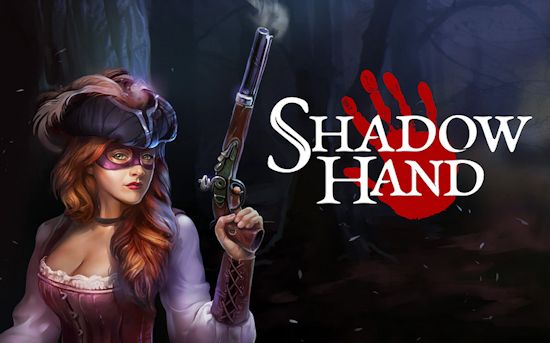
shadowhand

I’ve only seen the preliminary announcement, but I like the look of the forthcoming Shadowhand, a narrative card game with visual novel elements, telling the story of an 18th century lady who dresses up as a highwayman in order to kick ass.

*

Not new, but good: Jo Walton on how to write characters that readers will care about.

*

This month I updated my Writing IF resources page. It now has a lot more to say about choice-based IF tools and commercial/semi-pro publishing options, as well as more links to craft articles.

[Top Secret] (James Long) and a play-by-email IF tool

Screen Shot 2015-09-28 at 10.17.33 PM

James Long is Kickstarting an interactive story game called [Top Secret], played via email, which explores the Snowden story:

A fresh recruit to the National Security Agency (NSA), you have a new mission: find out who’s leaking TOP SECRET documents to the press. Stop them by whatever means necessary.

A single selector (phone number, email address, name) is all it takes for your team to surveil a target. It’s your job to decipher the intel, and follow the trail to its source.

But surveillance has a price…

In the paranoid world of the NSA, anyone can become a target, and soon your friends are in the firing line.

Part of his project is also to finish and release the play-by-email storytelling tool for general use, so I invited him to talk a little more about what that is and how it will work.

ES: Aside from (obviously) the Snowden concept, what sorts of stories do you think would lend themselves to this presentation?

JL: One of the great things is that it is truly “real time”. So with the Snowden story, I want to roughly match the 2 weeks in the run up to the leaks as they happened. It allows the author to pace the story and give time to the player to make choices and reflect on what’s happening. You can also inject meaning into the time between messages as well as content. e.g. if someone is excited, or angry about a conversation they may reply quickly, whereas disinterest, low spirits, or just being busy may result in delayed responses.

So I think there are rich mechanical opportunities to explore, but to be honest, I’m not sure what’s best for it – I’m discovering as I go!

I know there is a game called Lifeline on iOS which was app-based but also real-time. I haven’t played it (don’t own an iPhone), but I know that used time to give a sense of progression. e.g. the player would decide where the character should go, and several hours later, the character would ping to say they’ve arrived. (I’m sure they did more interesting stuff than this).

ES: How is your system deciding what to send back to players? Is it doing a simple keyword search on their email response, or is something more going on here?

JL: Yes, I can specifiy multiple keywords (or keyphrases) and trigger events when the keyword/keyphrase is detected. Such events include:

– sending a new message in the current email thread
– sending a new message in a new thread
– spawning concurrent email threads
– emails which are sent if none of the keywords are matched
– emails which match against any response

All the data is generated by a client-side web application I have created.

Continue reading “[Top Secret] (James Long) and a play-by-email IF tool”