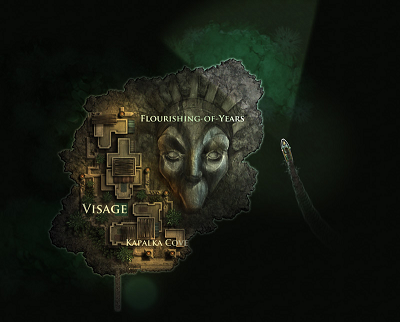
Lifeline (3 Minute Games)

lifeline-ios-02Lifeline is an iOS and Android mobile game in which you are fielding a distress call from someone named Taylor (gender never actually specified — I’ve seen some reviews refer to Taylor as male, but I pictured a woman). Taylor was the youngest, most naive crew member aboard a space ship that has crashed on a distant moon. They have no previous space experience and only the most rudimentary safety training. For some reason you are the only person in communication range, so they need you to prompt them through a series of survival decisions.

The story plays out in roughly SMS-sized messages from Taylor, which sometimes come in rapid succession and sometimes only after a substantial real-time delay. These exchanges are backed by atmospheric music, and though the actual content is quite bare-bones and without visuals, the presentation is glossy and solid.

Lifeline has also garnered reviews calling it the best game available for the Apple Watch — one of those statements that might feel like faint praise while still being quite important from a marketing perspective. As far as I can tell from here, Lifeline is another example of the success of commercial IF on mobile. (This Offworld article talks a bit about how the piece was actually prototyped in Twine.)

Continue reading “Lifeline (3 Minute Games)”

Interactive Narrative GDC Talks (Part 1)

Every year GDC talks are recorded and stored in the “GDC Vault”, which is accessible to people who have attended a recent GDC. There are also usually a few talks that are outside the paywall, though — and this year, there are quite a few non-paywall talks that might be of interest to IF and interactive narrative folks. There are also quite a few talks where the actual recording is behind a paywall, but the slides are available for free.

There are so many recommendable talks in this collection that I’m going to break them out over a couple of posts, starting with these fairly IF-specific talks:

Leading Players Astray: 80 Days and Unexpected Stories, Meg Jayanth, Freelance/inkle. (Slideshow, recorded talk.) An entertaining and watchable presentation about the tension between 80 Days’ boardgame mechanics and the story and the way the game tempts players into embracing bad strategy decisions. Meg also talks about the research that went into building 80 Days and the process of constructing the story as a whole.

Adventures in Text: Innovating in Interactive Fiction, Jon Ingold, inkle. (Slideshow, recorded talk.) Talks about narrative structure and tool implementation in inkle products, usable lengths of text, choice design, and a lot else. Well worth a look for anyone working in the choice-based game space.

Classic Game Post-mortem: Adventure, Warren Robinett. (Slideshow, recorded talk.) This is about the construction of the action-adventure game Adventure for the Atari 2600, but it talks about how that game was based on the Crowther and Woods game — and it also gets into a lot of delightfully sticky detail about the memory costs of a lot of the game elements. The latter is something that people working on interactive fiction now only have to worry about rarely, and usually only if they’re doing something either very large or targeted at a very restricted platform. A neat piece of game history with IF relevance.

Harvesting Interactive Fiction, Heather Albano, Choice of Games. (Slideshow only.) Intended to acquaint games narrative folks with recent developments in IF, this talk covers material that may already be familiar to IF veterans. Includes discussion of Hadean Lands, Codename Cygnus, Blood & Laurels, various Choice of Games titles, and much of the inkle collection, among other things. Edited to add: it’s a little hard to work out fully from just the slides, but I meant to mention that Heather did talk a lot about the use of ambiguity in text, and the storytelling leverage that you get from not overspecifying everything (which is sometimes easier when you’re working with words and not a full 3D model). This is an interesting area I’ve heard the Choice of Games folks talk about on various occasions but I’m not sure it’s gotten the discussion traction of some of the other concepts here (such as complicity).
Choose Your Erotica

[Editor’s note, several years on: this article has been around for a while, and some of the works it talks about are no longer available to play. But the article is still getting regular hits, and I can see from outgoing links that people are trying to find and play those pieces.

Clearly there’s a lot of interest in this topic, and most of the time, when people are coming to my site for resources, I try to put together some kind of reliable resource list. However, I don’t want to maintain a main page on my website that will serve as a frequently-updated repository of interactive porn and erotica, since I feel like that might sort of give the wrong overall idea about what I usually discuss here. Not very on-brand.

SO. Compromise: I will occasionally add some links to the top of this post that seem to be currently functional.

Now, on to the actual article as originally posted.]

Parser-based AIF — “adult interactive fiction” — has been around for a long time, though it has generally had its own forums and meeting places; every once in a while someone would turn up on rec.arts.int-fiction with a coding question about layered clothing, or submit an adult game to a competition, but for the most part AIF didn’t overlap much with the main IF community. I did play a few pieces, but they were usually aimed unambiguously at heterosexual men. A common structure was to have a series of puzzles that would “unlock” sex scenes with assorted partners. (Here’s a review I did back in 2006 of Ron Weasley and the Quest for Hermione, for instance.) Sometimes these were cut-scenes, but sometimes you could use parser commands to do a play-by-play of which parts went where.

As choice-based IF has become more prevalent, so has choice-based, female-POV erotica. Here I take a look at several. I’m not going to be quoting long passages or posting images, but this may still not qualify as SFW depending on where you are.

Continue reading “Choose Your Erotica”

Slammed! (Paolo Chikiamco / Choice of Games)

Screen Shot 2015-02-05 at 6.29.58 PM

Paolo Chikiamco’s Choice of Games game Slammed! has been around for a while now, and has enjoyed a reputation as one of CoG’s better works. It just became available on Steam, and I took that occasion as an opportunity to check it out.

The premise is that you’re an aspiring wrestler who gets a chance to break into the pro circuit, developing your skills and playing out a bunch of matches in the ring. On the face of it, this doesn’t sound like my kind of thing — the only two wrestlers I can name are Hulk Hogan and Jesse Ventura, and I just had to double check on wikipedia to make sure I was remembering them right — which may be why I put off playing Slammed! despite the good reviews.

Chikiamco, on the other hand, clearly does know and care a lot about wrestling, and he writes about it in a way that feels both compelling and reasonably accessible to the non-fan, constructing a detailed world full of strong personalities. What’s more, the themes that come out of the premise are things that interest me: career vs personal loyalty, the cultivation of professional persona, the development of both skills and relationships, the fine line between being a team player and letting yourself be taken advantage of.

Continue reading “Slammed! (Paolo Chikiamco / Choice of Games)”

Sunless Sea leaves early access

SunlessSea1

Sunless Sea is out of early access today!

If somehow you have not heard of this game: it is a grand, creepy exploration game from the cool people at Failbetter, set in the Fallen London universe. Sail a cavernous underground sea, fight off giant crabs, try to keep yourself and your crew sane, and encounter islands full of strange tales. It has more eye candy than Fallen London, and no action-metering or grind. On the other hand, it keeps the creepy setting and the tight, memorable prose. You can play it in a ferocious rogue-like mode with permadeath, or you can be wimpier and keep save files. (I keep save files. I admit it.)

It’s not just me with my fondness for Fallen London here, either. Eurogamer gives Sunless Sea a 10/10, and so does Starburst Magazine.

I’m hoping for a big launch day for Sunless Sea for a couple of reasons.

One, I guest-wrote three of the islands, and I’ve written a little about that experience here (general comments about writing for the Fallen London universe as part of a retrospective of my 2014 efforts) and here (spoilery design post about the island of Nuncio). I had a lot of fun with these, I’m happy about how they came out, and I’m hoping other people will like them too.

Two: Failbetter is doing some really intriguing commercial IF, and the success of Sunless Sea will have a direct impact on how much more they can do along the same lines. I am hoping that they’ll turn out to be able to do lots and LOTS more.

So! Buy a copy! Tell your friends! Leave a Steam review! Try not to commit any acts of cannibalism! (Harder than you might think.)

Spoken IF: Codename Cygnus, Multi Path Audio, Mayday: Deep Space

cygnusCodename Cygnus is interactive radio drama: there are voice-acted scenes with music and sound effects. The premise is that you’re a secret agent, and you can download several missions; each mission is itself divided into smallish episodes, so when you start something, you’re not committed to a long session. It’s highly genre-determined, trope-y stuff, where you’re meeting bad guys with foreign accents across a gaming table, or slipping truth serum into someone’s drink.

Periodically the narrator asks you which of two options you’d like to pursue in order to continue your mission, with specific keywords for you to speak (“Athletic? Or Clever?”). You can either speak the next word or tap the option on-screen, but the system is designed so that you can play entirely hands-free, without holding or looking at your device. As with Choice of Games titles, your actions may determine character stats rather than causing immediate narrative branching; and in fact in Codename Cygnus a lot of your choices (“Athletic / Clever?” “Hostile / Charismatic?”) are explicitly asking which of your stats you want to use and enhance. Because you’re not viewing the text, the screen consists purely of a stats readout, plus controls to scrub or replay audio sections you’re currently listening to. It’s simple but attractive.

Continue reading “Spoken IF: Codename Cygnus, Multi Path Audio, Mayday: Deep Space”