IF Comp open, and the Colossal Fund

ifcompIt is the time of year when IF Comp opens intents for new entries — meaning that if you’re an author and want to release a game as part of the October/November competition, you may now sign up.

This year, there’s a new feature: an organized initiative to fundraise prize money, together with running costs for the IF Technology Foundation. In past years, cash prizes for the comp have depended on the generosity of individual donors; usually they’ve ranged from $250-$400 as a top prize down to $15 or so, and usually there’s only been enough for the top-placing authors to receive any financial reward for participating. (The supply of other interesting prizes typically lasts quite a lot further down the list — but those aren’t all equally useful to the potential winners.)

Given that Comp placement tends to feel a little bit arbitrary, and authors are sometimes separated only by a very small score difference, it feels a little unfair to have a really steep drop-off in rewards. And often really novel or experimental work places not in the top three (that position tends to go more to crowd-pleasers), but somewhere in the top 15-20.

The fundraiser aims to help address some of those issues. The money raised will be distributed to the top 2/3 of authors, with a minimum prize of $10. If the fundraiser reaches its target, the top prize will be over $300, but the drop-off will be pretty shallow, with prizes above $100 for everyone down to 19th place. (The math of this is… highly specific. If you’re curious, check out the explanatory blog post.)

And what about the percentage donated to the IFTF? That goes to IFTF running costs. The IF Technology Foundation supports infrastructure for both the comp itself and the IF Archive, as well as sponsoring initiatives to improve accessibility in IF tools, and assisting to provide resources for Twine.
End of June Link Assortment

Events

July 1, IF Comp 2017 opens for intents-to-enter.

The British Library is running an Interactive Fiction Summer School as a weeklong course in July, with multiple instructors from a variety of different interactive narrative backgrounds. More information can be found at the British Library’s website.

First round voting in the XYZZY Awards for 2016 is open through July 4. If you liked some games that came out last year, you may vote to nominate that work now; the second round of voting will choose between the nominees. You may nominate up to two games in each category; you may not vote for your own work. There are no special requirements to be eligible to vote, though you should read the rules (as always).

July 19, the London IF Meetup gets together to talk about writing IF for money.

IntroComp is under new management but is still running this year, an opportunity to share the opening section of an IF piece with players and get feedback. Intents to enter are accepted through end of day today, with the intros themselves to be due July 31. This year for the first time the comp accepts an excerpt that might come from somewhere other than the beginning of the game.

August 14-17, Cape Cod, MA is the Foundation of Digital Games conference, including a workshop in procedural content generation. The PCG workshop has a theme this year:

What do our generators say about the underlying systems we have designed and the designers who create them?  Our theme aims to explore the biases inherent in PCG and the potential with which to subvert it.

Registration will continue to be available through August, but the ticket price goes up to “late registration” rates on July 4, so participants will save $100 by booking before that deadline.

New Releases

Screen Shot 2017-06-27 at 10.26.15 PM.png

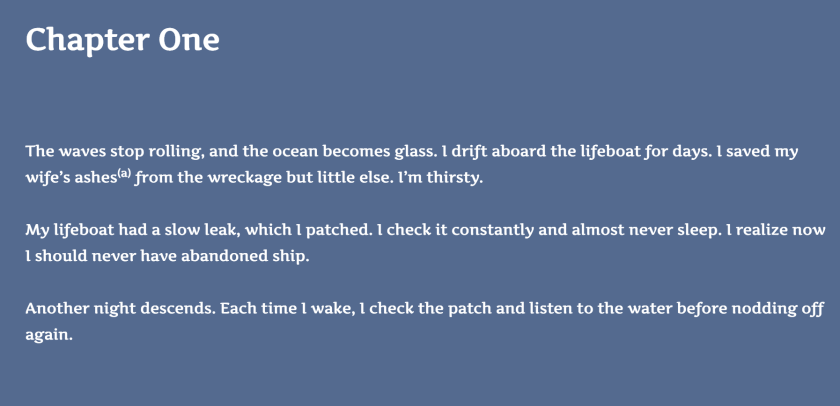
Sub-Q has Footnotes in Ashes, a new piece by Jeremy M. Gottwig about grief and loss; the memories keep intruding on the main text through clickable footnote links.

Articles and More-than-Articles

This article describes the recovery of original Magnetic Scrolls data, with a lot of careful manipulation of the original backup tapes.

Oliver Lee Bateman writes for the Paris Review about the proportion of story in games.

Aaron Reed’s dissertation is now available online. Entitled “CHANGEFUL TALES: DESIGN-DRIVEN APPROACHES TOWARD MORE EXPRESSIVE STORYGAMES,” it looks at a range of approaches in his own work and other people’s, including highly procedural projects like Façade, Prom Week, Redshirt, Siboot, and Versu; “sculpture fiction,” which would include quality-based narrative approaches such as StoryNexus but also Aaron’s own 18 Cadence and Ice-Bound Concordance; and collaborative storygames, both tabletop and digital, including attention to the work of Dietrich Squinkifer.

Tools

Chris Crawford has written an Encounter Editor to go with his prototype Storytron project; he very much hopes that people will use it to contribute content to his story world. I wrote more about this earlier in the month, and Crawford himself replied to that post.

Bruno Dias has released a major upgrade to Improv, his procedural text engine.

Talks

This is a few months old, but here’s Chris Klimas introducing Twine for novices, and also giving a little background on interactive fiction.

Elsewhere

Here are some recommendations of escape room games you can play at home, as opposed to the kind you have to go out to visit.

More on Frankenstein Wars

frankensteinwars

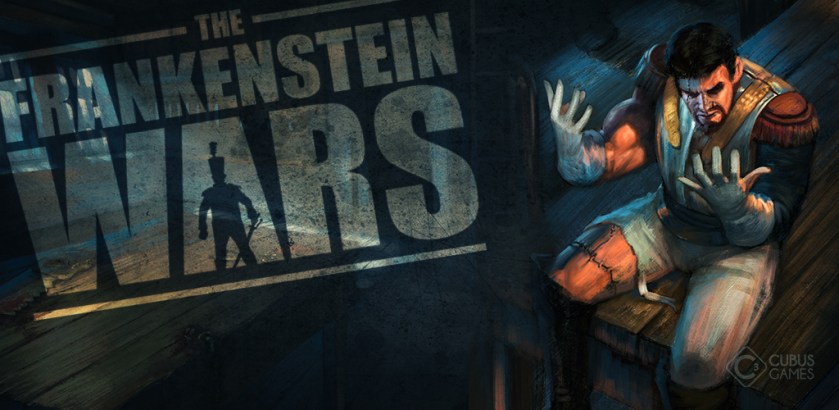
The premise of The Frankenstein Wars is that the protagonists are involved in a republican war using Frankenstein’s technology to resurrect the dead, creating stitched-together “Lazarans” — not zombies. The Lazarans have a memory of what came before, but sometimes are wearing someone else’s arms and legs: this is a scenario more like extensive organ donation than anything else. Together, they’re fighting against Charles X of France, the last of the Bourbon kings, who in our timeline was ousted in the July Revolution of 1830.

As protagonists, you control two brothers, the sons of Henri Clerval in Frankenstein. Other characters both real and fictional come in as well: Frankenstein’s monster (fictional, we trust); Byron’s brilliant daughter, Ada Lovelace (real, but heavily mythologized here); Percy Blakeney, the Scarlet Pimpernel (fictional); assorted real French political figures. There was something a bit League of Extraordinary Gentlemen about all this, albeit a few decades earlier. The Byron connection is a little twisty given that Byron was friends with the Shelleys, and Mary Shelley had the original idea for Frankenstein while on a trip to Lake Geneva with Byron (and others) in the summer of 1816; so any narrative universe that contains Byron would seem like it ought to include Mary Shelley was well. Mercifully, the story doesn’t wink at the reader about this, just takes it as a baseline fact and rolls on.

It’s not at all necessary to know the relevant history to play. It’s not even particularly necessary to be deeply familiar with Frankenstein, though it’s maybe worth noting that the original idea for the story came from Dave Morris, who did a Frankenstein project with inkle. The actual writing is by Paul Gresty (author of The ORPHEUS Ruse and Metahuman, Inc for Choice of Games).

There are a number of clever or unusual things going on with the interface, and even if it weren’t for its other merits, the game would be worth a look on those grounds alone.

Continue reading “More on Frankenstein Wars”

Some Articles from Procedural Generation

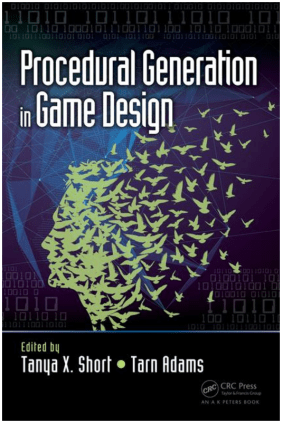
Screen Shot 2017-06-08 at 7.10.14 AMI mentioned earlier that Procedural Generation in Game Design is available, and that I have a chapter in it. I’ve now had a chance to look at a few of the chapters that I didn’t read previously during the publishing stage, and wanted to highlight a few of these as especially relevant to IF readers.

Joris Dormans’ chapter on Cyclic Generation talks about design patterns for procedural dungeons, including the most systematic section on the deployment of locks and keys I’ve recall seeing anywhere. He identifies concepts such as single- or multipurpose keys, consumable and reusable keys, asymmetrical and “valve” doors, safe and unsafe locks and keys, and other concepts; if you’re looking for design patterns for puzzle games gated on geography, this has a lot of ideas you might want to raid. You can get some of the same material from Dormans’ lecture at PROCJAM last year in Falmouth, but the article gives you more reference material.

Ben Kybartas writes about story and plot generation using expansion and rewriting grammars. The rewriting rules (“secondary rewrite rules” in Kybartas’ terminology) take a simple plot and then add complications to it based on what elements already exist in the game world: for instance, a simple plot about someone cheating at poker could be expanded with a complication that they have an accomplice in cheating — but only if there is someone with emotional ties that would make them willing to participate in such a deception. Rewrite rules could even add nodes to the story that provide player choice. I would have welcomed more information from finished games about how this method goes down in practice.

Jason Grinblat’s article on Emergent Narratives and Story Volumes talks about how procedurality can be used to define the themes of all the possible stories to emerge from that system; it ends in a close study of the tabletop storygame Fiasco, but also includes examples from Caves of Qud.

Mark R. Johnson writes about several aspects of Ultima Ratio Regum, but in particular about the procedural generation of dialogue for different character types and personality styles — something that’s obviously of strong interest and ties into some of the work I’m doing at Spirit AI as well as in my own practice.

(PS: 2017 PROCJAM Kickstarter fundraising is in its last days; you still have an option to help kickstart it.)

Interactive Fiction (ML Ronn)

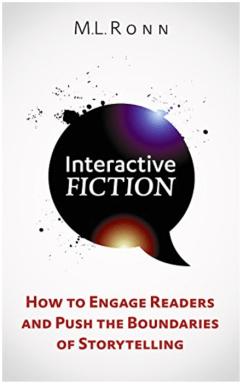
Screen Shot 2017-06-03 at 8.36.21 PM.pngThe full title of this is Interactive Fiction: How to Engage Readers and Push the Boundaries of Storytelling (ML Ronn), and I read it as part of the same research that led me to read Deb Potter’s guide.

(Throughout the below, I’ll refer to Ronn as “he” because Ronn mentions using the pen name Michael in places, despite the gender non-specific initials on the cover.)

Ronn’s book makes an entertaining diptych to Deb Potter’s piece, since he starts out in the introduction by vehemently rejecting a lot of the things Potter embraces: writing for children, leaving protagonists blank, deploying frequent deaths, and the use of the second person POV in general.

Ronn claims it’s flatly impossible to tell a good or characterful story in 2nd person POV; there are plenty of counter-examples in the IF canon but instead I’ll take the opportunity to recommend some Jennifer Egan. To be fair, however, I think he’s really railing against AFGNCAAPs rather than second person.

Continue reading “Interactive Fiction (ML Ronn)”

Writing Interactive Fiction (Deb Potter)

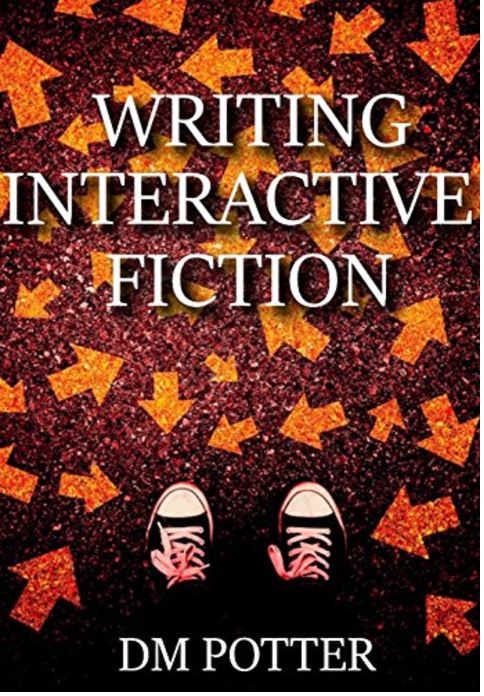
Screen Shot 2017-06-03 at 6.55.20 PM.pngWith the reappearance of IF as a commercial art form, there’s also been a rise in books out there to guide would-be writers in the form.

Deb Potter writes for the You Say Which Way series, which is to say pretty much straight CYOA. She has released Writing Interactive Fiction to teach others how to do the same, in a breezy and accessible style. Potter does not assume the reader has a great deal of pre-existing experience in the space, and starts out exploring basic concepts like choice and consequence, explaining why your basic left-or-right choice is usually such a bore, and suggesting that authors should give readers some warning before an instant death. She also comes down against using IF for moral preaching.

But there are a few places where her suggestions either depart from what I’d tend to consider received wisdom in the IF community, or introduce new terminology. In particular, she talks a lot about how to help the player build a mental model of the structure of the CYOA, and how to draw attention towards (or away from) choices that they might want/not want to replay.

Continue reading “Writing Interactive Fiction (Deb Potter)”