Mysterious Cases on Indiegogo

Robert Sabuda is a paper engineer who designs pop-up books. He — with collaborators — is now running an Indiegogo campaign to put together three Mysterious Cases: boxes that come with clues, props, puzzles and locks. He was good enough to answer some questions for me:

Screen Shot 2016-06-09 at 10.46.40 PM

ES: The trailer and photos make these look really appealing and tactile — it looks like there’s a lot of physical manipulation of props to solve these puzzles. And I know you’re a pop-up book artist and have done a lot of past projects that involve manipulating a book in order to bring about, as your FAQ says, a “WOW” moment. What qualities in a pop-up most contribute to delivering that sense of wonder?

RS: I think what it really comes down is providing a sense of a wonder and magic.  We like to be surprised, and maybe even a bit fooled, when we’re unable to come up with answer to “how did THAT happen?”  Pop-up books and interactive experiences, like the Mysterious Cases, supply that in droves.  We want to wrestle a bit and be delighted by new discoveries and the magic of the moment.

Continue reading “Mysterious Cases on Indiegogo”

Against Captain’s Orders (Punchdrunk / National Maritime Museum)

aco-eventlandingpage_950x2942

Against Captain’s Orders is an interactive theater experience run by Punchdrunk for the National Maritime Museum in London. It’s designed for a group of about 30 kids. Most of the productions require an adult to be accompanied at least one child between the ages of six and twelve, but they do run a special evening edition of the show for adults who are members of the museum. I’ve never been able to get to Sleep No More or any of Punchdrunk’s other work, and I was curious enough about them that I got a museum membership largely to be able to go to Against Captain’s Orders without having to obtain a child first.

The show has been reviewed as a piece of theater: the Guardian gave it ***, said it wasn’t dangerous enough; the Evening Standard an ungenerous ** and called it confused; Timeout went with ****, thought it was good but mostly for kids. The Register assures readers that the show provides value for money, which is true, but a grim sort of review of any sort of art. None of those reviews really gets into the interaction design side very deeply, though.

At the end of the show they ask you not to reveal too many of its secrets. I’m not going to give away the absolute ending, but it’s hard to analyze without spoiling a bit. So I’m not publishing this blog post until after the show finishes running. Still, if for some reason you want to avoid spoilers for a show that you can’t see now anyway, you should not read on.

Continue reading “Against Captain’s Orders (Punchdrunk / National Maritime Museum)”

The Secret Language of Desire (Megan Heyward)

SecretLanguageTrimmed

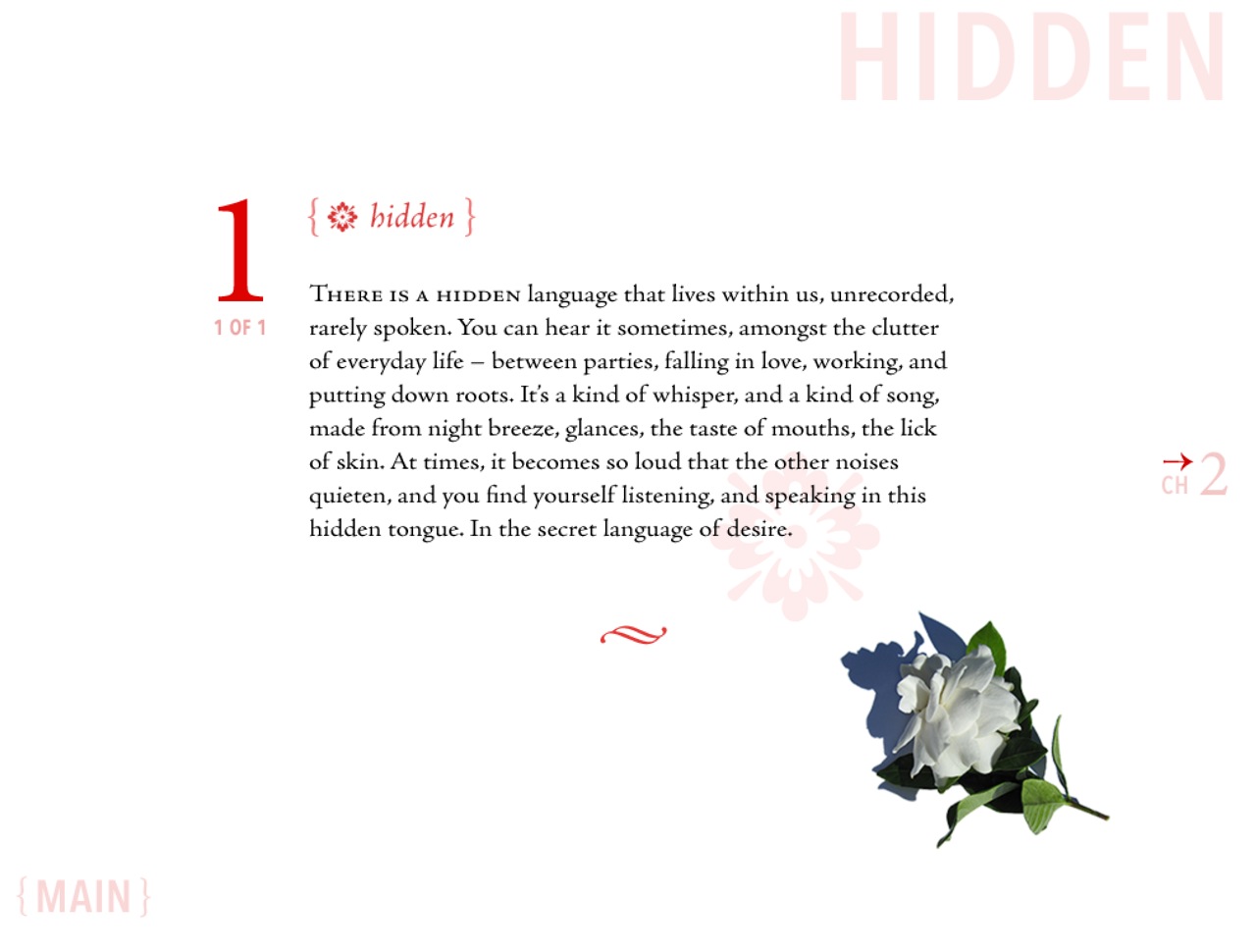
The Secret Language of Desire is an iPad app, enhanced with images and music and sound effects, which tells the story of a woman’s erotic awakening through a series of 27 short vignettes. It is available via iTunes, and will also be shown at the upcoming ELO conference in Bergen.

It’s fully linear: there are no branches in the story, no hypertext links to dig into. Unlike in PRY, there’s very little hidden information to tease out of the interactions, either. In one case, there’s something to uncover that explains the meaning of an intentionally vague and referential bit of text, though I was pretty sure what I was going to find there. This is the exception rather than the rule.

Continue reading “The Secret Language of Desire (Megan Heyward)”

The Century Beast (The Mysterious Package Company)

crate-dart

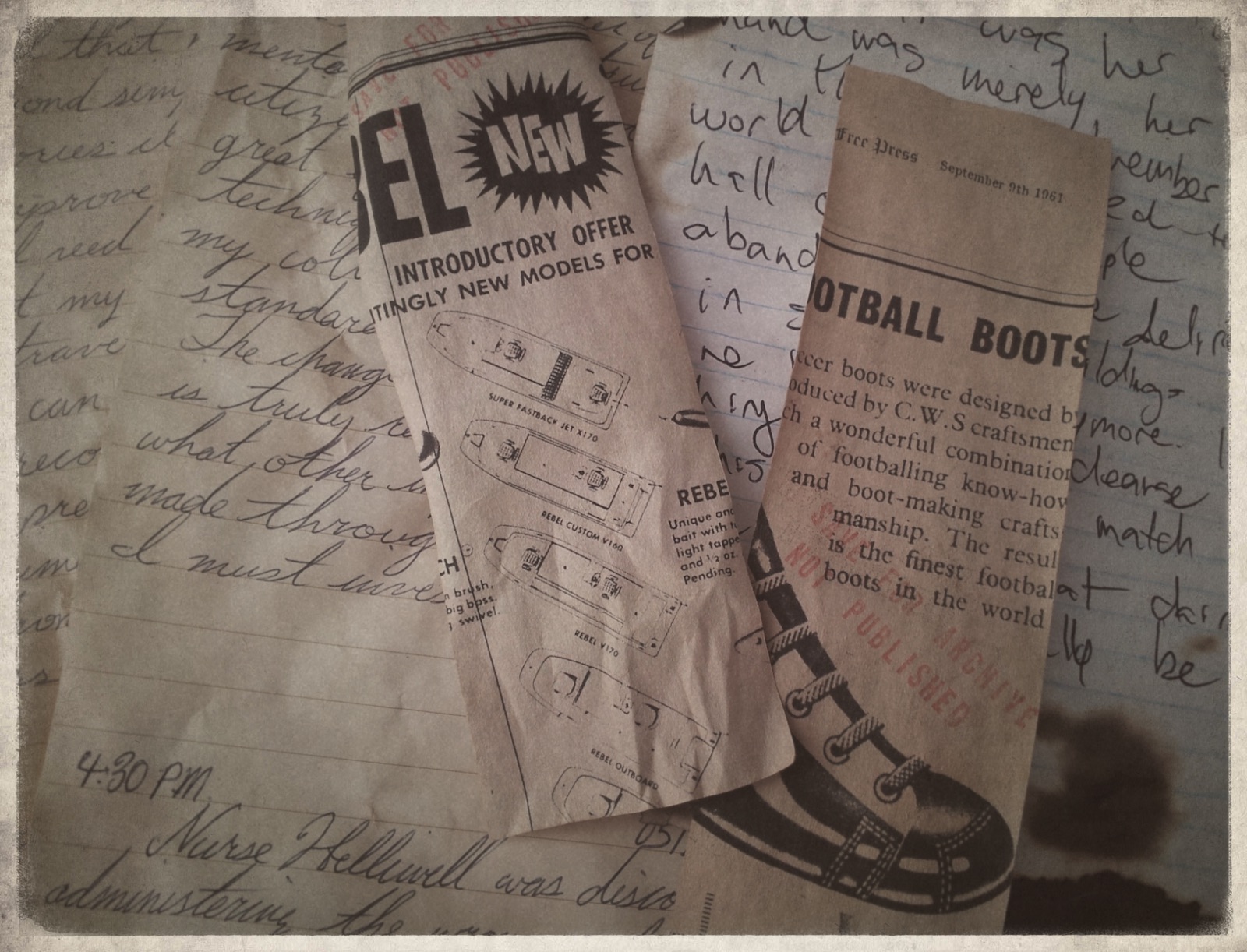
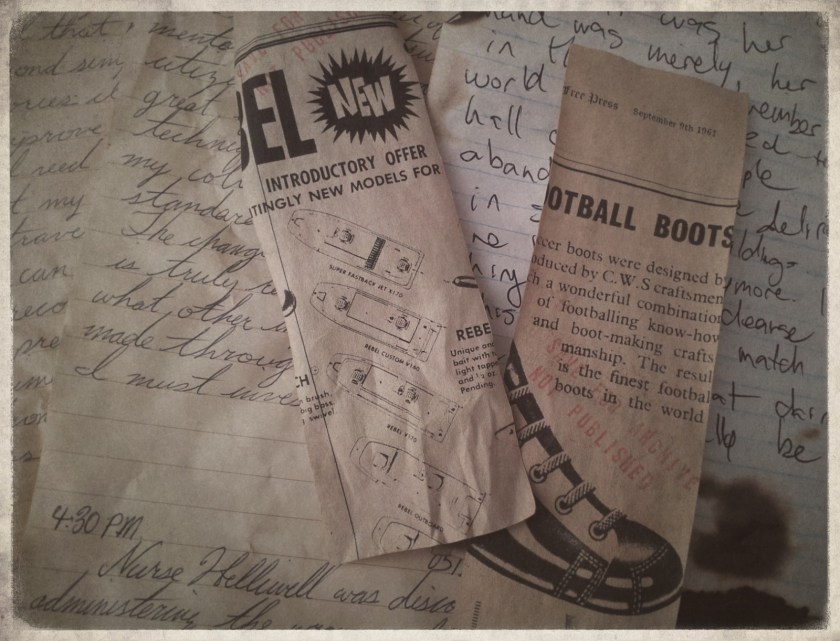
The Mysterious Package Company sends story experiences through the mail. Sign up, and you or your chosen recipient gets a sequence of unexplained mailings. Inside: objects that tell a story, from documents and newspaper clippings through medium-sized statuary and significant physical props. There’s a little of a sense of the magic trick about all this, too — they even describe the stages of their presentation in terms of “The Pledge”, “The Turn”, and “The Prestige”.

Having occasionally made much less ambitious, much less polished physical props to go with my games, I’m both jealous and a bit in awe of the talent going into their work. (I’ve seen a few props that they sent to a friend, but I’ve not signed up or tried a full experience myself.)

The Mysterious Package Company are now kickstarting a larger-than-usual experience called The Century Beast, a Lovecraft-meets-Vikings story about which the pitch is alluring but vague. The Kickstarter has been funded, and is meeting further stretch goals by the day. For anyone who likes narrative of objects pieces, single-player ARG-like experiences, or feelies — especially feelies — this is likely to awaken covetous impulses.

The Company is mysterious even in its correspondence, so I don’t actually know who runs the business, but someone called the Curator was kind enough to answer my questions about storytelling in their particular format.
articles-diary

Tell me about the kinds of storytelling that are possible with objects that would be harder to do any other way. What are the strengths of your particular medium?

Storytelling is universal, whether it be oral, written, or performance. However, with some notable exceptions, becoming truly immersed in a story is difficult. You may relate to the characters, or be taken by the narrative, but you are observing what is happening to others, not participating yourself. The advent of video games has provided new and wonderful ways to tell stories, whilst placing the player in the role of the protaganist, and that is a large step toward creating immersion, but there is a significant missing element: physicality.

Continue reading “The Century Beast (The Mysterious Package Company)”

The Feasts of Tre-mang (Eli Brown)

Screen Shot 2014-12-30 at 3.58.41 PMThe Feasts of Tre-mang is a fictional cookbook. That is, it contains recipes that you can actually cook, but they claim to be a variety of holiday dishes from an obscure Atlantic island called Tre-mang that was destroyed by volcanic eruption in 1914.

As you might expect in a cookbook, there are lists of ingredients, methods, and measurements; there are pictures of finished dishes, and editorial notes about safe substitutions. There are also explanatory articles about Tre-mang history and culture, the contexts in which these foods would be presented, and the life of Theodora Peterson, an anthropologist’s daughter whose diaries are the chief source of surviving information about Tremanner cuisine. Brown intersperses these with “old” photographs, maps, portraits, the Tre-mang flag and currency, and even Tre-mang-style erotic postcards. (It seems that Tremanners were very much aroused by ears.) It is narrative-of-objects stuff, though supported by lots of straight written text as well as well.

Continue reading “The Feasts of Tre-mang (Eli Brown)”

Device 6, The Sailor’s Dream, The Sensational December Machine (Simogo)

device_6_screen02Last year, Simogo produced Device 6, a game I found myself stubbornly disliking despite its massive app store popularity and the number of people hailing it as the next big thing in interactive fiction. Unquestionably a beautiful piece of typographical design with a 60s style evocative of the Prisoner, Device 6 disappointed me both as story and as puzzle collection.

As a story, it told about a largely unknown character in a surreal and unexplained environment: long on mystery, low on meaning. I tend to think of this as “Lost Syndrome”: writing that offers the player or reader a lot of suggestive and intriguing hints but does not demonstrably have any plan to resolve them all. In the end, it turns out that the entire business has been — oh, I won’t spoil it, since the evidence suggests that most people enjoy this piece more than I did. But let’s just say that the ending falls into a standard category that annoys the heck out of me.

As for the puzzles, they were not that well integrated into the story and varied widely in style and difficulty. More often than I liked, they turned on whether or not you had noticed some particular image or some particular correspondence between images: in my puzzle taxonomy, they’re basically all puzzles of surprise, typically without a lot of extra hinting available. If you got stuck, that meant a lot of time wandering around looking at things trying to have the perception shift that would reveal what you’d missed. Meanwhile, for a game requiring a lot of exploration, Device 6 didn’t make the process comfortable: you had to swipe back and forth (and back and forth, and back and forth) along long passages of shaped text. Over time the initially pleasing architectural nature of that text became a burden. By the time I got to the end I was thoroughly grumpy.

Now along comes The Sailor’s Dream.

Continue reading “Device 6, The Sailor’s Dream, The Sensational December Machine (Simogo)”