I’ve done a couple of retrospectives of 2015 in IF: here’s one on the state of the art in late September just before IF Comp, and here’s my Comp roundup. Most of the things I observed there hold, I think, even if you include the last month and a half.
But I also wanted to talk more about what is going on in the parser domain.
At one point about a year or a year and a half ago, in the ongoing discussions about the fate of parser interactive fiction, I observed that I felt like most of the interesting experimentation in IF had moved into other spaces. There were constantly new Twine games that surprised me with new ideas or new quirks of the interface; there were assorted new handrolled systems doing neat things; there were Seltani and Texture. But it felt as though not that much new was being said with parser IF.
That’s been less true in 2015. People continue to do amazing things in Twine and other choice-based systems, but we’ve also seen more experiments in parser hybrids (though I’ll talk about some of those in a minute) and in what the parser natively can do.
*
World model and story
Perhaps most obviously, there’s some surprising work from IF Comp 2015. Map and Midnight. Swordfight. both give the player a world model that is as much about story as it is about place and objects, inviting us to change elements of the backstory one way or another in order to produce different outcomes, exploring fully a space of possibilities and consequences. Map in particular captures some of the sense of wide-ranging, life-changing choices that you get in Alter Ego, and then in the Choice of Games works inspired by Alter Ego. In Map, though, this happens within a parser context where you can also putter around and look at the furniture and get a sense of the texture of the life you’re altering.
*
World model and map
Several 2015 games experimented with space presentation, breaking up the traditional handling of rooms to allow for genuinely three dimensional space (Ether), for continuous space best understood as a grid (Terminator), or for objects visible from a long distance away (Endless Sands).
There have been some games in the past that experimented with this, back as far as the subdivided rooms in Stone Cell or Shade, but 2015’s pieces suggested a renewed interest in the topic –particularly in creating systemic puzzles that required the player to understand a large space. In both Terminator and Ether, you’re challenged to figure out how to move yourself or other objects most efficiently in a large grid; instead of arriving at the single optimal solution, you’re likely to come up with some loose general approaches that are likely to work best.
*
World model and resources
Onaar didn’t do continuous space, but did do RPG-like gameplay with spawning resources, combat, and crafting/harvesting mechanics. Again, it’s not the first IF game to experiment in this space at all, but it is one of the more plausible ones I’ve seen. The gameplay feels very different from the play of a classic text adventure, but it has its own internal coherency.
Gotomomi also offered a big open world with lots of ways to gather money and other resources (but also lots of ways to fail to do so). I found it quite a bit harder than Onaar, not always entirely fair, but also intriguing and unexpectedly deep in some places.
*
World model and conversation
Ectocomp is a Halloween-based speed jam, and Ectocomp 2015 pulled in a fair crop of entrants. The short development time means that the games tend not to be super polished, but Halloween Dance is a neat little experiment in using inventory items to model conversation.
*
Conceptual space rather than literal space
 Technically this isn’t a 2015 piece; it’s something from late 2014 that has gotten a good deal more attention in 2015.
In December, Sub-Q did a reprint – with updated content and new cover art – of Caleb Wilson’s excellent Lime Ergot, in which the story is told almost entirely through deeper and deeper levels of examination of scenery objects.
I’ve written a little before about why I liked this piece, which wound up being one of my favorite IF games of 2014. The new version also prompted some reflections by Chandler Groover and Bruno Dias, and an interview with Caleb as well.
If you like Lime Ergot for the way it re-envisions parser storytelling, then I also recommend CEJ Pacian’s Castle of the Red Prince and Weird City Interloper, Toby’s Nose by Chandler Groover (also a 2015 release), and Porpentine’s Contrition. I already talked a bit about Toby’s Nose in my mid-2015 roundup as well.
(If you enjoy Wilson’s writing style, he’s got a number of other games on IFDB – The Northnorth Passage might also appeal. And I’ve always had a soft spot for Hey, Jingo!, his never-finished introcomp game from years ago. Even though it’s not a complete story, it has some of the same feel of postcolonial horror that comes through in Lime Ergot.)
*
Database storytelling
One rational extension of those ideas is Her Story:

Whether or not you liked it, whether or not you think it qualifies as IF, Her Story‘s database delving through search terms was thoroughly engaging for a lot of people. It demonstrates a way of separating an exploratory, typed-input UI from the traditional world model of the parser and doing something quite different with it.
*
Keyword storytelling but with continuous forward movement
Laid Off from the Synesthesia Factory, meanwhile, also uses a hybrid parser/keyword interface to explore, but it does so in the context of a continuous narration. Where Toby’s Nose or Lime Ergot or Her Story let you get stuck if you can’t think of the next interesting thing to type, Laid Off‘s narrator keeps talking to you no matter what. There are a few key moments of possible choice, but a lot of the time your dialogue options are more steering what you’ll find out about next than they are deciding an outcome or unpicking the puzzle.
*
Interactive parsing

Code 7 is a one-week student prototype that bills itself as a “modern text adventure.” Unsurprisingly for a prototype, it’s not a very strong game yet, especially when it comes to narrative. The plot is about as predictable and hackneyed as you can imagine, and the dialogue could use some work. The characters are also pretty much just ciphers inhabiting their situation. There’s voice acting for the main person you’re talking to, which I also felt could have been a bit stronger – but by including this at all, of course, Code 7 is making a statement about the kinds of assets and production values the authors would like to see in interactive fiction. It’s being developed into a full game, though; Rock Paper Shotgun wrote it up, and it was entered in the IGF.
In Code 7, you’re a) communicating with another character whom you’re directing to explore an abandoned ship and b) hacking some of the systems of that ship in order to help the character. Structurally, it’s a fairly simple gauntlet with some deaths (though usually you get some warning when you’re in danger, and the game automatically jumps back to the latest safe point after death).
The use of audio and the reliance on another character to do most of the legwork are both soundly in line with other experiments in commercial IF, but the interface is a bit different.
Most of your options are dialogue options, presented with a straight numerical menu. There are some hacking segments where you have to rapidly figure out a password, given a mastermind/hangman-style system that lets you know when you’ve found a letter in the correct position. These are not a very plausible representation of what hacking would involve (obviously), but they’re no more terrible than some of the other hacking minigames I’ve played. There’s a nice use of staged difficulty here: you have to figure out how to crack the password, then figure out how to do longer passwords under time pressure; and at one point the difficulty of a password puzzle is used to make a narrative point, which is neat.
But the most text-adventure-ish part is that you can discover additional instructions, usually by typing the name of the object you want to interact with; the command line will then show you some suggested actions:
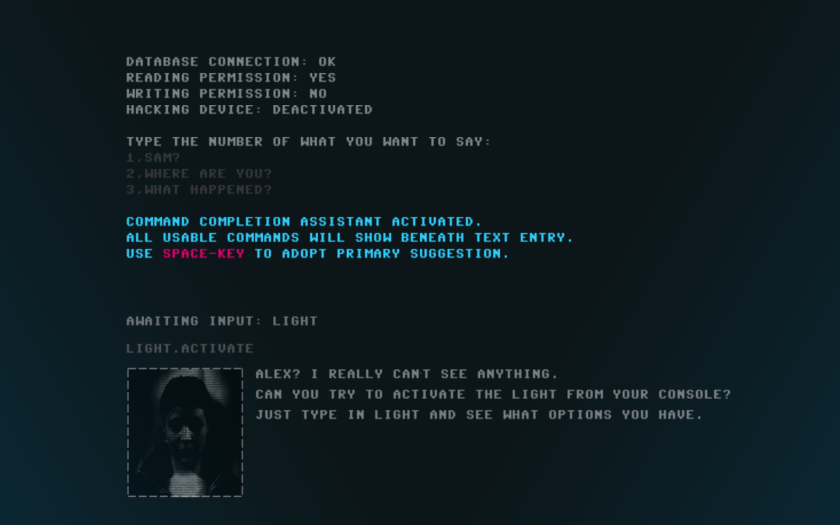
It’s not a million miles from some of Jon Ingold’s experiments with interactive parsing or noun-focused parser discovery in Dead Cities and A Colder Light.
In this implementation, I would say the resulting experience is much more “gamebook with some hidden nodes” (like say this one) than “trad text adventure with improved discoverability”. Either there is no backing world model, or the designers have done a good job of concealing the fact: objects are named inconsistently, actions that work in one room aren’t guaranteed to work in another, and in general you’re always searching for the single intended action that is enabled to work right this minute. I did even have a guess the noun moment, when I didn’t realize that the system would recognize the name of a particular object only if I typed it in with its attached adjective.
*
Keywords within hypertext
Porpentine’s Spring Thing piece Ruiness, meanwhile, is mostly a Twine game, but one that implements its knowledge puzzles through keywords – essentially passwords, really – that you type to gain access to some of the game’s alternate locations.
*
Other resources on IF interfaces
You may also like this old post on hybrid interfaces, and this post on a tool called Wunderverse, designed for writing iPad IF with a complex world model but no command-line interface. Also, here is a page on IF interfaces in general and a Pinterest board of IF interface screenshots.
*
Finally, none of this is to suggest it was a bad year for more traditional parser puzzle IF, either. I recommend the comp-winning Brain Guzzlers from Beyond! and Daniel Stelzer’s large and ambitious Scroll Thief, which riffs on the Enchanter series with a bunch of really terrific interlocking puzzles. And of course there was all of ParserComp.
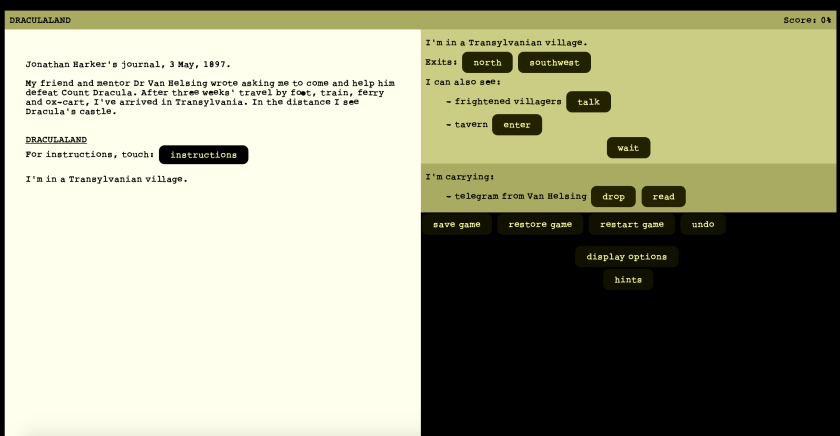


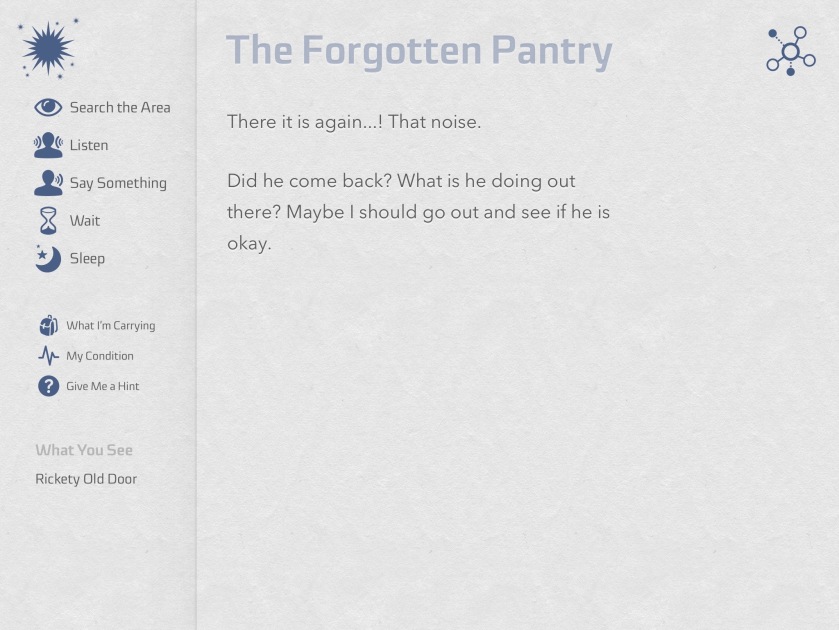
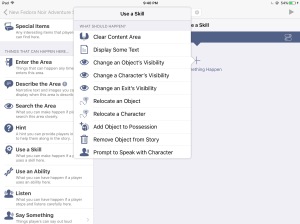 The good: the app looks pretty slick, and it features the ability to theme your stories and include sound effects and other elements.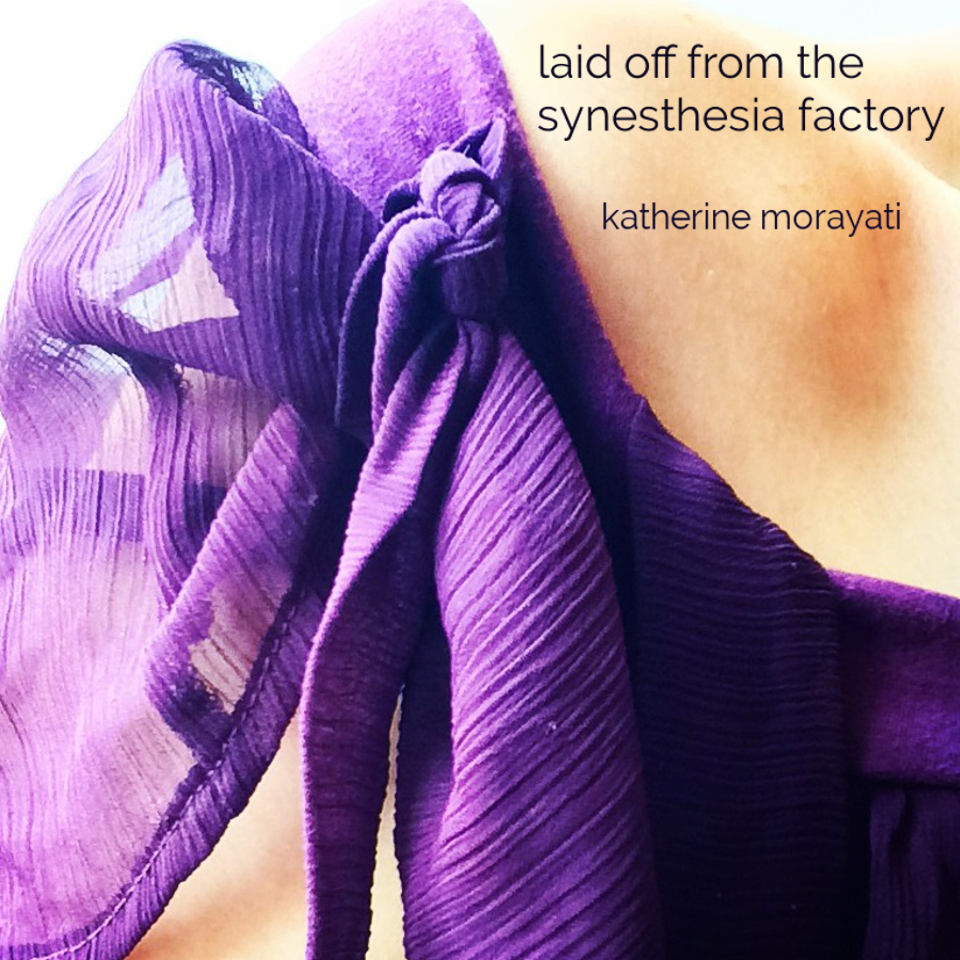

 Emily Short's Interactive Storytelling