IF Comp 2015: Cape (Bruno Dias)

The 21st annual Interactive Fiction Competition is currently on, through mid-November. Voting is open to the general public; the only prerequisite is that you not be an author, not vote on games that you tested, and submit votes on at least five games. (You emphatically do not have to have played them all! In a year with 55 entrants, it is very unlikely that most judges will get through anywhere near all of them.)

Cape is an Undum game by Bruno Dias, concerning the origins of a superhero in a dystopia with strong divisions between the rich and poor. (Play online.)

Continue reading “IF Comp 2015: Cape (Bruno Dias)”

IF Comp 2015: Much Love, BJP (Megan Stevens)

The 21st annual Interactive Fiction Competition is currently on, through mid-November. Voting is open to the general public; the only prerequisite is that you not be an author, not vote on games that you tested, and submit votes on at least five games. (You emphatically do not have to have played them all! In a year with 55 entrants, it is very unlikely that most judges will get through anywhere near all of them.)

Much Love, BJP is a short, photo-illustrated Twine piece about the fictional life of a war correspondent. It takes only about ten minutes to read completely, and contains minimal branching.

Continue reading “IF Comp 2015: Much Love, BJP (Megan Stevens)”

IF Comp 2015: Paradise (Devine Lu Linvega)

The 21st annual Interactive Fiction Competition is currently on, through mid-November. Voting is open to the general public; the only prerequisite is that you not be an author, not vote on games that you tested, and submit votes on at least five games. (You emphatically do not have to have played them all! In a year with 55 entrants, it is very unlikely that most judges will get through anywhere near all of them.)

100Paradise describes itself in its comp blurb as a procedural interactive fiction and multiplayer novel. Neither of those are terms I would use to describe it: there’s not much you’d call plot progression. And when I hear “procedural interactive fiction” I usually assume that there’s going to be some text generation or some procedural narrative structuring or some AI-driven characters or something along those lines. What’s here, I’d be inclined more to call something like “a platform for collaborative textual landscapes”.

Continue reading “IF Comp 2015: Paradise (Devine Lu Linvega)”

Windhammer Prize 2015: After the Flag Fell (Felicity Banks)

The 2015 Windhammer Prize is now running, which means you can download and play any of the 16 PDF gamebooks entered; if you play a reasonable number of them, you may also judge the competition by submitting a list of your top three favorites. (Full details are at the judging site.)

*

After the Flag Fell tells the story of the life of Peter Lalor, an Australian rebel and politician of whose life story I was embarrassingly ignorant before playing this game. As a piece of historical fiction, it’s pretty light: it serves up an intense-ish scene of battle and wounding and possible amputation at the beginning, but then backs off into a much more summary mode for recounting subsequent events, while allowing very wide branching of Lalor’s life. You can get married or not; you can enter politics (as the real Lalor did); you can run away and hide among Aboriginal peoples. One of the more sustained exchanges after the initial battle involves your romance with another character, and this is portrayed in a highly stylized fashion.

Even for a Windhammer book, this is a short piece. It uses only 63 of its permitted 100 nodes. Of those one is a choiceless introduction, one is a bit that isn’t reachable from anywhere and exists (I think) only to throw people off about how the romance plot might go, and four are easter egg nodes that contain authorial commentary. Brevity is fine, but in this case it also reflects a kind of oversimplification in the story’s later stages. Though the opening of the book suggests that it wants to explore why Lalor behaved the way he did and his effect on Australian history, the segments that deal with the political realities of his age are the briefest and least developed. For example:

“Forgive my impudence, sir, but are you sure you want to prevent women from voting? Your people elected you because they believed you would uphold democratic values.”

I refused to risk the good life I had. Letting women vote was too much.
Go to Page 38.

Under the circumstances, I signed the bill to let women have the vote.
Go to Page 26.

Presenting the situation so starkly gives little sense of how the contemporary people felt about this issue, what ideology (justified or not) might have supported each side, how the politicians were motivated, and how Lalor compared with his colleagues on the issue. So we’re left really only with our own inclinations on whether female suffrage is a good thing, and some of these choices felt to me a bit like “Do you like sexism Y/N?”

Continue reading “Windhammer Prize 2015: After the Flag Fell (Felicity Banks)”
The Beginner’s Guide (Davey Wreden) and Intimacy Inside Games

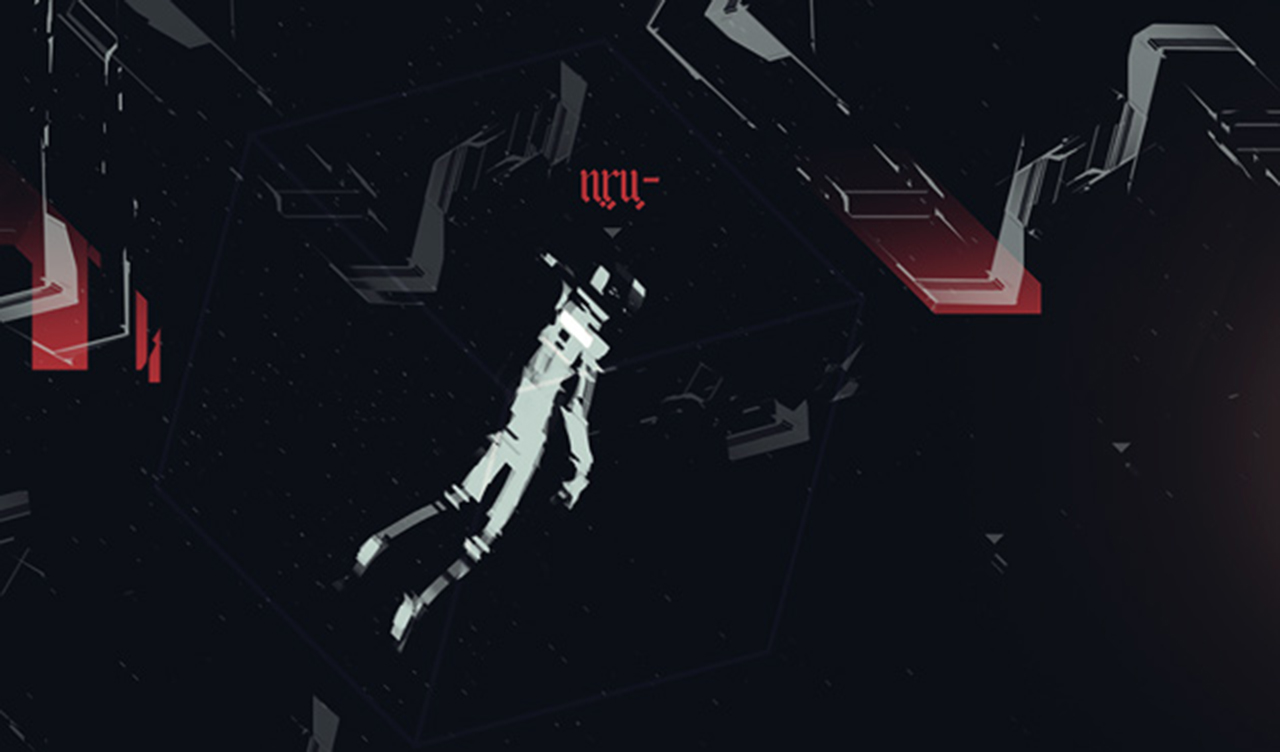
beginnersheaderThe Beginner’s Guide is a new game by one of the creators of The Stanley Parable. The premise is that Davey had a game-developing friend called Coda who wrote a bunch of small, arty games between 2008 and 2011, and Davey wants to walk us through these, showing the progression of the games and of his own relationship with Coda. He provides a voice-over that narrates everything we encounter. In some cases the discussion focuses on the design ideas and in some cases it touches lightly on the technical work that went into making a level.

This is one of those games in which the experience really suffers from spoilers, so if you think you would like to play a roughly 90-minute, mechanics light game about creativity, the challenge of understanding other people, and the mental health of creators, you may want to check it out before reading too many reviews, including this one. While I will not be giving away all the details of how the game turns out, it is impossible to discuss its major themes without ruining some of the surprise.

(Disclosure: I played a copy of this game which I bought with my own money.)

Continue reading “The Beginner’s Guide (Davey Wreden) and Intimacy Inside Games”

IF Comp 2015: Summit (Phantom Williams)

The 21st annual Interactive Fiction Competition is currently on, through mid-November. Voting is open to the general public; the only prerequisite is that you not be an author, not vote on games that you tested, and submit votes on at least five games. (You emphatically do not have to have played them all! In a year with 55 entrants, it is very unlikely that most judges will get through anywhere near all of them.)

Summit is a mid-length, multi-stranded Twine game with visual effects and a soundtrack. (If you play, I strongly recommend making sure that you’re in a position to play with the sound on — it really is not the same experience without.) It tells a surreal fantasy parable in a world rather reminiscent of Porpentine’s work.

Continue reading “IF Comp 2015: Summit (Phantom Williams)”