Tender Loving Care (Trilobyte)

hurt

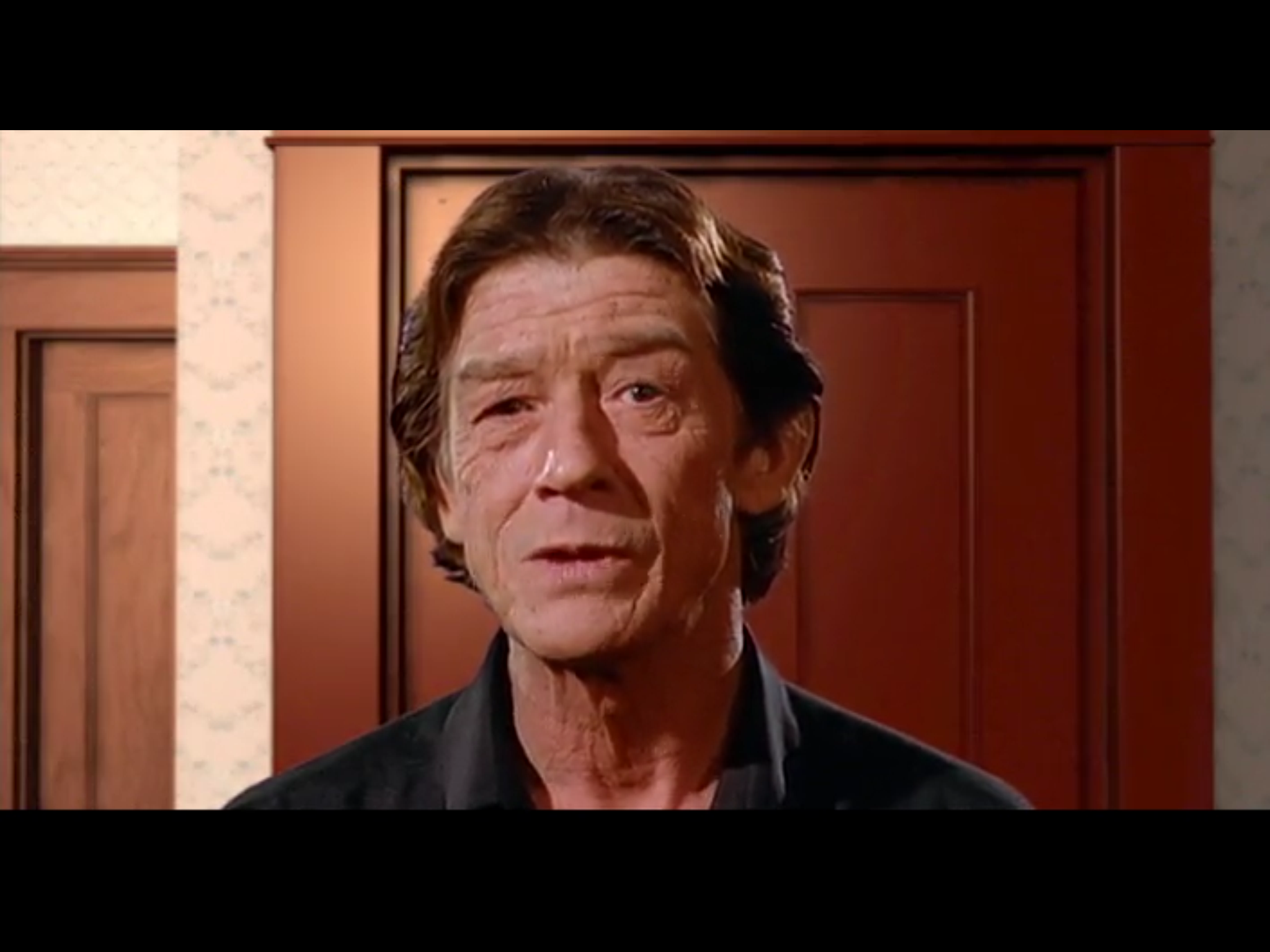
I don’t think I truly appreciated John Hurt’s acting ability until I saw him in Tender Loving Care, a late-90s-era game with live action footage, created by the same people who made 7th Guest and subsequently brought to iOS by Trilobyte Games.

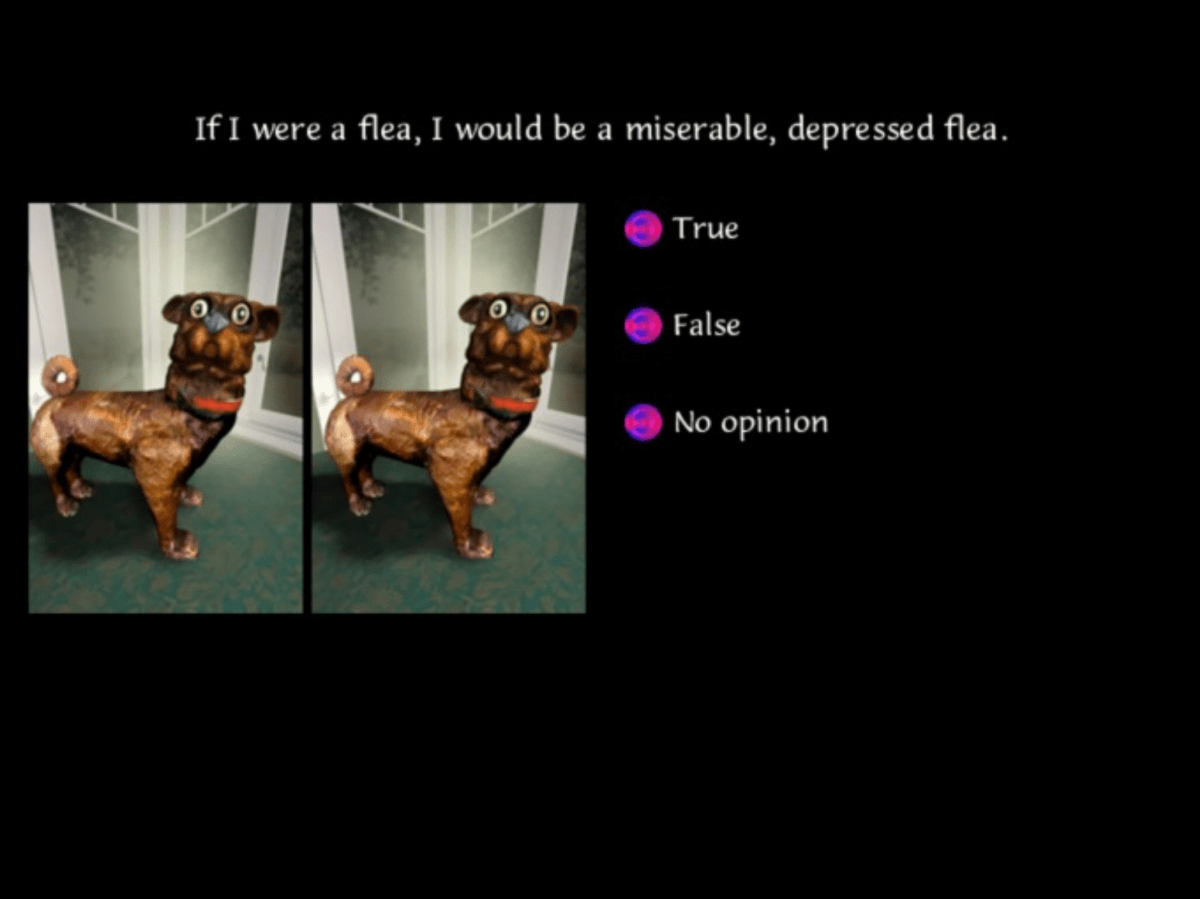
This is a truly extraordinary game. It has decent production values for its time, including hours of live video content; offers an assortment of conceptual innovations; deals in the realm of character and emotion rather than physicality; and then manages to be boring, offensive, and misguided in ways I’ve not seen in a game before. It is supposed to be an erotic thriller, but the one time I felt true apprehension was when I restarted the app after some time away and saw that I was offered only a “Begin” button. Had it lost my progress? Was I going to have to go through those three hours again? Answer: No, it hadn’t; it just had a UI bad at communicating state.

The premise is that Dr. Turner, played by John Hurt, is showing you scenes from a case that went terribly wrong. The case involves Allison, a woman who has lost her daughter in a car accident but lives in the delusion that Jody is still alive; Michael, Allison’s frustrated and exhausted husband, who hasn’t processed his own grief or gone back to work, but who has been forced to look after Allison as she’s ceased to be a partner in any meaningful sense; and Kathryn, the live-in psychiatric nurse specializing in trauma whom Michael has hired to sort things out. Kathryn is cartoonishly provocative, wearing insufficient clothes and licking her lips to camera.
Continue reading “Tender Loving Care (Trilobyte)”

Neon Haze (Porpentine, Brenda Neotenomie)

Screen Shot 2015-08-11 at 2.12.21 PM

Neon Haze is this week’s release at Sub-Q Magazine.

A side note: If you are interested in IF, especially Twine IF with a speculative fiction focus, you should be paying attention to Sub-Q: it’s an ambitious venture, a website with stories and interviews that pays pro rates for interactive fiction. It provides some resources for matching storytellers with people who can implement content for them, if the author doesn’t already have those skills. The guidelines would allow for parser IF, but possibly they simply haven’t been offered any so far that met the other requirements. Sub-Q is paid for by memberships and donations, but it’s free to read; I’d like to see it continue, though, so I’ve signed up.

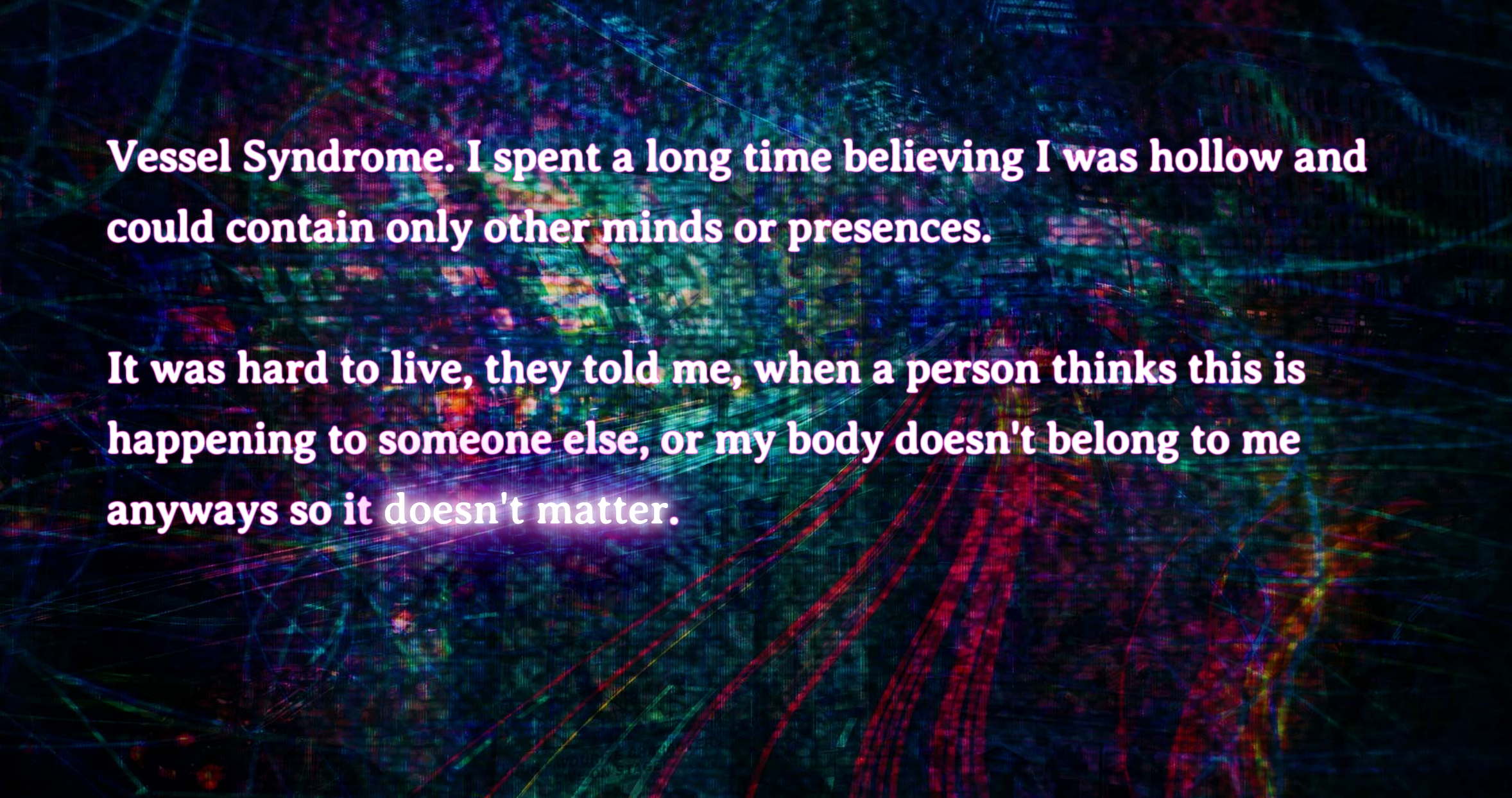
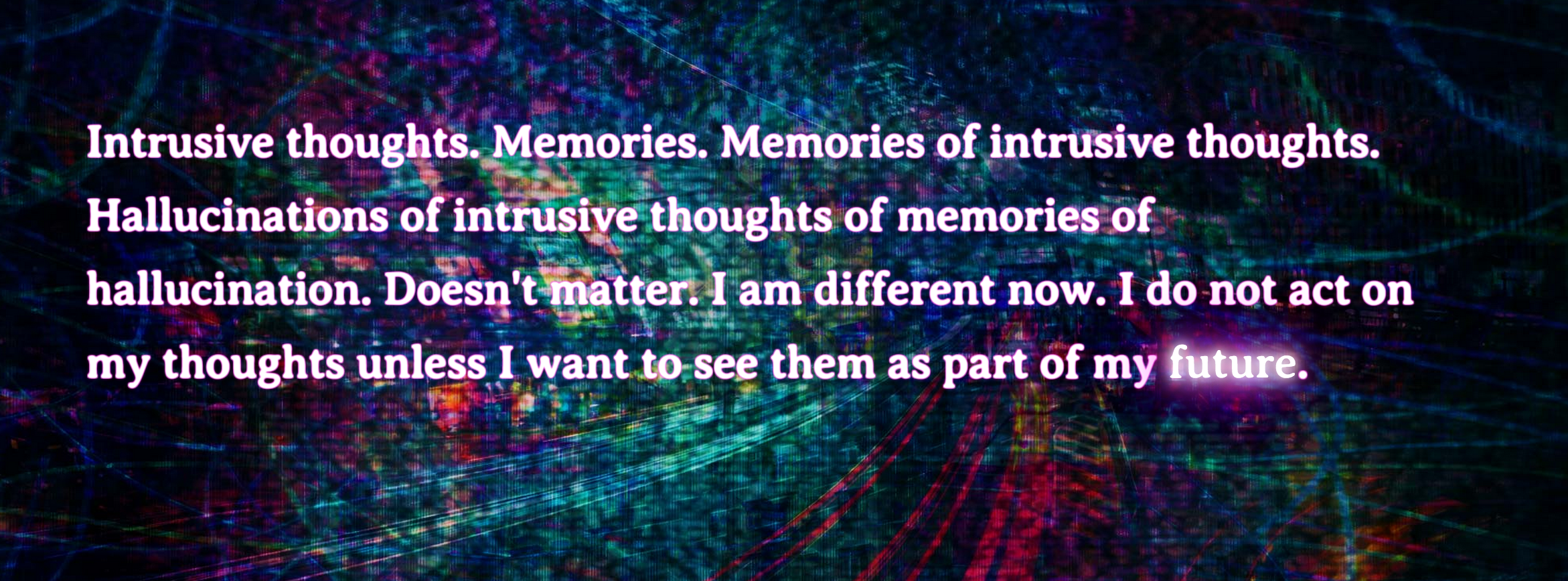
So, Neon Haze. It is the story of someone living in a dark-rainy-night-plus-neon kind of environment. The protagonist suffers from Vessel Syndrome, a condition that produces a sense of not really being oneself, or not being in one’s own body; a sense of being occupied by other spirits. Sometimes they seem to dissociate. Often they use language drawn from therapy sessions to describe their experience.

One of the game’s key moments comes when you’re allowed to choose which of two people you were in a scene: someone safe and surrounded by friends, or an outcast who has gotten into a fight? Whichever you choose, the game does not contradict you, and either way provides an interesting way of understanding the situation. Perhaps the protagonist has always been an outsider and imagining themselves as someone different and safe was a way to escape that experience. Or perhaps the protagonist comes from a background of safety that is now lost, one in which they acted entitled and did not understand how difficult things could be elsewhere, on the outside.

Screen Shot 2015-08-11 at 2.17.38 PM

The story is supported by CSS effects that make the links glow on the page against a dark cityscape, and by Neotenomie’s music, which loops and hums with seductive energy. Sometimes, at least for me, the music was more than a mood-setting device. It communicated hope, or perhaps some not-quite-hope will to live, even when the text itself was describing a bleak situation.

Continue reading “Neon Haze (Porpentine, Brenda Neotenomie)”

IntroComp 2015

IntroComp is a yearly IF competition which invites participants to send in the first part of a game. Judges vote on how much they would be interested in playing the rest of the submitted game, and authors who finish and release their pieces within a year are eligible for a prize based on where they placed. The games for 2015 are currently available, and judging is open through August 21.

Below, thoughts on the pieces I ranked highest.

Continue reading “IntroComp 2015”

Snake Game (Vajra Chandrasekera with Tory Hoke)

Screen Shot 2015-08-08 at 3.08.17 PM

Snake Game is the first new story at Sub-Q Magazine, written by a veteran speculative fiction author turning to IF for the first time. It tells the story of a man who has left the army and returned to his father’s home in the jungle, where the wife he barely knows waits with his young daughter. The story concerns his relationships to all of them, the things we pass down through generations, the way our parents can confuse us about our own identities, and several other things as well. Chandrasekera is Sri Lankan, and I had the impression, though I could be wrong, that the non-fantastical elements of the setting are drawn from his homeland.

Snake Game challenges categorization. It isn’t really choice-based fiction since the player is never making choices for the protagonist, nor does it quite seem like “dynamic fiction”, the term Caelyn Sandel uses for her linear but interactive Bloom. Instead, it is a navigable fiction.

Most of the incidents in the story have three alternate versions, and the reader can choose whether to slither forward through the story or whether to move sideways, considering alternate interpretations and understandings of what is going on. The options — forward, sideways left, sideways right, backward — match the four directions one can take in a game of Snake. Nonetheless, the events are still consistent enough that however much we might turn aside from a moment or an interpretation we dislike, some truth remains truth.

Continue reading “Snake Game (Vajra Chandrasekera with Tory Hoke)”

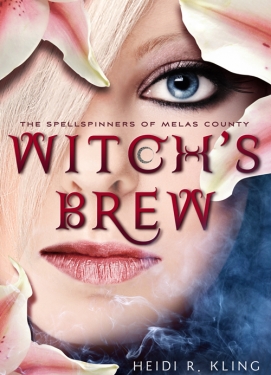
Witch’s Brew: The Spellspinners of Melas County (Heidi Kling)

spellthumb

What’s Cool from Coliloquy: In Witch’s Brew, Lily and Logan’s fate is already decided, but Heidi explores several different possible pathways for how they get there. She shares scenes that wouldn’t normally fit in a book format and gives readers more precious moments between the two young lovers. As the series progresses, you’ll see some normal narrative forms, interspersed with smaller scenes, alternate points of view, and a lot of “what if” scenarios. (Source.)

Coliloquy was a company creating interactive ebooks for the Kindle, which was semi-recently sold to digital publishing platform Vook. Witch’s Brew is the first book of a YA fantasy line of theirs. I’d encountered some articles about Coliloquy in the past, which made it sound as though the main selling point of the platform was that it was able to deliver reader metrics, not that it supported a significantly richer or different reading experience than other interactive fiction platforms out there.

The premise of Witch’s Brew is that the teenage witch Lily is preparing for the Gleaning, a mystical contest/battle against an evil warlock. Long ago light magic was apportioned to witches and dark magic to warlocks, and the Gleaning makes possible a redistribution of powers, which everyone apparently accepts is necessary even though the witches and warlocks who lose are Never Seen Again. But when Lily meets a breath-takingly sexy teen warlock who is able to speak to her telepathically, she begins to question whether she has been told the whole truth, and whether she and her hunky counterpart might not be the key to saving the future of magic. There are enchanted tattoos.

Side-characters include the beautiful, wise, shape-shifting mother figures of the coven (though there are some hints that all may not be completely as it seems there); Logan’s voodoo-using warlock buddy Chance (seemingly sort of a nice guy, though he doesn’t get a lot of character development); Lily’s angelic little sister Daisy, whom I could not stop picturing as Dawn Summers; and Jacob, the lead warlock, who has red-rimmed eyes, exhales toxic dust, and eats eggs whole, like a snake. He runs a pharmaceutical company, in case you weren’t sure of his moral alignment.

Here are some representative quotes:

“Girls,” she addressed us with flashing Indigo eyes, “join me, please.”

After the long hike, the magic eucalyptus smacked my system like a jolt of espresso.

The smell of beer mixed with the jubilant sounds of teenage revelry…

It’s a genre exercise, and it’s directed at people who fantasize about moody 16-year-old boys with chiseled abs and about being able to speak magical Gaelic. I wouldn’t say that it’s quite as far out of my preference zone as zombie horror, but this is not a genre where I tend to hang out just to enjoy the scenery, and this book is very much for people who do want to linger there. The marketing quote above is actually a pretty clear explanation of what interactivity is for in this book: giving you more “precious moments” between Lily and Logan.

Continue reading “Witch’s Brew: The Spellspinners of Melas County (Heidi Kling)”

Tonight Dies the Moon (Tom McHenry)

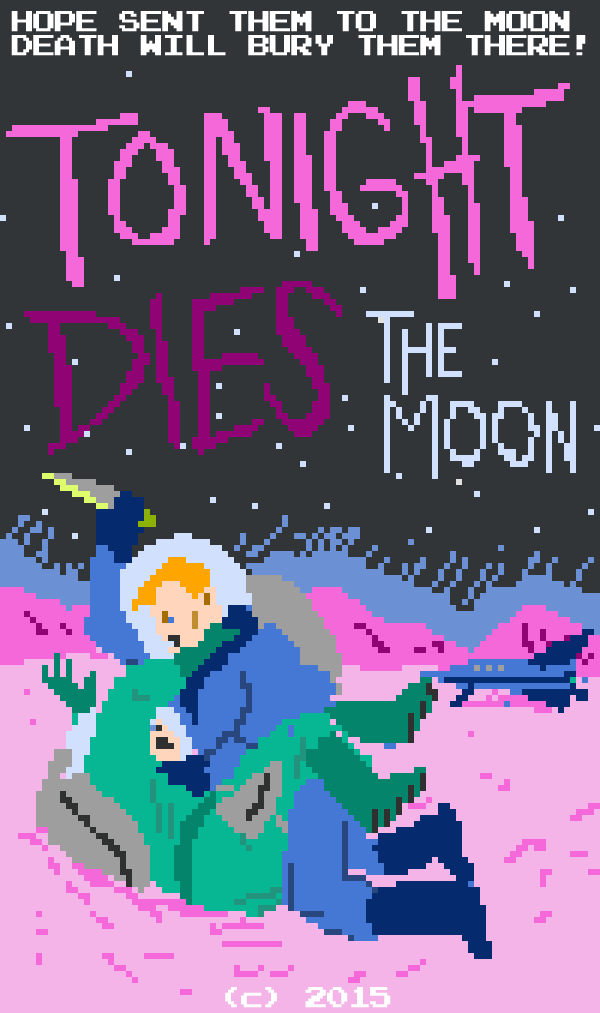
tonightdiesTom McHenry is familiar to people who follow Twine as the author of the grotesquely fascinating Horse Master. Tonight Dies the Moon is his Twine contribution to Antholojam, and is a diptych of stories about an ongoing Earth-vs-Moon conflict. It is less narcotically surreal than Horse Master, but it shows many of the same influences and artistic impulses. There is pixelated art, there is resource management more for the sake of the experience of managing resources than because the player can ever hope to gain anything thereby, there are small evocative hints of a large horrible dystopia.

At the beginning of the story, you’re allowed to choose which you come from, and have an entirely different experience depending on your selection.

If you choose the Moon, you live out your life as a space farmer in a roughly communist pod, obsessing over which of about a half dozen crops you should plant each year on your personal allotment. If you save up enough, you can buy a ticket back to Earth, but I’m not sure it’s possible to succeed. I managed to scrape together enough cash to buy a little extra land, but there are arbitrary crop failures and problems, and you periodically need to revamp your farm equipment or your yields drop, and you only have so many seasons available to you. At no point during your Moon life do you attack the Earth.

If you choose the Earth, you’re a young person living out a job both depressing and soul-numbingly boring, in which you control a combat drone attacking moon bases. You spend more of your time filling in spreadsheets than you do piloting your craft. Piloting the craft is slow and cumbersome but really easy anyway. It is the opposite of a first-person shooter, a videogame representation of combat that makes it boring and unheroic. Where Unmanned takes on the moral dimensions of drone warfare, Tonight Dies the Moon comes more or less from the starting point that it’s pretty horrible even without considering the experience of those being bombed. Though, of course, one should take that into account.

Both stories are less lonely than Horse Master. The Moon protagonist has fellows in ger living environment; the Earth protagonist has roommates and parents. This gives McHenry a little more scope for individual characterization, and he uses it well. The awkward conversation with the Earth protagonist’s parents is highly plausible, touched by love and anxiety and resentment in both directions. It can go well or badly, depending, though it may not be immediately obvious why, and this too feels accurate to family relationships, especially in transitional young adulthood.

Slightly more spoilery discussion after the jump, but for my tastes, this is one of the best Twine pieces I’ve played this year.

Continue reading “Tonight Dies the Moon (Tom McHenry)”