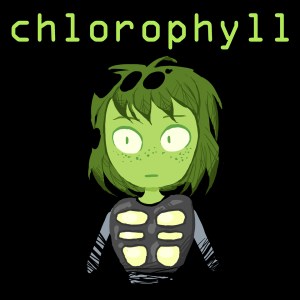
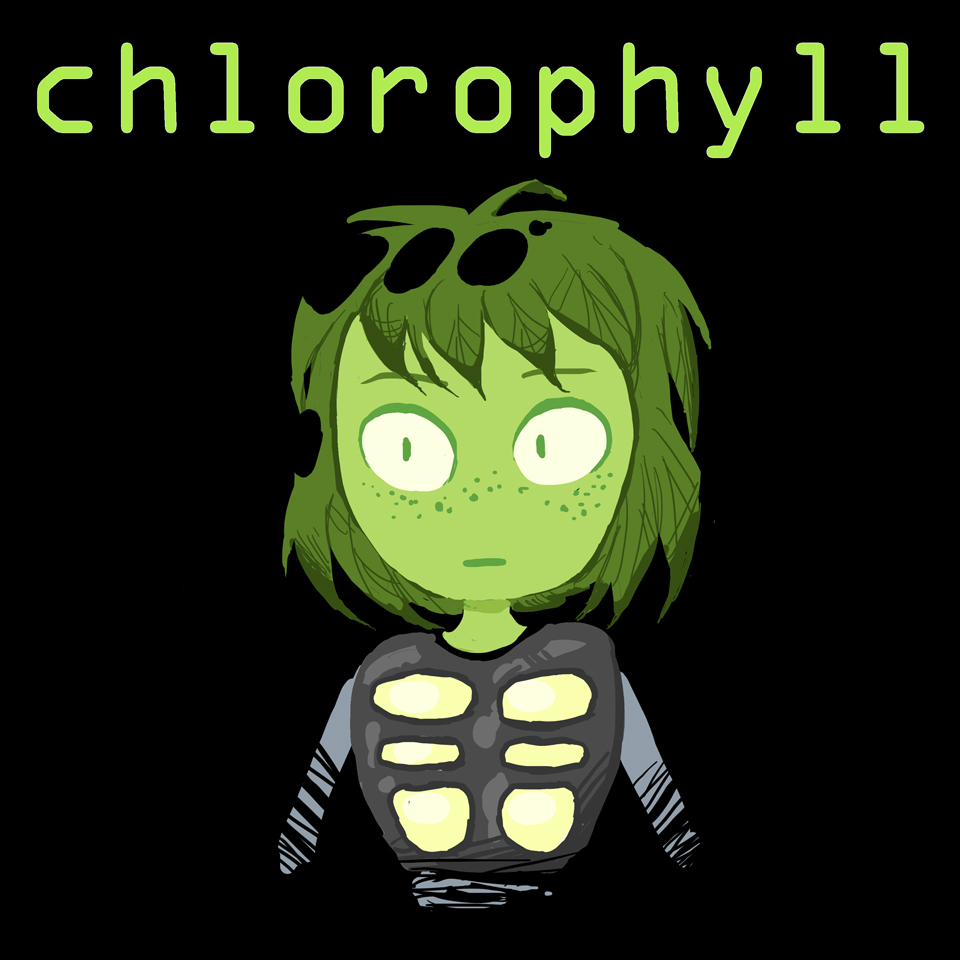
Chlorophyll is a lighthearted science fiction story by Steph Cherrywell, the author of Jacqueline, Jungle Queen. The premise is that you’re a sentient, mobile plant and have been brought along on a space colonization expedition by your mother, who is trying to discover what’s gone wrong with an abandoned space station. Your need to photosynthesize constantly provides a combined light/hunger puzzle that puts a fresh spin on a pair of rather elderly text adventure tropes.
The other puzzles work pretty well too. Eventually I needed to reach for the walkthrough, but that was mostly for reasons of time and general exhaustion and wanting to get through enough ParserComp games to vote, despite GDC travel. I think in other circumstances I would have gotten through most or all of the puzzles on my own. As in Jacqueline, Jungle Queen, I felt like the author had a pretty much textbook mastery of puzzle/map design for a game this size: you get a confined intro, then access to multiple puzzles at once, then narrow again to a more dramatic couple of endgame puzzles. It may be a standard structure, but it’s a standard for good reasons.
I had a stronger reaction to the story than to the puzzle structure. Except for the photosynthesis concept, the implications of your plant-based origins are developed gently and selectively. Plant culture bears a lot of resemblance to human culture, down to toy stores and hair leaf salons. Plant-person society is apparently all-female: male Xyloids are grown in special gardens and appear to be objectified and possibly non-mobile or even non-sentient.
Meanwhile the protagonist is right around (human-like) puberty, and this was handled with a few well-selected moments and bits of inner monologue. We see a growing desire for independence, a mixed curiosity and disquiet around sex, ambivalent feelings about a position somewhere between childhood and adulthood, and opportunities to play both sides of that divide at different points in the game. In a hair-dressing scene that fills no plot-critical function, the protagonist can explore different ways of presenting herself: does she see herself as glamorous? tomboyish? like a smaller edition of her Mom? And as simple as these options are, they capture something about the personal stakes of such decisions. Plenty of media present young teen girls as obsessed with hair and fashion, but flag up that behavior as shallow or “girly” in a negative sense. From the inside, all this is the opposite of shallow: it’s a whole complicated and confusing process of figuring out who you are as a social being, where you stand relative to sex and adulthood, and what set of signifiers will help you communicate those discoveries — or, if need be, camouflage the things you’re not ready to share.
In an understated way, Chlorophyll understands all that. Its protagonist is, yes, immature in an absolute sense, prone to sullenness and resentment of adults. But she’s doing a good job of handling the life stage she’s at. She’s capable of handling machinery and scientific problems as well as anyone her age could be expected to; she’s perceptive about work culture, sensitive about her changing relationship to her mother, and brave in the face of danger, while still being distinctively a girl and dealing with the kinds of issues that female-identifying people often deal with during puberty.
Then there’s Mom. The protagonist’s mother is put out of action fairly early on, in classic children’s/YA-literature style: the only way to get young people into adventure-hero roles is usually to remove the adults who would normally be responsible for dealing with serious situations. But this is handled reasonably adroitly. And despite the mother’s absence for the majority of the time, there are still a number of references back to her. I wouldn’t go so far as to say that the story is mainly about your relationship with her, but there are several points where it is important, and in particular one of the game’s key puzzle rewards doubles as a re-assessment of how Mom thinks of you.
This was enough to make me reflect on how rarely IF touches on mother/daughter relationships at all. There’s a bit of this in Common Ground, and some in my own work Bee, but I’m not thinking of a lot of other examples.
I wouldn’t really have pointed out mother-daughter relationships as a Thing That Is Lacking before playing Chlorophyll, but when I encountered it here, I found it refreshing all out of proportion with what actually happens in this game — which is a pretty good sign of an unsatisfied longing.
This is perhaps related to another wish I had previously identified: I want to play more games featuring middle-aged and older women in established career positions. I might be interested in a show about a female superhero or a female soldier, but I don’t identify with or aspire to those situations. I’m more excited by women who have agency and enjoy respect because of what they’ve built and accomplished, through dedication and talent and social savvy. I know women like this in real life, and am fortunate enough to count some as mentors and friends, but such characters don’t come along as often as I’d like in any of the media I consume. When you do get an older female character in a career role, she’s often portrayed as a stone-cold bitch, a Miranda Priestly or a Patty Hewes, having lost every humane impulse in the process of reaching her position. I want more CJ Creggs, please — and, indeed, more Annalise Keatings, because morally ambiguous though Annalise is, she is motivated by a mix of vulnerability, loyalty, ambition, and (sometimes warped) principle. Her brilliance and her success exist alongside all the other components of a human.
I want more of this kind of representation because, frankly, I am looking for hints. Navigating a career you take seriously often presents special challenges for women. There’s the challenge of finding a sweet spot between being too passive to be effective, and being assertive in ways that many people will accept only from men; between buying into the prevailing work culture too little to be an acceptable fit, or so much that one is doing nothing to make it easier for the generation of women who will come afterward; between being dismissed as unambitious, and being condemned for not being enough of a team player. In some positions and corporate cultures, no sweet spot exists. (See also Mattie Brice on The Lost Woman in Games.) Whether this issue is apparent on the outside or not, it is the subject of a lot of thought, and of many of the conversations I have with other women, both inside and outside the game industry.
So I welcome more examples of how to be, and when something with a mature female character with ambitions beyond family life does come along, I tend to watch/read/play that thing avidly despite whatever other problems it may have.
Anyway, Chlorophyll. I enjoyed it, and I’m glad to see another entry from Steph Cherrywell. I had a few implementation nitpicks I’ll put on the other side of spoiler space, but essentially it’s fun, gently challenging, with a fresh enough concept to keep things interesting, and a handling of its female characters that I found very welcome. And while it’s mostly focused on a pubescent girl, it sketches a few of those elusive mature female characters in the background, not only your mother but all the others who inhabit and run the station.
Continue reading “ParserComp: Chlorophyll (and a digression about female characters)”

 Emily Short's Interactive Storytelling