The 39 Steps (John Buchan remade)

Screen Shot 2015-10-01 at 11.12.38 AM

The 39 Steps app is an adaptation of the book and movie of the same name, available on Steam. It gets a lot of comments about how it is not a game, which is probably unsurprising given the Steam audience. Some of the things written about it make defenses about how it’s really meant to be an enhanced book, and therefore the lack of gameplay is to be expected.

I don’t demand recognizable gameplay elements in my interactive stories, but I do want some consistency in how the interface works and how it’s engaging the audience.

39 Steps uses interaction and gestures for pacing: click to move the story onward and read more text. Rotate the mouse to move the text forward or backwards. (I hated this one. I don’t have a mouse; I’m using a trackpad. I never quite worked out whether I was doing the gesture correctly.)

It also uses interaction to create a sense of place and context. Sometimes the text narrative will pause and put you in an environment with two or three interactive objects you can look at more closely. This is a bit like Gone Home with less walking or looking for pale pixels in dim corners, which, in my view, is a net positive. The main narrative is full of pompous, stalwart-colonial stuff about going to South Africa and establishing diamond mines, or the protagonist’s friend deciding to try his luck in the Congo. This is true to its original period but hard now to read without at least an undercurrent of distress. So when in the protagonist’s club we find objects such as this:

Screen Shot 2015-10-01 at 11.09.14 AM

…they serve to ground the story more concretely in its particular time, and to suggest that the app doesn’t uncritically approve of all this empire-building. (Unless, that is, you’re the sort of person who can look at that map and think “Rah, the good old days!”)

All the same, though, it felt like an adaptation without a strong understanding — as though someone had looked at the original story and asked where they could stick in some pictures and clickable bits, rather than reimagining it from the ground up as an interactive story.

This piece was recommended to me by someone who finds most traditional interactive fiction disappointing, because they’re looking for more audio-visual richness.

(Confession: I found this piece sufficiently irritating to interact with that I did not complete the whole thing.)
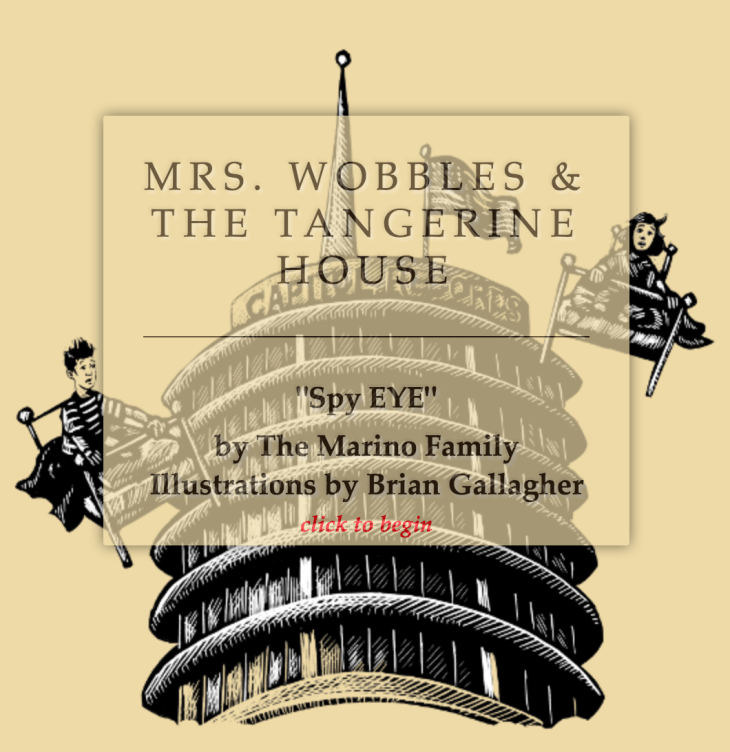
 

Spy EYE (The Marino Family, Spring Thing 2018)

Screen Shot 2018-04-15 at 1.06.05 PM.pngFrom Spring Thing 2018, Spy EYE is a continuation of the Mrs. Wobbles series (Mysterious Floor; Parrot the Pirate; Switcheroo). Like the earlier pieces in the series, it’s an Undum work that tells a part-fantasy, part-reality story about children in foster care. (I also highly recommend Lucian Smith’s guest post about Switcheroo.)

In this case, the protagonists are a Latinx brother and sister whose parents are missing, and the story revolves around going to look for them and rescue them.The story lets you play as either Juan (the older brother) or Ichel (the younger sister), and they have different takes on whether to expect their parents back any time soon. That touch reminded me of a few other stories where the choice of viewpoint character is meant to shed some light on a family situation — Stephen Granade’s Common Ground, most notably.

Continue reading “Spy EYE (The Marino Family, Spring Thing 2018)”

Known Unknowns (Brendan Patrick Hennessy)

knownunknownsKnown Unknowns is a four-part Twine series by the author of Birdland and set in the same universe. The protagonist is Nadia, a Toronto teenager who is trying to deal with her sexuality, fraught relationships with several of her classmates, various annoying teachers, and the real possibility that she has just encountered a ghost raccoon.

Like Birdland, this is Y/A queer romance — but this time the choices are less about self-characterization and more about how you’re going to interact with the side characters. (And, as in Birdland, the core plot remains the same regardless. This is not as far as I can tell a heavily branching story, but the interpretation of individual scenes can vary a good bit.) Known Unknowns is immensely charming and accessible, solidly structured and well paced — and as it’s now available in its complete form, there’s no waiting between episodes.

Continue reading “Known Unknowns (Brendan Patrick Hennessy)”

Grayscale (D. Fox Harrell et al)

Screen Shot 2018-03-31 at 7.01.51 AM.png

Grayscale is a short piece about harassment and appropriate behavior in the workplace, conducted through an email interface (which makes it one of a smallish category of epistolary IF). As the HR representative, you choose which of several responses to offer to each complaint you receive. Do you intervene between coworkers? File harassment reports when you have only tenuous evidence to work with? Allow employees special assistance because of issues in their personal life?

The framing of the game implies that many of these would be tricky judgment calls:

Tales of sexism, sexual harassment, and sexual assault are bubbling angrily through the wires. In late 2017, the media attention to this perpetual ill and the harrowing #metoo stories sparked us to share our own computational tale of fiction that we humbly hope can participate in this dialogue… The experience is intended to provoke players to reflect critically on sexism in the workplace, both overt & hostile and more subtle.

In practice, I found myself relatively unambivalent about most of the events in the story. Where I was uncertain, it seemed as though a real person in this situation would be aware of applicable laws and corporate policies. (It’s possible that I’m not quite the target audience, of course: as a female manager, I’ve had occasion to think about a variety of sexism-in-the-workplace issues from multiple angles by now.)

As to the characters — they came through distinctly enough to keep me engaged for the (short) duration of the game, but there wasn’t really enough time for them to develop extensively.

In terms of interface and pacing, though, I found it worked very well for me. The email interface means it’s easy to review past interactions. There are times when several urgent emails arrive at once, and others when things feel relatively quiet. The protagonist’s private experiences are tracked in a “notes” section (which also includes a diagram of the company hierarchy — useful when you want to double check whether one character is the boss of another, or merely a sniping colleague). As UI, it sufficiently replicates UI I’m already using all the time to feel comparatively transparent.

Instead of Power

CarrieThis is part review, part essay. There are light spoilers for Naomi Alderman’s The Power and N. K. Jemisin’s Broken Earth series, and major spoilers for The Last Jedi.

*

I wrote previously about my hopes for The Last Jedi: that I wanted to see a movie about Leia as an older female leader, a woman of command. I felt the need for that movie badly. I wasn’t at all sure I was going to get it.

So I went to the cinema in a spirit of apprehension and hope.
Continue reading “Instead of Power”

Reigns: Her Majesty (Leigh Alexander / Nerial)

Screen Shot 2017-12-27 at 12.03.06 PM

Reigns is a piece of interactive narrative with a Tinder-style mechanic (swipe left or right to accept the requests of your various friends, advisors, and enemies) and story snippets unlocked by where your stats are so far. At all times you need to keep your stats from reaching maximum or minimum, or your current incarnation will die — so trying to keep your current character going requires sometimes making individual choices that wouldn’t be what you want; and sometimes there’s a narrative-progressing move you could make… but you can’t afford to do it right now without dying in the process. Meanwhile, choices give you a clue what they’re likely to affect, but it’s not complete information — you can sometimes guess wrong about whether an option will raise or lower a particular stat, and thus kill yourself by accident.

The story experience that emerges thus feels a bit capricious but often entertaining. It’s not roleplaying of the kind where you can choose a protagonist personality and pursue it consistently, because consistently heading in any direction will get you killed.

There’s also a long-term way to win, but I never figured it out, in part because I wasn’t enough into the story to keep messing with it.

Reigns: Her Majesty takes that same simple concept, re-centers it on a queen protagonist, and makes it much much funnier.

Continue reading “Reigns: Her Majesty (Leigh Alexander / Nerial)”