Glulx Entry Points version 8 troubleshooting

Because I’ve gotten a couple of emails about this now:

The latest version of Glulx Entry Points is version 8. That is the version included inside the Inform package, if you download the latest Inform.

There are other dependent extensions (such as my Graphical Window extension and the related Location Images extension) that require at least Glulx Entry Points version 7. If you include one of those dependent extensions and compile, you may get a problem message saying that you require Glulx Entry Points version 7. (Version 8 will do for this purpose; it just won’t accept anything *earlier* than version 7.)

If you get that message:
— make sure you have the latest version of Inform, which has version 8 of Glulx Entry Points;
— make sure that you are not overriding this extension. You might have an older version of GEP installed in your user extension folder, in which case Inform will look there first. This is not a bug: we want authors to be able to use older extension versions if they need to for compatibility on legacy projects. But it does mean that if you have, say, GEP v6 installed in your user folder, Inform will find that first, in preference to the version 8 extension included in the package. If you remove or delete that version of the extension, Inform will be able to find v8 again.

Here ends the public service announcement.

Introcomp 2010

Introcomp, the yearly competition for the beginnings of IF games, is enjoying an unusually strong year this year, with quite a few entries and fairly high quality overall. My thoughts — mildly spoilery — follow the cut. If you’re interested in playing the games and forming an opinion yourself, I encourage you to do so. I’ve also truncated my RSS feed for the time being so that the content here won’t syndicate to Planet-IF, as is my usual custom during competitions. I’ll turn it back to full strength soon.

So:

Continue reading “Introcomp 2010”

Readings, News

A new post from the Echo Bazaar folk, on choices in games — including what they call the “reflective” choice, which invites the player to think about why he’s doing something, or act expressively, without necessarily expecting the game to pick up on that. We’ve seen that in IF in a few places. Certain portions at the beginning of Blue Lacuna do this thing of collecting responses from the player without using them to affect the world model — but they certainly affect the experience of playing and the meaning of the story.

PAX Prime is going to feature an IF panel and its own IF suite! (That’s Seattle, Sept. 3-5.) But tickets are selling quickly. If you want to go, you may want to make your plans soon.

Two links

Enthusiastic, spoilery review of Make It Good from someone who doesn’t generally seem to be a big fan of IF.

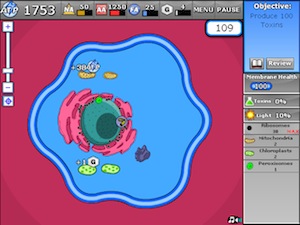
Cellcraft, an RTS-style game about cellular biology, from the creator of Super Energy Apocalypse. More thorough review to follow later, but the short version is: I think the tutorial is paced wrong, and the interface has a few dozen things that I would tweak. On the other hand, by the end I was thoroughly enjoying this despite the quirks, and recalling some things about golgi bodies and the endoplasmic reticulum that I haven’t thought about for quite a while. And the silly, cute story provides a bit of motivation for the whole thing.