Some Articles from Procedural Generation

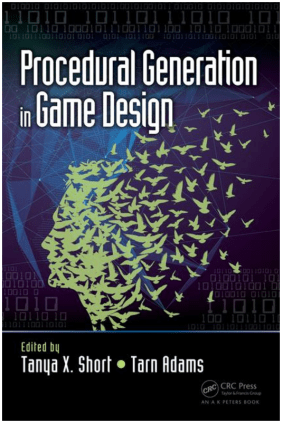
Screen Shot 2017-06-08 at 7.10.14 AMI mentioned earlier that Procedural Generation in Game Design is available, and that I have a chapter in it. I’ve now had a chance to look at a few of the chapters that I didn’t read previously during the publishing stage, and wanted to highlight a few of these as especially relevant to IF readers.

Joris Dormans’ chapter on Cyclic Generation talks about design patterns for procedural dungeons, including the most systematic section on the deployment of locks and keys I’ve recall seeing anywhere. He identifies concepts such as single- or multipurpose keys, consumable and reusable keys, asymmetrical and “valve” doors, safe and unsafe locks and keys, and other concepts; if you’re looking for design patterns for puzzle games gated on geography, this has a lot of ideas you might want to raid. You can get some of the same material from Dormans’ lecture at PROCJAM last year in Falmouth, but the article gives you more reference material.

Ben Kybartas writes about story and plot generation using expansion and rewriting grammars. The rewriting rules (“secondary rewrite rules” in Kybartas’ terminology) take a simple plot and then add complications to it based on what elements already exist in the game world: for instance, a simple plot about someone cheating at poker could be expanded with a complication that they have an accomplice in cheating — but only if there is someone with emotional ties that would make them willing to participate in such a deception. Rewrite rules could even add nodes to the story that provide player choice. I would have welcomed more information from finished games about how this method goes down in practice.

Jason Grinblat’s article on Emergent Narratives and Story Volumes talks about how procedurality can be used to define the themes of all the possible stories to emerge from that system; it ends in a close study of the tabletop storygame Fiasco, but also includes examples from Caves of Qud.

Mark R. Johnson writes about several aspects of Ultima Ratio Regum, but in particular about the procedural generation of dialogue for different character types and personality styles — something that’s obviously of strong interest and ties into some of the work I’m doing at Spirit AI as well as in my own practice.

(PS: 2017 PROCJAM Kickstarter fundraising is in its last days; you still have an option to help kickstart it.)
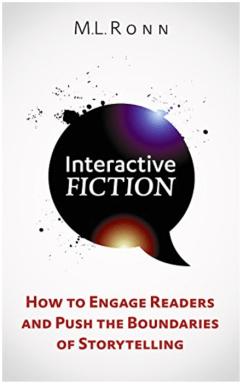
Interactive Fiction (ML Ronn)

Screen Shot 2017-06-03 at 8.36.21 PM.pngThe full title of this is Interactive Fiction: How to Engage Readers and Push the Boundaries of Storytelling (ML Ronn), and I read it as part of the same research that led me to read Deb Potter’s guide.

(Throughout the below, I’ll refer to Ronn as “he” because Ronn mentions using the pen name Michael in places, despite the gender non-specific initials on the cover.)

Ronn’s book makes an entertaining diptych to Deb Potter’s piece, since he starts out in the introduction by vehemently rejecting a lot of the things Potter embraces: writing for children, leaving protagonists blank, deploying frequent deaths, and the use of the second person POV in general.

Ronn claims it’s flatly impossible to tell a good or characterful story in 2nd person POV; there are plenty of counter-examples in the IF canon but instead I’ll take the opportunity to recommend some Jennifer Egan. To be fair, however, I think he’s really railing against AFGNCAAPs rather than second person.

Continue reading “Interactive Fiction (ML Ronn)”

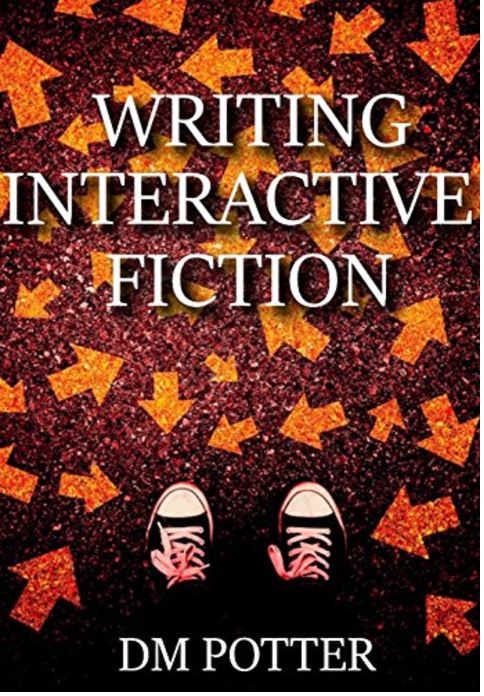
Writing Interactive Fiction (Deb Potter)

Screen Shot 2017-06-03 at 6.55.20 PM.pngWith the reappearance of IF as a commercial art form, there’s also been a rise in books out there to guide would-be writers in the form.


Deb Potter writes for the You Say Which Way series, which is to say pretty much straight CYOA. She has released Writing Interactive Fiction to teach others how to do the same, in a breezy and accessible style. Potter does not assume the reader has a great deal of pre-existing experience in the space, and starts out exploring basic concepts like choice and consequence, explaining why your basic left-or-right choice is usually such a bore, and suggesting that authors should give readers some warning before an instant death. She also comes down against using IF for moral preaching.

But there are a few places where her suggestions either depart from what I’d tend to consider received wisdom in the IF community, or introduce new terminology. In particular, she talks a lot about how to help the player build a mental model of the structure of the CYOA, and how to draw attention towards (or away from) choices that they might want/not want to replay.

Continue reading “Writing Interactive Fiction (Deb Potter)”

Strayed (Adventure Cow)

Strayed.png

Out today for Android is Strayed, an interactive fiction game by Adventure Cow. It includes writing by Gavin Inglis (known around here for Hana Feels, Eerie Estate Agent, several Fallen London stories):

You’re only fifteen miles from home; but those fifteen miles are a lonely road through woods drenched in mystery, that many locals dare not enter. Rain batters your windscreen; your radio reports an aggressive beast, lashing out against passers-by; and there is something — something — waiting on the road ahead. Your decisions will matter in this game; perhaps more than you think.

As this is currently an Android release, I haven’t had a chance to play it myself.

In Case of Emergency (A Door in a Wall)

icoe-cube-min

I’ve been hearing about A Door in a Wall for a while, and reading the rave reviews they get from escape room and immersive theatre review blog The Logic Escapes Me. This month, we decided to hire them to run a game for the London IF Meetup — one of their smaller pieces, suitable for 15-25 players rather than being performed in a whole pre-set house. They sent out a facilitator who gave the story background, MC’d, scored and awarded prizes at the end; and a suitcase full of clue and puzzle items. Our 20-odd group divided into teams of 1-4 people apiece, and we were off.

Continue reading “In Case of Emergency (A Door in a Wall)”

Chris Crawford’s Encounter Editor

Yesterday, Chris Crawford put up a post with the following plea:

I’m asking everybody to consider an important post I have made at erasmatazz.com/library/intera…. There’s 25 years of work hanging on this.

He also emailed me the same message directly. So I had a look.

The basic premise is as follows: Chris’ long-running Storytron system, designed to make interactive storyworlds, needs a lot more content in order to show off its hypothesized strengths. In particular, it needs content that feels handcrafted to some degree, to go with the procedural descriptions of characters gossiping, falling in love, and fighting. Or, as Chris puts it,

After many years of trying, I have learned the hard way that the procedurally intense interactions provided by the Storytron technology lack the color that most people expect from traditional storytelling. There’s a repetitive, mechanical feel to those interactions, and while they are dramatically more intense, more significant, they are like the skeleton of the story, the core elements, in need to fleshing out with muscle and skin. That’s the purpose of Encounters. They provide a more data-intense form of interaction that is shallower in dramatic significance, but more colorful.

To build this, he created an encounter editor. The Encounter Editor lets people design encounters that:

  • are locked or unlocked by certain prerequisites consisting of other encounters
  • start with a description of a meeting with another character
  • let the player make a choice in response
  • provide several possible reactions for NPCs, including some variable-based probability around which of those reactions they’re most likely to choose

In other words, the encounter bears a strong resemblance to storylets in StoryNexus. The editor looks like this:

Screen Shot 2017-06-21 at 8.15.50 AM.png

It’s a little more constrained than StoryNexus about how prerequisites work — they can only depend on what other encounters the player has run into, not on the whole range of variables in the world state.

Continue reading “Chris Crawford’s Encounter Editor”