My latest RPS column talks about on Birdland‘s dominance this year (and why it’s awesome in general).
Mustard, Music, and Murder
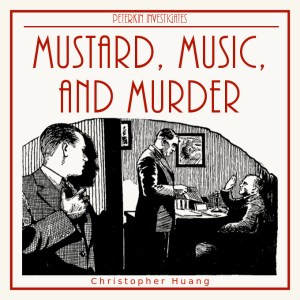 Christopher Huang’s Mustard, Music, and Murder is a less intricate construction than his previous, highly randomized detective puzzler An Act of Murder, but it’s likely to appeal to many of the same players.
Mustard is a bite-sized mystery IF set after WWI, where the central challenge is to work out the alibis of various office workers who might have committed a murder.
In the rather artificial mode of traditional logic puzzles, the characters turn out to have interacted in neatly quarter-hour chunks, so you need to interview everyone and then work out the resulting schedule to find out who could possibly have been alone at the right time. But as with An Act of Murder, realism isn’t precisely the point here. Instead, the game feels a bit like an early Lord Peter short, offering fifteen minutes’ worth of deduction in a cozy 1920s setting. The environment is implemented fairly lightly to avoid red herrings, but includes several entertaining surprises.
Mustard, Music, and Murder includes a hint system that will step you through the solution if need be, so there’s no chance of being stuck, but I didn’t need to rely on that too heavily.
Huang is also crowdfunding a novel about Peterkin, the game’s protagonist, and his fondness for this period and genre shine through.
End of June Link Assortment
June 30, Introcomp intent deadline. You have just a few hours to register your intent to enter this year’s Introcomp, a chance to get your game introduction in front of a bunch of players and collect their feedback.
July 3, Oxford, the Oxford/London Meetup is doing a WIP exchange to share and critique one another’s work. The RSVP list is currently full, but if you join the waitlist you’ll be notified if a spot becomes available. (These sessions need to be pretty small to be effective, hence the low ceiling.)
July 9, the SF Bay Area IF group meets.
I’ll be in Hong Kong, Kyoto, Tokyo, Honolulu, and Seattle over the course of late July/August. If you’re in one of those places and think it would be useful to meet and talk, drop me a line. My time is not unlimited, but as always I’m happy to try to set things up where useful.
Sept 17 (well into the future, but worth knowing in advance) there’s an all-day Roguelike Celebration event that might be of crossover interest to IF folks, especially if you like procedural generation or procedural narrative. Nick Montfort will be speaking.
Interactive Fiction Technology Foundation Launch
Today is the launch of the Interactive Fiction Technology Foundation (main website here). This is a non-profit, fundraising body in a position to do things like
- provide long-term stewardship of important IP assets and infrastructure
- raise (tax deductible!) funds for critically important developments such as Twine
I know this may sound rather dull and legal, but it is in fact very important. A lot of fundamental assets of the interactive fiction community, from the IF Archive to the various coding tools, have survived on quiet individual support — but no one person is able to provide support indefinitely. IFTF will be in a position to receive rights assignments and look after some of these projects. And some things, like Twine itself, perform their mission effectively only by being freeware, but would benefit from financial support from those in a position to offer it.
Then there are plans like this:
IFTF intends to create a program during the coming year that will help identify ways to bring popular IF platforms up to modern accessibility standards. We will assist projects in implementing these improvements, and create permanent accessibility guidelines for future IF work.
Again, accessibility is important, but often individual authors don’t have the skills or resources to make sure they’re meeting accessibility standards. This is a good work, and I’m excited to see where it goes.
IF Only on Hadean Lands
I talk about Hadean Lands (recently released on Steam!) on Rock Paper Shotgun.
Mysterious Package Company and Narrative of Objects
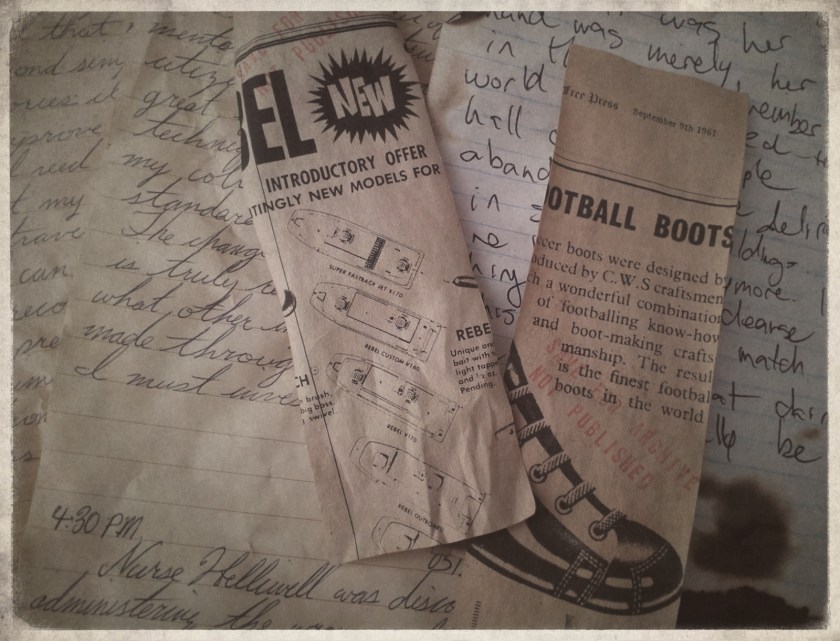
Last year, I interviewed the spokesman of the Mysterious Package Company about their Kickstarted project The Century Beast. The company was doing a form of object-based storytelling that struck me as really fascinating, though — as they also encouraged secrecy around their projects — it was hard to get exact details about what one could expect.
Since then, their Kickstarter has been successful and they’ve been sending out Century Beast packages. I bought a Bronze version of that experience for myself, less deluxe but also less exceptionally expensive than some of the other tiers of the experience. I’ve also heard from a few other people who bought MPC products after reading my interview. I’ve come away thinking the idea is still pretty interesting but that the execution is a mix of excellent, the less-than-excellent, and the problematic.
I’d like to talk about all of that, though I’m conscious of the need not to spoil too much, so I’ll avoid specifics as I do when writing about escape rooms.
Continue reading “Mysterious Package Company and Narrative of Objects”
Bring Out Your Dead: Interface
Bring Out Your Dead is a jam I ran for defunct WIPs, over the week around summer solstice. It is now complete, and you can see the 89 entries. Not all of these are interactive fiction: being on itch meant that the jam attracted a number of not-even-slightly IF projects, from a hexagonal Tetris variant to a bullet-hell shoot-em-up to Conflux, a 3D puzzle game about getting the right perspective on your environment.
Providing any kind of coverage of all 89 works is more than I can do, but I did want to look at a few concept trend over the next few days, starting with experiments in storytelling interface.
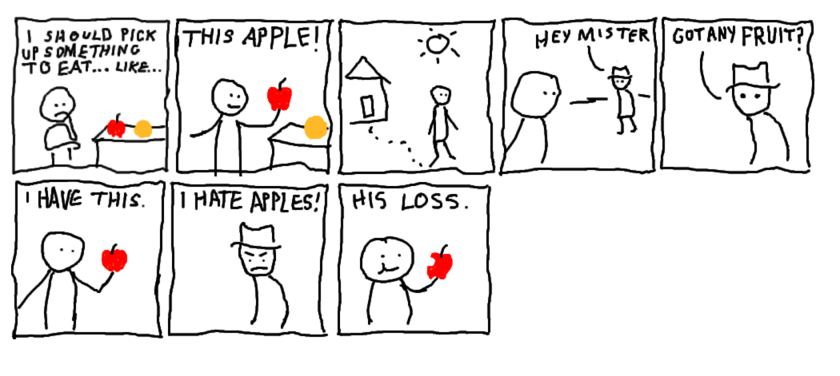
Interactive Comics Prototype (Carl Muckenhoupt) is an interactive comic where changes in one panel instantly propagate forward to later panels. That means it’s possible to explore a Time Cave-structured story extensively without moving on from a single page.
What would this look like for a longer structure? I could imagine each strip being itself a node in a larger tree; I could also imagine a game where you’re actually working your way backwards, trying to open up earlier panels so that you could exercise greater and greater agency, in the style of 18 Rooms to Home. I would definitely play more of something like this.
 Emily Short's Interactive Storytelling