Bundle In A Box – Adventure Bundle

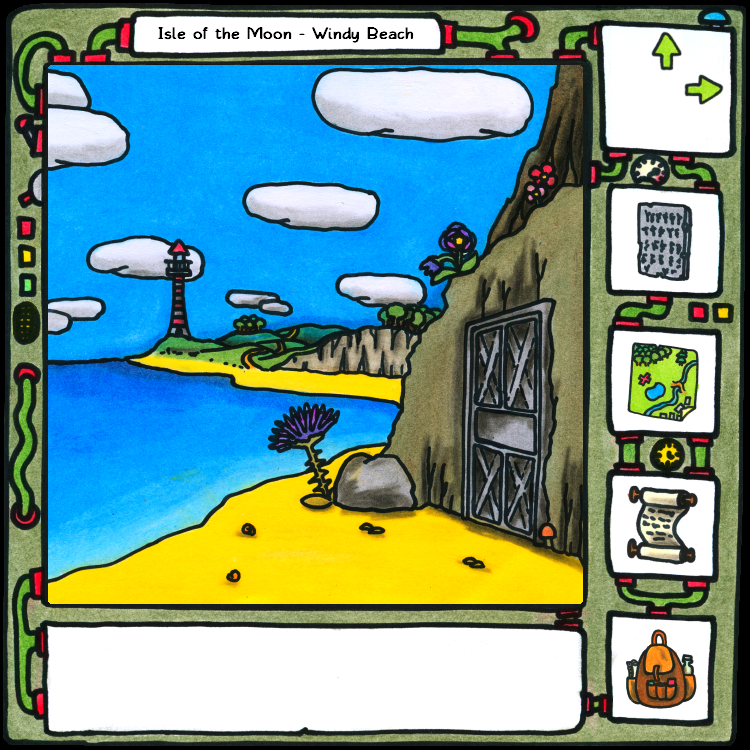
Out today at bundle-in-a-box.com is a very reasonably-priced bundle of adventure games, both graphical and text, including new work by Jonas Kyratzes (screenshot above). Konstantinos Dimopoulos explains:

We will exclusively debut the whimsical The Sea Will Claim Everything by Jonas Kyratzes and offer six more games: Gemini Rue, Metal Dead, The Shivah, Ben There, Dan That!, Time Gentlemen, Please! and – for the first time ever – the downloadable version of 1893: A World’s Fair Mystery text-adventure (previously only available as a physical product). Yes, we are indeed hoping to further fuel the current Adventure Game Renaissance!

While I haven’t played the graphical games in this collection, I’ve heard great things about The Shivah and Time Gentlemen, Please!. 1893 remains one of the most extensive settings ever offered in text adventure form, a meticulous historical recreation that is engaging to explore whether or not you choose to engage with the plot and puzzles.

Pricing for the Bundle In a Box follows the pay-what-you-want model with a low minimum; proceeds go to establishing an indie dev grant fund and to charity.
A Small Roundup of Interesting Things

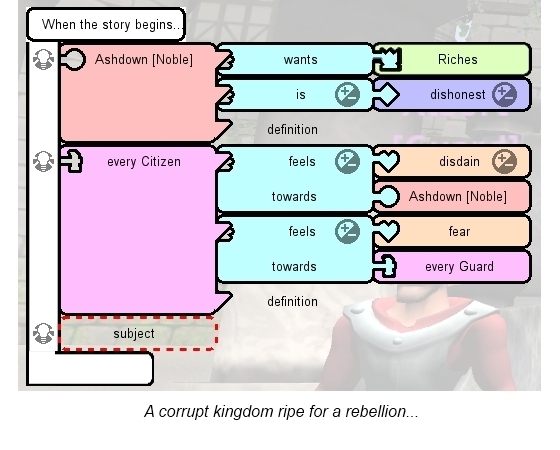
Storybricks, now fundraising on Kickstarter, is an AI project to allow users to create generated stories in an MMO environment. The project provides an authoring tool for establishing characters’ desires, relationships, moods, and basic conversation:

The engine then brings the results to life within a 3D fantasy kingdom. The Storybricks team has posted a public demo that you can try out for yourself.

Playfic, Andy Baio and Cooper McHatton’s website for playing and writing Inform games online, has had a successful three months, with hundreds of new games posted and (collectively) around 85,000 play sessions. Now Playfic has added the ability (crucial, in my opinion) for authors to include extensions from Inform’s extension site, meaning that supported games can be more complex and make use of a wide range of pre-existing tools.

Cover Stories is a minicomp pairing artists and authors of interactive fiction. The first phase (now over) collected dozens of pieces of cover art; during the second phase (now running), authors may select one of the submissions and write a short game suitable for that cover. There are still some cool images unclaimed. Rules and details may be found here.

Endless, Nameless by Adam Cadre

Endless, Nameless is Adam Cadre’s latest game. The surrounding text claims that it’s the relic of the bulletin board age, but anyone familiar with Adam’s oeuvre won’t be surprised to know there’s a bit more to it than a retro remake. There’s no way to write a substantive review without addressing the ways in which it takes a twist, though; it’s worth playing enough to find out just exactly how it’s going to be not what you think. So please consider giving it a try before reading on.

Continue reading “Endless, Nameless by Adam Cadre”

Hap Aziz and Colonial Williamsburg

Hap Aziz, a doctoral researcher in the use of interactive fiction for education, is creating an educational game about Colonial Williamsburg. The Historical Williamsburg Living Narrative is currently gathering funding through Kickstarter.

Hap was good enough to talk to me about his approach to the educational aspects of the project: why he chose this particular period, the teaching aims of the game, how it relates to other IF he’s encountered, and his wishlist of IF tools for educational gaming.

Continue reading “Hap Aziz and Colonial Williamsburg”

Frankenstein, by Dave Morris with inkle studios

Frankenstein, written by Dave Morris and implemented by inkle studios, is an iPad app retelling Mary Shelley’s original tale in a new interactive format.

Morris’ Frankenstein follows the essential plot of Shelley’s, with a couple of key deviations. Victor Frankenstein’s experiments take place in revolutionary Paris rather than at the university of Ingolstadt; the narrative frame of the original story is peeled off, so that it no longer begins with Frankenstein meeting a shipful of adventurers in the north Atlantic, and the meeting on the ice occurs only at the end.

Removing the frame gives the story a certain immediacy. Victor’s experiments are told in the present and the horror of them is more directly present than they would have been via flashback; and flashback is notoriously tricky in interactive narrative because it often makes the reader question how she can possibly be affecting events that are, from the point of view of the frame narrative, already in the past.

Continue reading “Frankenstein, by Dave Morris with inkle studios”