On Gostak, Nemean Lion.
Author: emshortif
The conversational “script”
Something that emerged from my reading on conversational analysis is how many of our conversations in daily life are essentially pre-scripted, not in their details but in their overall shape. Someone you don’t know well calls you on the phone: you identify yourselves to each other, exchange a little small talk, get to the point of the telephone call, resolve that business, and hang up. You go to a movie: you tell the person behind the desk what you want to see and when, that person prints tickets and tells you the price, you pay, you exchange concluding civilities and leave.
It might seem that we can negotiate these scenes because of our natural language fluency, but that’s not really the case (or not all of it): context helps a huge amount. I’m terrible at following a conversation between two French speakers I don’t know anything about, but I’m comfortable ordering a restaurant meal, buying stuff at a store, checking into a hotel, etc. — because those are situations for which I not only have the specific vocabulary but have very clear expectations about each stage of interaction to help me guess what an ambiguous utterance might mean.
It occurred to me that this idea of scripts might help address a particular problem with characters in open/exploratory IF where the player can choose when and how long to interact with each person in a landscape full of (say) shopkeepers, tourists, bus conductors, etc. One usually has a choice of making these interactions either very curtailed or very unrealistic: either you can *only* talk to the shopkeeper about the price of milk, or you’re allowed to ply him with a lot of questions about everything under the sun, which a real shopkeeper would probably try to cut short.
So my current implementation works this way:
Infidel Again
Finished Infidel this evening, after consulting the hints about just a couple of points (which turned out to be guess-the-verb-y things where we had the right idea).
Overall, I’m surprised by how relatively easy it is — the hieroglyphics puzzles are fun and consistent but not that hugely brain-teasing. It’s really easy to lock yourself out of victory by doing the wrong things in the wrong sequence, but mostly that’s about execution (remember to pick up your knapsack again before leaving an area!!) rather than about figuring anything out in particular. I found myself thinking that the emphasis on performance actually makes it a little more like a platformer than modern IF tends to be. It’s very hard to get to the end without having to replay parts — probably most of the game at least once, and some pieces perhaps multiple times — and even when you’re replaying it’s easy to screw something up if you drop the wrong thing in the wrong place and forget to pick it up again, or take a wrong direction by accident.
After a while it becomes a kind of proficiency run, to do all the necessary steps with no extras and no mistakes.
Idea to Implementation
One of the most tricky aspects of amateur game development is just working out what workflow you’re going to use to get from point A, your germ of a premise, to point B, the finished game you can release. (This is not always as much of a solved problem in commercial game development as one might expect, either, but a commercial project tends to have some people with prior experience shaping a game who have a plan — whether or not it’s a good plan — about what needs to happen in what order.)
Lately I’ve adopted a new approach to this, and it’s made me look back on how I’ve done such things in the past, and the whole gory evolution (which is probably not over yet) of my implementation strategy.
 Implement first! Design later!: You open up your IF tool of choice and you just go. Implement a room or two, some stuff to go in it, maybe a character. Write whatever comes into your head, then seek out the connections that come out of it.
In my experience, it’s really hard to finish this kind of game. I’ve started lots this way, especially when I was new to IF writing, and that was all useful experience because it familiarized me with my tools and was a kind of play. But sooner or later you hit a wall where you realize that your doodlings aren’t going anywhere and you have no particular end in mind; or you do, but there’s not a coherent plot, the backstory doesn’t work consistently, the pacing is off. No design intentionality has gone into the project, and sooner or later that becomes obviously a problem. At that point you can either ditch the project and start a new one, or step back and do some intentional design work on the project, then come back to implementing.
There’s a real risk, though, that if you’re alternating implementation with incremental design you’ll let yourself consistently avoid the really difficult pieces. “Ending goes here.” “Something interesting happens, I’m not sure what, and the player winds up at Alpha Centauri.” “A coding miracle occurs because I have no idea how to do this.” You may not even realize that you’re doing it… until sooner or later you realize that thing is just not getting done. And isn’t ever going to.
Guilty pleasures
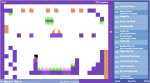 After hearing about it for a while and thinking it basically sounded like a silly gimmick, I finally tried Achievement Unlocked; and I have to say that it actually is fun, as well as being a goofy send-up. Its sequel/relative This is the Only Level is not bad either, though some of the mechanics were irritating in practice; it struck me as a good sort of mental exercise for the designer (what are all the different twists we can put on this one simple challenge?) but less awesome to play.
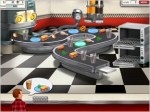 These days I mostly don’t play time management games unless they’re sent to me for review, they’re demonstrating some new mechanic, or they show hints of having a more interesting storyline than average. The first few were fun, but I’ve now pretty much been there and done that. But I made an exception for Burger Shop 2. The first Burger Shop was simply very well constructed; and number 2 won my heart and my registration with its goodnatured jokes about casual games in general. The game opens with the protagonist of Burger Shop having mysteriously lost his empire and needing to rebuild it (the question that most time management sequels have to answer somehow or other, usually hamhandedly). One of the first things he does is to hire a detective, but the detective is useless and keeps bringing him pointless objects, in a screen that spoofs hidden object games. Other casual game styles are sent up in later screens.
There’s no great depth here, just strong design and a perky self-awareness that many casual games lack.
Outside take on Anchorhead
Here is a review of Anchorhead by someone who’d never played any IF before but was persuaded by TIGSource and Play This Thing! reviews to give some a try. It’s kind of cool to see what he thought was good and what he thought was frustrating about the format.
The rest of the site is interesting too.
 Emily Short's Interactive Storytelling