Playing Sam Fortune

sfpiI’ve been playing (and reviewed) the second noir IF game in the last couple of months: Steve Blanding’s Sam Fortune – Private Investigator. It’s not one of those must-play pieces, but it’s entertaining and reasonably solid; if you’re looking for something to play for 30-45 minutes, you could do a lot worse.

Haven’t forgotten “Inside Woman”, but it was looking like it was going to take a while to finish, so I put it aside until I have a bit more time.

Interactive Storytelling Must-Play List

A few days ago Skye Nathaniel took me to task in comments for “[making] a point of playing Portal when there is science to do elsewhere”. I don’t regret playing Portal — it was awesome. But this makes me wonder about other things that I’m missing. What belongs on the “must play to understand interactive storytelling” list?

Here’s my own list to start with. It is, I know, both woefully incomplete and IF-slanted (and that even though I was fairly sparing about what IF I allowed on the list). I’m probably also forgetting a bunch of things that I’m planning to play myself. But that’s why I’m posting. Input?

Have played and consider relevant

Commercial

  • Planescape: Torment. Didn’t come close to finishing, but played enough to be impressed.
  • Portal. despite Skye’s comments, I did think it was worth playing through, for the characterization of GlaDOS if nothing else. And it’s popular enough that it provides a good example for discussing any of the techniques it does use — because people are likely to know about them.
  • Something in the Myst series, as a milestone of atmosphere and development. I liked Riven best for its overall structure and gameplay. But I’d include it more as source of history to understand than because it’s currently cutting-edge.

Indie but not freeware

  • The Path. I really don’t know whether I liked it or not, but I played to a finish. I thought it was both broken and kind of brilliant, and whatever you think about it, it will really stick with you. I have a Homer in Silicon column on this to come, though probably not for a while.
  • Dangerous High School Girls in Trouble. Very unusual gameplay in many respects, and there are some semi-boring patches in places, but it’s taking on issues and ideas that are worth discussing. (HiS column)

Persuasive

Casual

  • Miss Management. Gamelab’s excellent time management game with memorable characters and a distinct plot arc. (HiS column)
  • Emerald City Confidential. It’s really a graphical adventure, but it puts itself in the casual category via its marketing, sort of. Categories are hazy, did I mention? Anyway, it’s not too formally innovative except in its attempts to make a graphical adventure accessible to a casual audience (and even there, it’s adopting a new set of genre conventions more than inventing); but it does take the story to some places that aren’t completely common in adventure games. (HiS column.)

IF (long more because I know about it than because I’m making some statement about its relative importance)

  • Anchorhead, for the complexity and extent of the plot and the uniformly high quality of writing and atmosphere.
  • Photopia, as an exploration of linearity.
  • Rameses, as a classic example of the value of complicity.
  • Shade, for the changing player/protagonist relationship.
  • The Baron, for adventures in protagonist motivation and the value of choice and philosophical thinking in an interactive story.
  • Varicella, for its development of the accretive protagonist.
  • Slouching Towards Bedlam, for its excellent articulation of the different choices available to the player, and the sense of true freedom within the story.
  • Everybody Dies, for its inventive combination of image and text to accomplish subjective effects, and because it’s an especially strong use of multiple, differently-voiced protagonists (though see also Being Andrew Plotkin).
  • Blue Lacuna, or exploring player reaction and expressiveness as well as player choice; for the experiment in drama management, even though I think said drama management does not always work to keep the pacing tight.
  • For historical reasons, probably Trinity and AMFV; possibly also Deadline, Plundered Hearts, and Wishbringer. Maybe The Hobbit, though honestly it drove me insane when I tried to play it. I don’t get the impression it was a terribly successful adaptation as narrative, but that people really enjoyed getting the NPCs to do weird things.

Ren’Py… I don’t know. I have no specific recommendations here about works that were too awesome to miss, and yet I think a knowledge of the form doesn’t hurt. I’ve played a few of these, especially by Tycoon Games and Hanako Games, but I’d be interested in any suggestions if there are Ren’Py games with really fabulous stories that I’ve missed.

Various games in the newly emergent retro/art genre

  • Passage. Because it gets talked about so much. I wasn’t a huge fan, but I feel like it’s kind of necessary to know about.
  • Don’t Look Back. Terry Cavanagh’s platformer version of the Orpheus and Eurydice story, for its use of the challenge and frustration of gaming in service of the story.
  • Cavanagh also collaborated on Judith, which rediscovers some of Photopia’s techniques — temporal reordering, inevitability, narrowing of interactivity — but in a different medium. So, from my point of view, most of what this game does with interactive storytelling techniques has actually been done better and earlier in IF, but it may have introduced the ideas to a new audience, which is good.
  • (I Fell in Love With) The Majesty of Colors. My favorite, I think, in this game line: it’s intuitive and moving and unique.
  • I Wish I Were the Moon and perhaps also Storyteller (same place) for the way that they allow the player to select elements that should go into a story, rather than controlling any of the characters.

Other/unclassifiable

  • Façade. Unique and entirely obligatory, though far from perfect.
  • Ruben and Lullaby. Uses touch and gesture on the iPhone as a way to communicate feelings to the protagonist. For my taste the actual story aspect is a bit vague, but it’s a fascinating attempt and worth a look. (HiS column.)

Want to play (some of them rather old)

  • The Blackwell Legacy. While I have a dual-booting Mac laptop, I don’t have a two-button mouse for it, which makes some games unplayable. I know, I could fix that for about $20, but I haven’t gotten around to it yet.
  • Neverwinter Nights. Again, I just need a $20 two-button mouse to make this go on my Windows boot partition, so it’s probably going to happen sooner than the others; I know it’s old, but I’m particularly interested in exploring the player-designed content aspect, and I’ve just never gotten around to playing with it. (I know there’s also a Mac version, but as far as I could tell it didn’t come with the editor, which makes it vastly less interesting to me.)
  • Half-Life 2. I don’t have anything up to running this.
  • Bioshock. Ditto.
  • The Mighty Jill-Off.
  • Braid. Planning to play it when it’s available for the Mac.
  • Ico.
  • Shadow of the Colossus.
  • The Longest Journey.
  • Fable. I have the impression that people were disappointed, but I’m still curious about what it attempted, perhaps unsuccessfully, to do.
  • The Witcher.

In Praise of the Glorious Practice of Beta-Testing

Juhana Leinonen has just announced a new site for IF authors seeking testers and vice versa. It takes a slightly different approach from the IF betatesters’ mailing list, in that you can subscribe to an RSS feed rather than getting email at times of year when you might not be in the mood for testing. There’s also a small selection of articles on the art of testing, and the opportunity to specify what kinds of games you’re willing to test.

I mention this not so much because I have a vested interest in pushing one site or another, but because it’s worth reminding prospective authors as we head into summer and the season of comp-game writing:

Please test your game and credit your testers.

It makes your game better, and it offers your players some kind of promise that you made an effort. Also, please give your testers enough time to work that you will be able to fix what they find — ideally get the game into testing a month or more ahead of the comp deadline. This especially applies if you’ve never written IF before. It takes a lot more testing time than you think.

(My personal plan for the coming competition is not to bother reviewing games that don’t credit any testers, just to spare myself the annoyance of writing the same dull rant ten or fifteen times. I realize this isn’t foolproof and that someone could stuff in the names of a half dozen imaginary friends, but still. Worth a try.)

Conversation Methodologies

My latest Homer in Silicon column is a bit of a departure from the norm: instead of offering a critique of a game or set of games, I discuss conversation modeling methods, in an attempt to share some interactive fiction theory with a wider audience and to encourage more discussion about conversation modeling in general.

ETA: there is some further discussion of the ideas at TIGSource.

Non-IF Roundup

Recent playing:

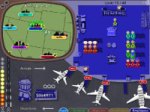
launchShot1_miniNow Boarding 1.2. This game has been out for a while, but it’s just received a new expansion covering Caribbean airports — a free upgrade for people who have older versions of the game. Now Boarding is an airport game, which makes it perhaps very superficially resemble, say, Airport Mania.

Fortunately it’s considerably more inventive than that. What I really like about Now Boarding is the way that gameplay evolves. It starts off as a time-management kind of deal, with the player responsible for putting individual passengers on planes, dragging planes to the gate, and doing hands-on customer service. Gradually, though, it becomes more like a tycoon game. You get to hire employees to do the menial customer-management tasks while you yourself take a more high-level view and devote yourself primarily to laying out routes and upgrading your terminals and fleet. Towards the end of the game, you may find that instead of repeatedly creating custom routes for all your planes, you are instead optimizing a set of repeatable loops for the different planes in your fleet. Congratulations: you’ve ceased to be a charter company and turned into a regular scheduled carrier.

Continue reading “Non-IF Roundup”

Peeve

People who say “X is impossible in games/IF” when what they mean is “I do not know how to accomplish X in a game/IF”.

Extra demerits if X is in fact something that is already done in various places but the writer of the assertion has failed to do basic research.