2015 in Interactive Fiction So Far

Screen Shot 2015-09-28 at 6.57.25 PM

It might seem a little late in the calendar year to do a half-year roundup of interactive fiction, but in fact the end of September is typically the turning point of the year: after summer is over but just before the release of the annual IF Comp games.

First, a general Don’t Miss category. This is personal and doubtless incomplete, but:

Best of. On IFDB, stalwart reviewer MathBrush has a list of 2015’s best IF releases so far. It’s a very good list, with a variety of parser and choice-based IF to look at. I might also add Caelyn Sandel’s Bloom series, Porpentine and Brenda Neotenomie’s Neon Haze, and Vajra Chandrasekera’s Snake Game.

Other standouts for me have been Her Story (my review, followup thoughts), Lifeline, Sunset, Below, and Arcadia. Some of these I enjoyed, some I thought were interesting, and some seemed likely to have a strong impact on future work (and I’ve unpacked some of that later in this post). They’re all worth knowing about.

And this is a little outside the standard IF fold, but I enjoyed the FMV graphical adventure Contradiction a lot more than I expected to.

An undercelebrated resource in walkthroughs: David Welbourn has been building a steady supply of high-quality parser IF walkthroughs, supported by his Patreon. When I say “high-quality”, I mean that they’re divided into sections for easier use, provide maps and commentary, and frequently include discussion of how you’re meant to figure out a particular puzzle. Often David will go out of his way to document interesting side aspects of the game in question. These walkthroughs make games accessible that might have been too hard to get through or demanded too big a time commitment before, and they provide a useful resource for people writing up games later (whether in an academic context or not). It’s often fun to read through after you’ve finished a game and find out what you missed.

Here are his walkthroughs for a few games that I remember enjoying but thought were a bit overlooked by the community at large (sometimes because they were challenging): Muggle Studies, Adventurer’s Consumer Guide, Katana. Or perhaps you’ll like Firebird, which did make a bit of a splash in 1998 when it came out, but doesn’t get a lot of discussion now. And style points for providing a walkthrough of Everything We Do Is Games.

Digital Antiquarian. Jimmy Maher’s blog about the history of interactive fiction (and related games) through the 1980s is consistently compelling. He approaches the work from many angles — the history of the companies and individuals writing the software, the state of the industry, the themes and design of the games themselves. Superb. I occasionally call out links in my link roundups each month, but every post is worth reading.

Sub-Q Magazine. I am so excited about this that I go around annoyingly telling people about it at the drop of a hat — which is also why I’ve used a screenshot of Sub-Q’s current lineup at the top of this post. Sub-Q is an online magazine for interactive fiction. It pays authors, which gets into another 2015 trend that I’ll talk about in a minute, but what excites me even more is the editorial discipline and mission of the site. The first two months of Sub-Q have featured well-chosen reprints, new work from established and rising IF authors, and interactive pieces solicited from speculative fiction authors who haven’t previously worked in IF. Moreover, that work comes from all over the world and represents a variety of cultural perspectives. The currently running story is a wonderfully vivid piece of Nigerian fantasy. This doesn’t happen by accident, but only as a result of dedicated editorial work.

New works come out with cover art and blurbs. The site runs author interviews and tool coverage as well, in between stories. It is great, seriously, filling an important unfilled space in this field. As recently as my 2014 retrospective post, people were speculating about whether something like this would even be possible. I will be really really sad if it winds up having to shut down due to lack of subscription. If I were an eccentric IF-loving billionaire, one of my first moves would be to make sure Sub-Q was fully funded.

After the fold, more thoughts on specific trends and developments.

Continue reading “2015 in Interactive Fiction So Far”

Windhammer Prize 2015: Tides of Chrome (Steffen Hagen)

The 2015 Windhammer Prize is now running, which means you can download and play any of the 16 PDF gamebooks entered; if you play a reasonable number of them, you may also judge the competition by submitting a list of your top three favorites. (Full details are at the judging site.)

*

Tides of Chrome tells the tale of a robot — one of a whole society of robots, with their original “Architects” long since out of the picture — who is sent to explore a damaged ancient underwater station. From there, the story follows many standard tropes of abandoned-base exploration: there are various signs of what different inhabitants were doing here in the past, there are dangerous and/or secret areas, there is evidence that some parts of the station Go Deeper Than You Had Previously Realized.

Continue reading “Windhammer Prize 2015: Tides of Chrome (Steffen Hagen)”

New Release: Discernment

Discernment_promoI have a new story out!

Subscribers to Fallen London — that is to say, Exceptional Friends — can now play Discernment. Look for Salome’s soul, meet a Salon of devils and devilesses concerned with building the very best soul collections. You may also encounter some information on the moral perspective of mushrooms.

One of the things I enjoy about writing for Fallen London is being able to riff on assorted lore, connections, and player history from other stories. Without spoilers, I am especially pleased about how that worked out in this piece.

If you’re looking to get started, seek out the Burglary of a Cartographer’s Estate storylet.

Regency Games: Regency Love, Marrying Mr Darcy, Regency Solitaire, Fitzwilliam Darcy’s Dance Challenge

earlydia

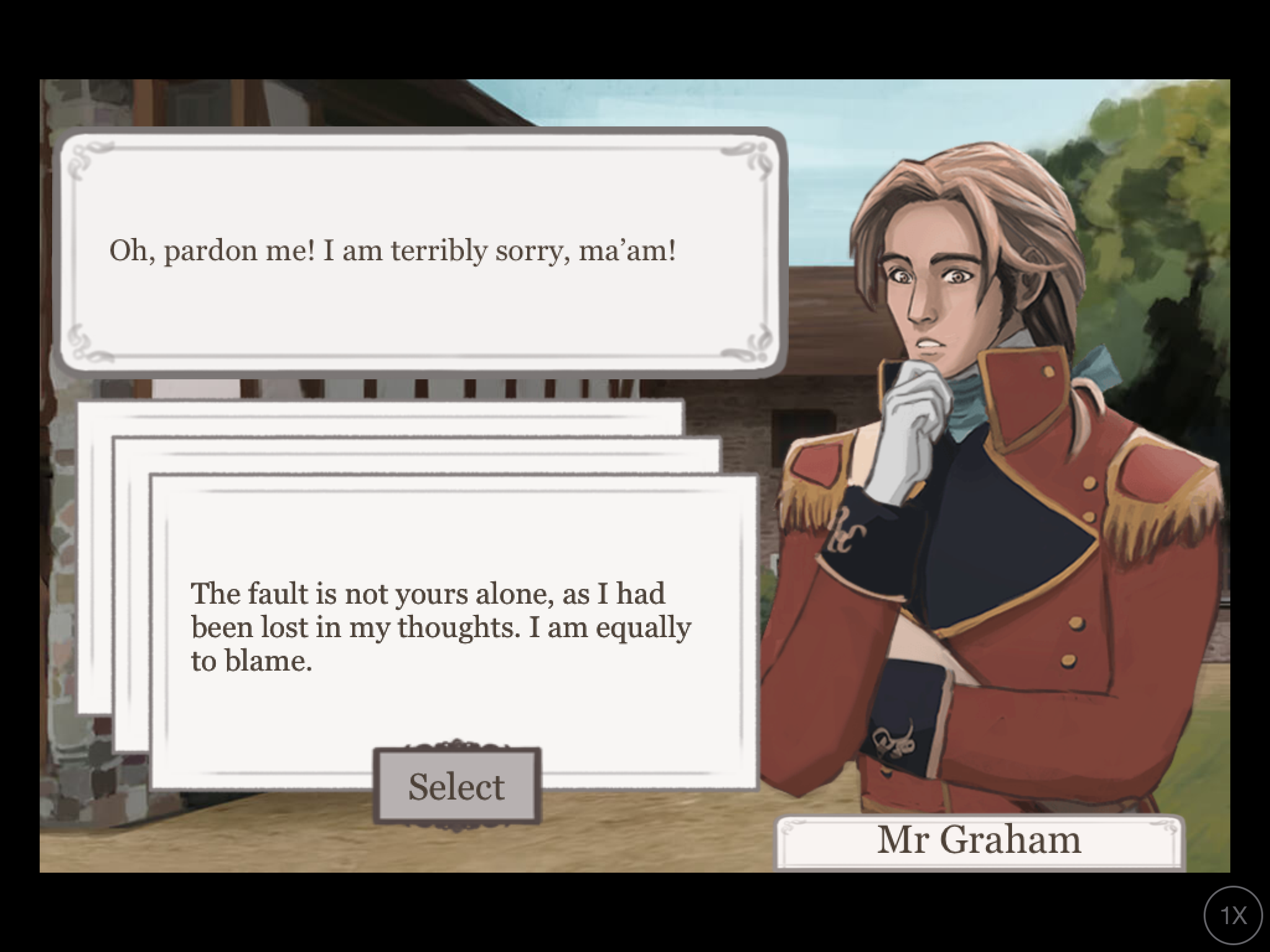
Regency Love is an iOS game set in a pseudo-Austen town; it is in the same general territory as a dating sim or visual novel, but with a structure that also owes something to roleplaying games.

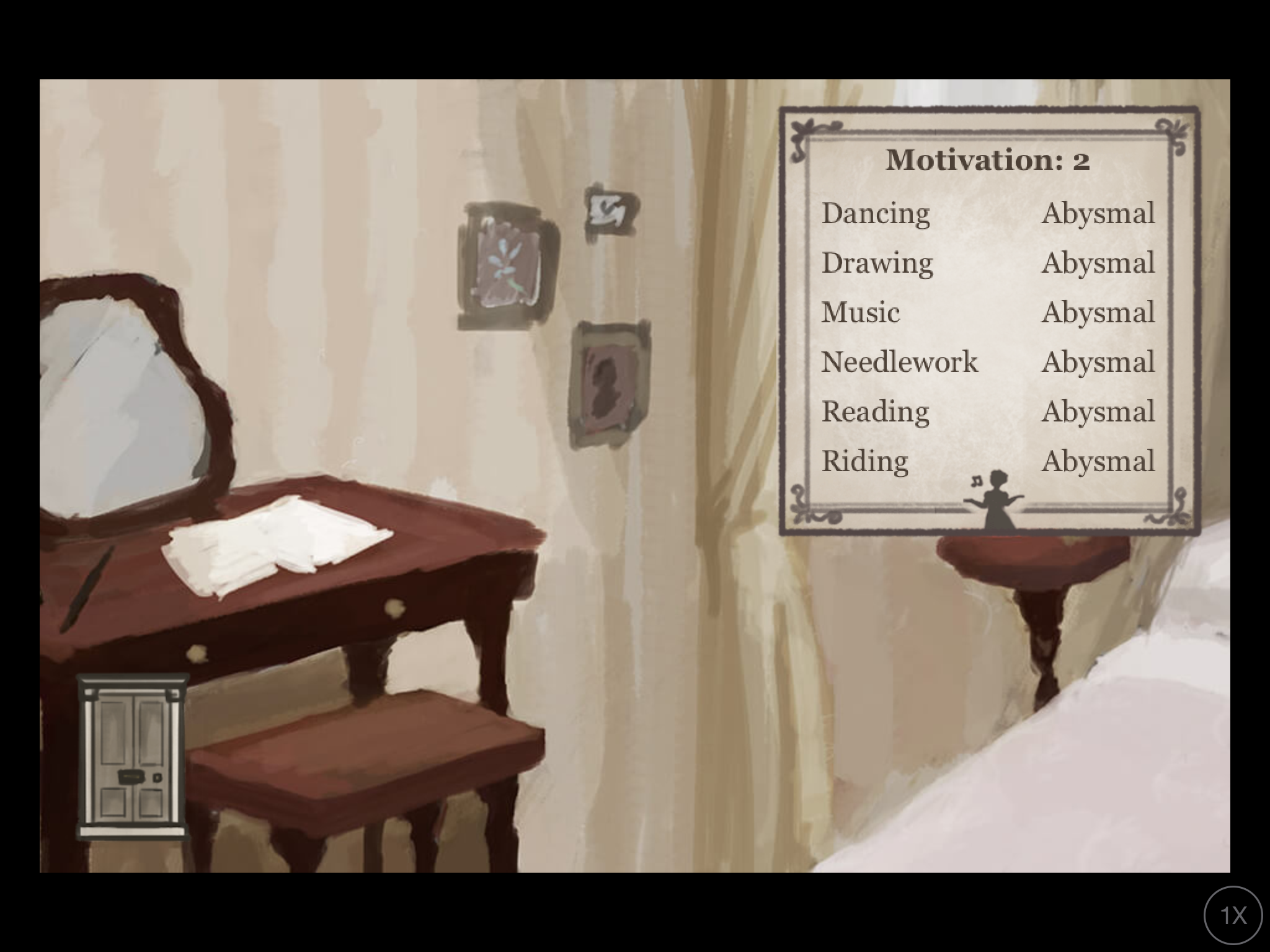
The core interaction loop is that the player can select a place from the map of Darlington, their town; the place may yield one or more possible activities. The activities can either be quizzes about Regency life (how long should you properly mourn a sister? how much did muslin cost?) or social interaction scenes that are primarily dialogue-driven. From time to time, there’s an opportunity to do another quiz-like activity, a game of hangman in which you’re trying to fill in a missing word from a famous quotation, mostly from Austen. Doing quizzes and hangman gains you motivation points which you can spend to raise your skill in one of six “accomplishments” — drawing, needlework, reading, dancing, riding, music (harp and pianoforte and singing are not distinguished). Some of the social activities depend on you having a certain accomplishment level in a certain area before they will unlock. Other social events depend on what has already happened.

Using a map to pick the next little story you want to participate in also reminded me a bit of StoryNexus, though whether the underlying engine relies on anything like quality-based narrative, I have no idea.

Before the game began I evidently paid NO attention to my governess.
I was never a great enthusiast for the quizzes and stats part of this game. The questions refer to information from Austen that is not provided internally, so you either already know the answers or you have to guess. There aren’t enough hangman sentences and quizzes to last the whole game, either, so you’ll see the same things repeat over and over again before you’re done. Meanwhile, your accomplishments are necessary enough that you can’t ignore this part of the system, but there’s not enough variety to what the stats do to make it an interesting choice which one you raise next. Somewhere between halfway and three quarters of the way through play I had maxed out all my accomplishments and could now afford to ignore the whole quiz-and-hangman ecosystem, which was a relief.

Based on your behavior, the game also tracks character traits, reflecting whether you’re witty, dutiful, etc. It displays what your traits are, but I never worked out exactly what was moving the dials. What I said in conversation must come into it, but I didn’t know which dialogue did what. Nor did I ever figure out how it mattered. Some events were plainly closed to people with less than 12 Needleworking, but I never saw an explicit flag that excluded people who weren’t witty. So the character trait system may have been doing important things, but it was opaque enough that eventually I started to ignore it.

What does that leave? Talking. Lots and lots of talking. I like talking games! This one made some slightly peculiar choices, though.

Continue reading “Regency Games: Regency Love, Marrying Mr Darcy, Regency Solitaire, Fitzwilliam Darcy’s Dance Challenge”

Prospero (Bruno Dias); Writing with Raconteur

Screen Shot 2015-09-15 at 3.02.45 PM

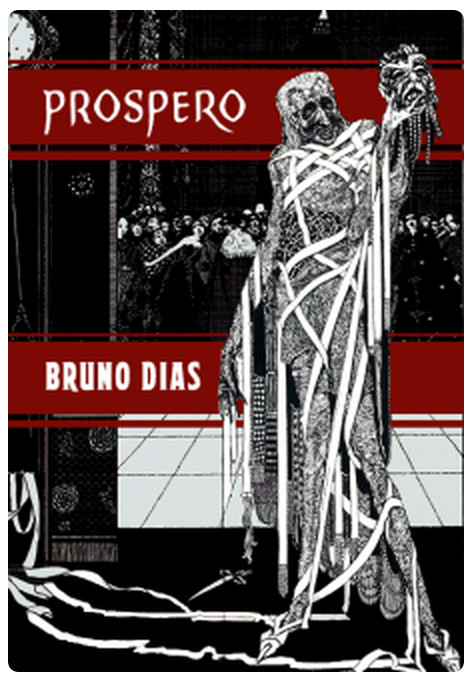
Prospero is Bruno Dias’ retelling of “The Masque of the Red Death”, implemented in Undum/Raconteur and published for Sub-Q Magazine.

As one might expect of both the author and the venue, Prospero is a typographically attractive piece of work, rendered in white text with red progression links. Links that merely expand the existing text appear in bold white, instead. The distinction between stretchtext links and movement links might be old in literary hypertext terms — I’m not certain — but it’s not consistent in the Twine and Undum world. I find it very useful to know whether the link I’m clicking is going to tell me a little more information or whether it’s going to move the whole story forward.

Prospero is also a beautifully textured piece at the level of prose. Dias has a gift for the specific detail — seen in Mere Anarchy in the variety of magical tools available to the protagonist, or here in Prospero in the scenery and the protagonist’s possessions.

The original Poe story goes like this: there’s a plague in the land, but the prince Prospero has a lot of money, so he walls himself up with his favorite courtiers and various resources, and they try to keep the plague at bay. (In contrast with the religious community in Vespers, he seems untroubled by the implications of shutting out the rest of the world.) During an elaborate party Prospero throws, a creepy masked figure attends, who turns out to be the embodiment of the plague. Despite their decadence and indifference to the world outside, the whole party dies. It is possibly a story about the inevitability of death, or possibly about the comeuppance of the wealthy classes.

Dias’ version keeps a great deal of that structure, but moves the action to something closer to the modern day, with cars and modern architecture and electric lighting. He casts the player as the Red Death, with the ability to choose the final outcome. This feels like a surprising choice, given that Poe’s version is so much about inevitability. And I think it would have been fatal to the concept of the original story to give Prospero any choice about whether he lived or died. As the Red Death, we can move among different parts of Prospero’s party, meet different party-goers, and decide whether to spare them all, or one or two favored exceptions, or no one.

Two of Dias’ previous projects, Mere Anarchy and Terminator Chaser, deal with resistance against wealth and power. Prospero raises some of the same issues, particularly the idea of the rich who imagine that they can remove themselves from the rules that apply to everyone else. In contrast with Mere Anarchy, it is comparatively merciful; it allows you to grant forgiveness, if you’re so moved. But I found that I didn’t entirely want to. Perhaps my own favorite ending was to spare one woman who seemed not to belong to the wealthy decadence around her: this suggested a universe with some moral discrimination.

If you like Prospero, you might also enjoy Peter Nepstad’s adaptation of stories by Lord Dunsany, or Caleb Wilson’s anachronistic gothic Six Gray Rats Crawl Up the Pillow.

*

Prospero was built with Raconteur, Dias’ system for creating Undum content. Undum builds beautiful hypertext with elegant typography and link transitions. However, it’s not particularly easy to use out of the box, so Raconteur provides a way to build for it without having to go direct to the javascript; and Dias has released the full source for Prospero as an example case. So in addition to reviewing Prospero, I’d like to take a moment to look at the experience of writing with Raconteur here.

Continue reading “Prospero (Bruno Dias); Writing with Raconteur”

Fast-Paced Parser Games

Most parser games tend to keep a pretty stately pace, allowing the player to move around and explore, and only ratcheting the plot forward in response to player actions. There are exceptions, though: a handful of pieces describe a world already and continuously in motion, or cut rapidly from one scene to another with just a few moves in each — presenting an experience paced more like a film than like Adventure.

Quite a few of these are by J. Robinson Wheeler, which is unsurprising given that that style is a bit of a specialty of his (perhaps reflecting the fact that he’s also a filmmaker and takes a cinematic approach to his IF stories).

moonbaseMoonbase Indigo, J. Robinson Wheeler. Inspired by Moore-era Bond, with a lot of the tropes you might expect in that context.

Centipede, J. Robinson Wheeler. A Starship-Troopers-esque reinterpretation of the classic arcade game.

The Tale of the Kissing Bandit, J. Robinson Wheeler. Playful, lightly romantic.

Being Andrew Plotkin, J. Robinson Wheeler. If Being John Malkovich where about zarf, instead. There are a fair number of community and classic IF in-jokes in this one, but also some entertaining riffs on different narrative styles.

Everybody Dies, Jim Munroe. Touches of both realism and mysticism, together with some excellent illustration.

Guilded Youth, Jim Munroe. Told through a series of vignettes that take place both on and off-line.

Dial C for Cupcakes, Ryan Veeder. There are some puzzles in this one, but also a fair amount of scene progression. As is typical for Veeder’s games, the puzzles are not tremendously hard.

Attack of the Yeti Robot Zombies, Øyvind Thorsby. The conceit of this game is that you’re meant to play once and never undo. If you commit to an action, you’re stuck with it.

Andromeda Dreaming, Joey Jones. Most of the games set in Marco Innocenti’s shared Andromeda world are fairly puzzle-based, but this one focuses more on an unfolding story.

If this sort of thing interests you, see also: IFDB poll for Autonomic Narration (where you can also add your own suggestions).