Choose Your Erotica

[Editor’s note, several years on: this article has been around for a while, and some of the works it talks about are no longer available to play. But the article is still getting regular hits, and I can see from outgoing links that people are trying to find and play those pieces.

Clearly there’s a lot of interest in this topic, and most of the time, when people are coming to my site for resources, I try to put together some kind of reliable resource list. However, I don’t want to maintain a main page on my website that will serve as a frequently-updated repository of interactive porn and erotica, since I feel like that might sort of give the wrong overall idea about what I usually discuss here. Not very on-brand.

SO. Compromise: I will occasionally add some links to the top of this post that seem to be currently functional.

Now, on to the actual article as originally posted.]

Parser-based AIF — “adult interactive fiction” — has been around for a long time, though it has generally had its own forums and meeting places; every once in a while someone would turn up on rec.arts.int-fiction with a coding question about layered clothing, or submit an adult game to a competition, but for the most part AIF didn’t overlap much with the main IF community. I did play a few pieces, but they were usually aimed unambiguously at heterosexual men. A common structure was to have a series of puzzles that would “unlock” sex scenes with assorted partners. (Here’s a review I did back in 2006 of Ron Weasley and the Quest for Hermione, for instance.) Sometimes these were cut-scenes, but sometimes you could use parser commands to do a play-by-play of which parts went where.

As choice-based IF has become more prevalent, so has choice-based, female-POV erotica. Here I take a look at several. I’m not going to be quoting long passages or posting images, but this may still not qualify as SFW depending on where you are.

Continue reading “Choose Your Erotica”

Slammed! (Paolo Chikiamco / Choice of Games)

Screen Shot 2015-02-05 at 6.29.58 PM

Paolo Chikiamco’s Choice of Games game Slammed! has been around for a while now, and has enjoyed a reputation as one of CoG’s better works. It just became available on Steam, and I took that occasion as an opportunity to check it out.

The premise is that you’re an aspiring wrestler who gets a chance to break into the pro circuit, developing your skills and playing out a bunch of matches in the ring. On the face of it, this doesn’t sound like my kind of thing — the only two wrestlers I can name are Hulk Hogan and Jesse Ventura, and I just had to double check on wikipedia to make sure I was remembering them right — which may be why I put off playing Slammed! despite the good reviews.

Chikiamco, on the other hand, clearly does know and care a lot about wrestling, and he writes about it in a way that feels both compelling and reasonably accessible to the non-fan, constructing a detailed world full of strong personalities. What’s more, the themes that come out of the premise are things that interest me: career vs personal loyalty, the cultivation of professional persona, the development of both skills and relationships, the fine line between being a team player and letting yourself be taken advantage of.

Continue reading “Slammed! (Paolo Chikiamco / Choice of Games)”

What Lies Beneath The Clock Tower (Margaret Killjoy)

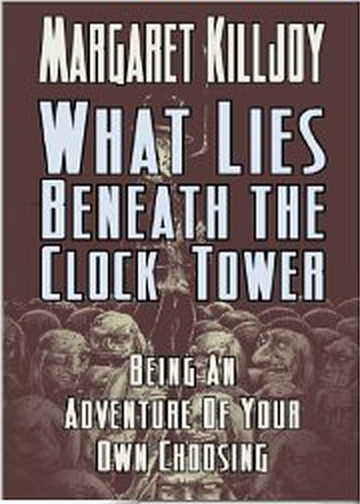
What Lies Beneath The Clock TowerWhat Lies Beneath The Clock Tower: Being An Adventure Of Your Own Choosing is a choice-based steampunk story. “As a novel, this isn’t a novel,” writes Jim Eaton, its reviewer at fantasybookreview; and while I tend not to bother arguing labels like “novel” and “game”, I think it’s fair to say that it doesn’t present a number of features that I might ordinarily expect from a genre fantasy novel. The plot(s) are deeply odd, the protagonist hard to know and hard to relate to, the emotional scope a bit dry, the setting too whimsical ever to develop fully. During perhaps my first hour with the book, I would also have said it was not particularly successful as CYOA, full of false starts and arbitrary endings. But I’ve backed off that view a bit: I came to like it better by the time I was done mapping the story, and had had a chance to work out that it’s activist satire with a comedy steampunk gloss.

It begins with a passage about your character that would be verbose but not otherwise out of place in response to an >INVENTORY command:

At the beginning of this tale you are wearing a fashionable, if cheap, suit—complete with black wool overcoat and starched-felt bowler. You have a pocket watch on a chain. But this is no ordinary pocket watch; this pocket watch has been over-wound and is in need of repair. Your wallet is empty of money; they seem to have taken it all at the bar. In one hand you bear a simple, bronze-headed cane of stained wood, born as an affectation. In your trousers pocket you have a silver ring that you won in a game of chance, a ring you were hoping to give your lover. And, of course, you would not leave your room without an ample supply of intoxicants, which may be found in various flasks and bottles upon your person.

Continue reading “What Lies Beneath The Clock Tower (Margaret Killjoy)”

Spoken IF: Codename Cygnus, Multi Path Audio, Mayday: Deep Space

cygnusCodename Cygnus is interactive radio drama: there are voice-acted scenes with music and sound effects. The premise is that you’re a secret agent, and you can download several missions; each mission is itself divided into smallish episodes, so when you start something, you’re not committed to a long session. It’s highly genre-determined, trope-y stuff, where you’re meeting bad guys with foreign accents across a gaming table, or slipping truth serum into someone’s drink.

Periodically the narrator asks you which of two options you’d like to pursue in order to continue your mission, with specific keywords for you to speak (“Athletic? Or Clever?”). You can either speak the next word or tap the option on-screen, but the system is designed so that you can play entirely hands-free, without holding or looking at your device. As with Choice of Games titles, your actions may determine character stats rather than causing immediate narrative branching; and in fact in Codename Cygnus a lot of your choices (“Athletic / Clever?” “Hostile / Charismatic?”) are explicitly asking which of your stats you want to use and enhance. Because you’re not viewing the text, the screen consists purely of a stats readout, plus controls to scrub or replay audio sections you’re currently listening to. It’s simple but attractive.

Continue reading “Spoken IF: Codename Cygnus, Multi Path Audio, Mayday: Deep Space”

Choice of Robots (Choice of Games)

Robots

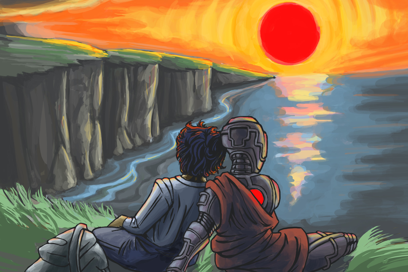
Choice of Robots is a recent large-scale Choice of Games piece: you take the role of a gifted young graduate student in robotics, about to make significant breakthroughs in your field, generating a line of robots that might become surgeons, soldiers, companions, factory workers. Your choices include design decisions for the robots and business decisions about how to manufacture and sell them, but also personal decisions about how to relate to your robot creations, and what you think it all means. The scope of your activities is such that you may find yourself flying to Shanghai to take meetings, or spending months in a military jail, or preventing the invasion of Taiwan — and along the way it’s pretty likely that you’ll also make a considerable personal fortune, which you can choose to spend on luxuries, philanthropy, or a mix of things.

Continue reading “Choice of Robots (Choice of Games)”

Games of Co-Authorship

Someone recently asked me about games in which the player is involved in the story as a co-author rather than as a protagonist, and this is the list I came up with (plus a few others that I thought of after answering the initial request):

witchs

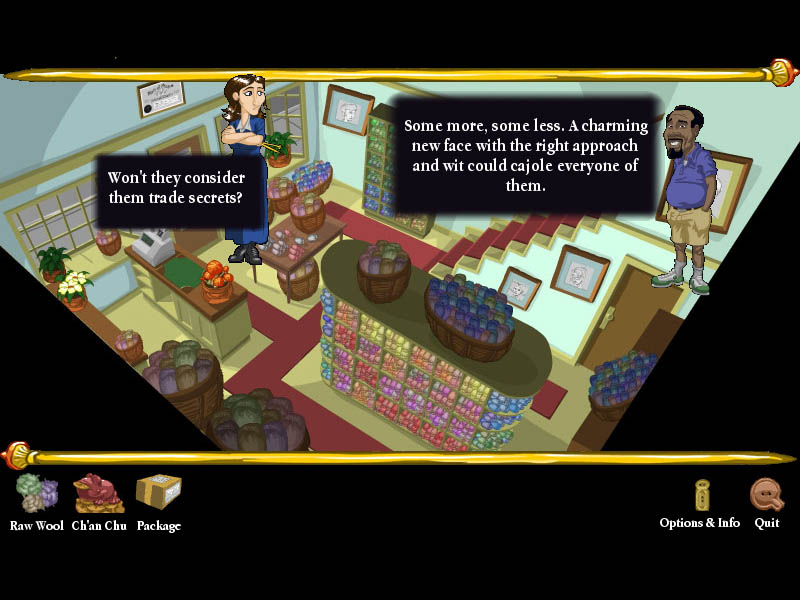
Witch’s Yarn — a graphical point-and-click rather than text-based, but you’re picking which props/characters you want to bring on stage next. Eons ago I did a review of it here. I think there are interesting procedural narrative things they could have done with this premise, but mostly in practice it came out as a series of puzzles instead. (Still interesting and unusual, though.)

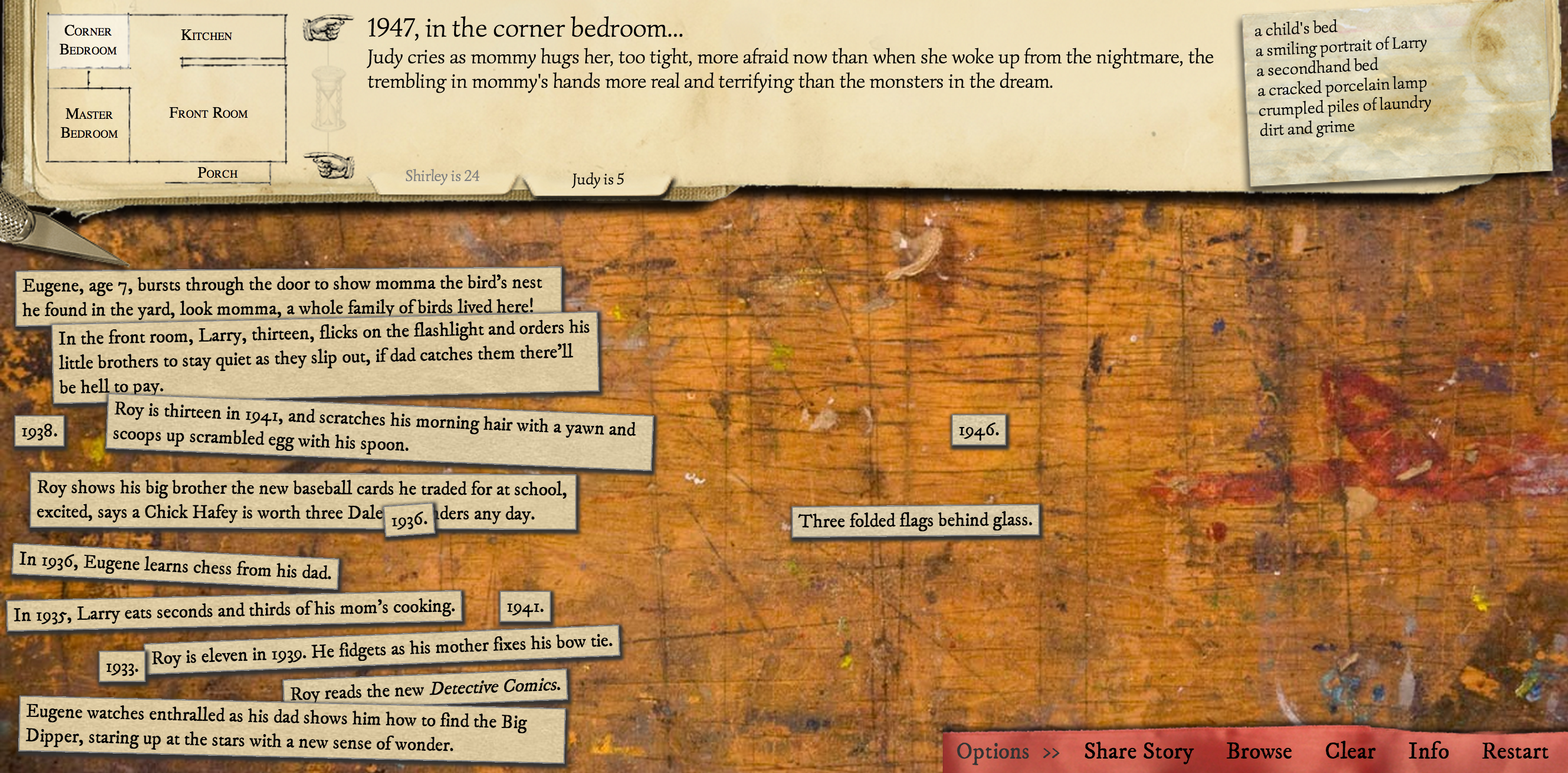
Screen Shot 2013-04-03 at 6.50.26 PM18 Cadence — players rearrange objects and narrative elements to construct their own stories. I talk about it more here.

Continue reading “Games of Co-Authorship”