IF of 2018

A few of my favorite games from this past year:

Screen Shot 2017-12-27 at 12.03.06 PMReigns: Her Majesty was a terrific commercial release from Nerial and written by Leigh Alexander. A sequel to the previous Reigns, it used its design to comment on the history of gender and power. It is also extremely funny, with some wonderfully zingy individual sentences.

Also stylish and gorgeous to look at — and entertainingly on the border between graphic adventure and text-based narrative — was Ben Wander’s noir-lite A Case of Distrust.

Screen Shot 2018-05-15 at 6.44.13 PM

Katherine Morayati’s Human Errors made fantastic use of a customer service-style interface to talk about how technology and corporate life divides us from each other. Brief, sharp, and inventive in how it uses its interactive interface.

Bogeyman by Elizabeth Smyth is a sort-of-horror story about an abusive caretaker relationship that I found consistently uncomfortable — as it was intended to be. Work in this genre often leans into being disgusting or creepy in a way that lacks human depth, but this piece made the personal relationships central to its horror, and that made it exceptionally effective.

Dead Man’s Fiesta (Ed Sibley) is a story about the process of grieving, and about the ways we try to manage our feelings, though they may not really be susceptible to management. That’s a topic that IF has taken on before, in various ways, but Ed’s take worked better for me than most: it has sparks of humor and surprising observation about the other characters in the story, rather than being simply maudlin retrospective, and I found it effective.

Illuminismo Iniziato (Mike Coyne) won Spring Thing 2018 with a classic comic fantasy text adventure.

And if you like the flavor of that, you may also enjoy Mike Spivey’s Junior Arithmancer, a set of math puzzles embedded in text adventure form with fantasy spellcasting. It’s a less-narrative sibling to Spivey’s A Beauty Cold and Austere from last year.
Screen Shot 2018-10-07 at 10.32.12 AM.png

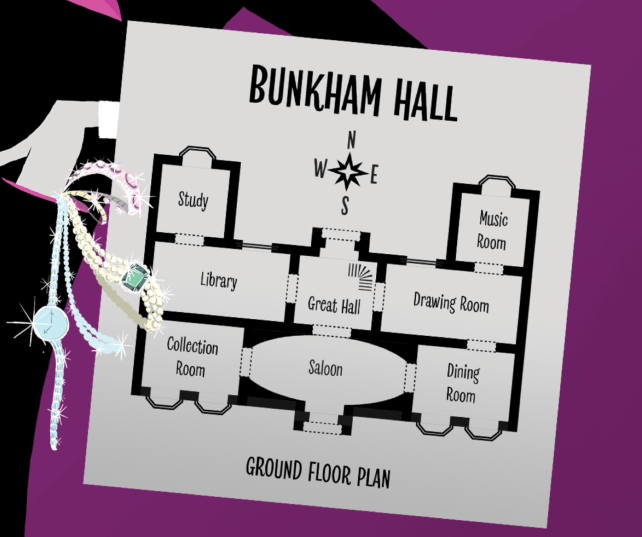
Alias ‘The Magpie’ is an entertaining heist puzzle game set in an environment that parodies Wodehouse and Agatha Christie, with a hint of Pink Panther; and features some very charming feelies as well. Constructing a farce that will play smoothly in a parser puzzle game is no easy feat. I played this with a group, which is always a different experience from playing solo, but we glided through the puzzles pretty smoothly and were confronted with one absurd twist after another. Two notes: the setting and plot include a comedy depiction of mental illness — a sympathetic one, and so ludicrous that it would be hard to take seriously, but still something to be conscious of. And the game also depicts but doesn’t really inspect an aristocratic experience of colonizing a bunch of countries in the name of the British Empire.

As a bonus, here were two games that I really loved from 2017, but didn’t play and review until 2018: Known Unknowns (Brendan Patrick Hennessy) and A Beauty Cold and Austere (Mike Spivey). The former is a funny, moving, yet non-twee young adult story about growing up and learning enough of your truth to tell it to other people, executed in Twine with terrific illustrations. The latter is a text adventure full of puzzles exploring the nature of mathematics.

Mid-December Link Assortment

The Oxford/London IF Meetup does not meet in December, due to everyone being busy this time of year.

January 5 is the next event from the SF Bay IF Meetup:

SF Bay Area Interactive Fiction Group

San Francisco, CA
328 Members

You are playing an unusual form of interactive entertainment. A COMPUTER is here, displaying mostly text. In accordance with tradition, the text is written in the SECOND PERSO…

Check out this Meetup Group →


February 8-9 there will be a two-day conference Beyond the Console: Gender and Narrative Games. The conference is being organized by The Centre for Research in Digital Storymaking at London South Bank University and cohosted by the Oxford and London IF Meetup.

The first day, Friday, February 8, will take place at the Victoria & Albert Museum. The V&A is also currently running the exhibition Videogames: Design/Play until February 24.  I will be chairing Friday’s event and giving the introduction, and the evening will feature a keynote game by Porpentine, and the exhibition.

Saturday, February 9‘s event will shift to London South Bank University, featuring panels on gender, identity, indies and industry.  Hannah Wood will give the keynote and a drinks reception will follow.  For more information about the conference, please click here.


Continue reading “Mid-December Link Assortment”

Mailbag: AI Research on Dialogue and Story Generation (Part 3)

This is a continuation of an earlier mailbag answer about AI research that touches on dialogue and story generation. As before, I’m picking a few points of interest, summarizing highlights, and then linking through to the detailed research.

This one is about a couple of areas of natural language processing and generation, as well as sentiment understanding, relevant to how we might realize stories and dialogue with particular surface features and characteristics.

Transferring text style

Screen Shot 2018-08-25 at 2.27.27 PM.png

Style transfer is familiar in image manipulation, and there are loads of consumer-facing applications and websites that let you make style changes to your own photographs. Textual style transfer is a more challenging problem. How might you express the same information, but in different wording, representing a different authorial manner? Alter the sentiment of the text to make it more positive or negative? Translate complex language to something more basic, or vice versa? Capture the distinctive prose characteristics of a well-known author or a specific era? Indeed, looked at the right way, translation from one human language into another can be regarded as a form of style transfer.

Continue reading “Mailbag: AI Research on Dialogue and Story Generation (Part 3)”

Cragne Manor

cragneCragne Manor is now available!

Considering the number of authors on this game, it feels possible that every person who is interested in parser-based interactive fiction is already part of this project. But I know there are a few exceptions, so for those who aren’t already familiar:

Cragne Manor was organized by Ryan Veeder and Jenni Polodna as a 20-years-later tribute to Michael Gentry’s classic 1998 Lovecraftian horror game Anchorhead. They put out an open call to the IF community for authors to write one room each — without being able to see each other’s work — and they themselves would stitch the results together.

I think it’s fair to say this succeeded more thoroughly than they anticipated. More than 80 authors created rooms for Cragne Manor — some of them small, atmospheric rooms like mine; others packed with story or constituting ingenious set-piece puzzles; still others brief and elegant vignettes. There are some individual author contributions in Cragne that would make respectable IF Comp entries in their own right. Not only that, but Ryan and Jenni did an epic amount of work, with great ingenuity, to come up with a puzzle structure that would make all of those disparate pieces contribute to a functional, enjoyable gameplay flow.

I haven’t finished it — a reflection partly of my supply of free time, but also the fact that this game is huge. But I can tell you already that if you like parser IF, you want to play this. It’s sometimes scary, sometimes disgusting, sometimes funny, sometimes weird, and sometimes all of those at once — but I’ll let you find the horse for yourself. And somehow all that surreal adds up to something greater than the sum of its parts.

Thanks, Ryan and Jenni. This was really, really fun.

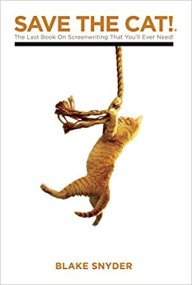
Save the Cat (Blake Snyder)

savecat

Save the Cat is one of those screenwriting books, like Robert McKee’s Story, that you can’t help running into if you’re looking at writing advice at all. The title refers to the idea that you must establish your protagonist in a movie with some sympathetic action. There are a lot of musts in this book. Snyder is telling you specifically how to write a three-act, 110-page movie script that fits a Hollywood formula of a few years back — down to which pages of the script should feature major events and reversals; how many beats should appear within each act; and how the hero should be feeling at the midpoint of the movie.

He explains that the heroes ought to be in their 20s at the latest because Men Under 25 are the most coveted viewing demographic. He does not overtly say they should be white, but that assumption is I think implicit. The book is a few years old; after Black Panther and Get Out and Crazy Rich Asians and so on, perhaps Snyder would now have something different to say about representation.

In any case, the book is largely about formula — and a formula much more genre-bound than my nemesis The Hero’s Journey. Snyder has very little to say about theme, other than to acknowledge that you probably should have one and mention it early in your screenplay. He has not much to say, either, about developing characters or about representing personal truths. He doesn’t very much care what the substance of your work might be. This book is about how to package it, how to make it accessible to audiences in a format that is familiar to them and that will help them quickly understand the emotional landscape.

So if this is mainly formula for a different medium and different market from games, does it have anything to offer?

Continue reading “Save the Cat (Blake Snyder)”

End of November Link Assortment

December 1 is the next SF Bay IF Meetup.

December 2 will be the next Seattle area IF Meetup, at University of Puget Sound in Tacoma.

December 5 is the next date for the upcoming Boston IF Meetup, discussing IFComp winner Alias: The Magpie.

December 5-8 in Dublin is the next ICIDS, an academic conference on interactive digital storytelling. (I have enjoyed this in the past, though it’s been a few years since I’ve been able to attend.)

December 15 will be the next Baltimore/DC IF Meetup, discussing IFComp winner Alias: The Magpie from 3-5 at Mad City Coffee.

December 15 is the submission deadline for SubQ’s Game Jam, for very short pieces that focus on the theme of love.

The Oxford/London IF Meetup does not meet in December, to give everyone a holiday break.


Continue reading “End of November Link Assortment”