Getting Hired to Write IF

Over the past eighteen months or so, a couple of interesting things have happened.

One: there are way more opportunities than there used to be to write interactive text and receive payment in return. I hear about a lot of these because they tend to be documented on the intfiction forum or the euphoria &if channel, because people email me about them directly, or because author requests are pitched at the Oxford/London IF Meetup group. I also have a certain number of email exchanges where I’m offered a contract I don’t have the bandwidth to take, so the asker follows up with a request for a recommendation. I’ve started keeping a list of freelancers I know in this space.

(If you freelance and you want me to know that, feel free to send me a portfolio link. I do not guarantee any particular result, and I do exercise my own judgment about whom to recommend in any given circumstance. I do not ever make the full list available to prospective clients or employers. If I pass your name along, it will be because I think you’re a viable fit for what I know of the project.)

Two: there are lots of people interested in writing IF for money who are unsure about some aspect of how to get into it. Sometimes they message me in one form or another and ask for advice. I’ve written some advice about setting rates before, and also a bit about how my own situation works, though it’s not typical (see below).

Lately I’m getting questions about how to establish your skills in this space and make yourself appealing to employers, so I will write what I know about that as well.

Note that this is mostly about work-for-hire situations rather than working for specific IF studios and publishers such as Choice of Games, Failbetter/Fundbetter, Sub-Q, Tin Man Games, etc. Where you already have a target in mind, you’re best off looking closely at their own websites for their submission requirements or job postings, and familiarizing yourself with the work they’ve already published to see if you’re a good fit.

Ready? Let’s go.

Continue reading “Getting Hired to Write IF”

Worldsmith (Ade McT/interactive fables)

Screen Shot 2016-08-21 at 6.21.43 PM.png

Worldsmith belongs to a category that is still pretty rare, even in this age of growing opportunities for commercial IF: it’s for-sale parser IF. A demo is available for free, but the full version is $5.99. Not only that, but the author has collaborated with furkle (of SPY INTRIGUE fame) to skin an Inform 7 game with images, video, hyperlinks and custom menus. The surrounding images help communicate status information, with images of the NPCs you’re conversing with, and/or the planet you’re currently constructing.

Then there’s the gameplay. Worldsmith is heavy on both simulation and procedural text; I’ve seen a lot of authors start work that made ambitious use of those, but very few actually finish something of that scope and complexity.

The essential premise is that you are a world-builder in competition with several other world-builders (a very high-powered version of the Great British Bake-Off, perhaps). In order to do this, you must combine fundamental elements such as Air and Fire to make planets; set the planets in chosen orbits in your pet solar system; seed those planets with life; and then nurture the life to a degree of sentience that will survive in the wider universe and be able to leave its home planet before said planet becomes uninhabitable.

So far as I’ve seen, this is very much a systems game rather than a puzzle game. There is loads of information to learn about how various elements combine and what sorts of creatures they are likely to produce. Though you get a tutorial (a rather exasperated encounter with your teacher, who evidently feels that you really should have mastered the elements of world-construction by now), there’s a dizzying amount to retain, and you’ll likely find yourself reviewing your instruction manual quite a lot.

I haven’t managed to win. On the contrary, I’ve made a series of half-baked planets and seeded unsuccessful life on them, and needed to restart several times. (It turns out that if you teach your lifeforms too much too quickly, they’ll probably just destroy themselves, so slow up, Prometheus.) But I feel like I’m learning, so this is good restarting, rather than the bad frustrating restarting when a puzzle game has gone unwinnable.

In response to the decisions you make, your world is formed with differently described land forms, creatures, and technologies. It’s probably the closest thing to Spore-in-text-form that I’ve seen.

Still, eventually I realized that if I wanted to blog about this piece, I was going to have to go against my usual preference and write it up without having played the whole thing. So that’s a big caveat. I have some things to point out about Worldsmith but I have not seen anything near all of it, and certainly not most of its storyline.

Continue reading “Worldsmith (Ade McT/interactive fables)”

Lifeline: Silent Night (3 Minute Games)

Screen Shot 2016-02-09 at 10.55.29 AMLifeline: Silent Night is a (very lightly) Christmas-themed sequel to the original Lifeline (though, mercifully, it has no important connection with the disappointing Lifeline 2). In it, Taylor, the gender-nonspecific protagonist of the original game, has gotten into trouble aboard the ship home after the events of Lifeline. (I have always thought of Taylor as female, so I refer to Taylor as she below, but your version of Taylor could well be “he” or “they” if you prefer.) There’s less mystery this time around, because we basically know the parameters of the kind of universe we’re inhabiting. Taylor still spouts pop culture references from Futurama and The Simpsons (and the conversation even lampshades this overtly). There are still long pauses where Taylor is “traveling” or “resting” – perhaps somewhat less plausibly now that she is not on a vast moon but are instead poking around what is described as a small spaceship, and during an emergency.

But Silent Night offers a couple of other tweaks on the formula of the original. There are fairly long stretches of non-interactive text in between choice points – sometimes a page or two of text messages on my iPad, more than I remember from the original Lifeline. This text-to-choice ratio wouldn’t seem that odd in, say, a Choice of Games piece, but it’s more noticeable when the text is formatted as text messages (where we’re used to a rapid back-and-forth) and when it’s printing on a delay.

There are structural changes, too. Taylor is no longer completely on her own. The ship is crewed, and Taylor’s connection renders their dialogue in contrasting colors so that you can see the conversation when we’re around them (which is not very often). These other characters are still out of the way for most of the duration of the game, perhaps because otherwise it’s hard to explain why Taylor would be taking our advice to the exclusion of theirs, and it’s also not quite obvious why we can hear them but they can’t hear or see the advice we’re giving back to Taylor. But we just have to accept that that’s how the communication link works.

Second, Silent Night comes with a schematic map of the ship, allowing you to pause during conversation and check out where Taylor is and what she’s doing. This is kind of cool, from a feelie perspective, and helps sell the idea of the ship as a particular place. I wouldn’t ever say that the map becomes necessary, though, and in fact it frequently felt to me as though it had been awkwardly appended to the game after the script was already complete.

For one thing, the game frequently has Taylor making long trips through solitary corridors. Empty corridors are a staple of television and movie spaceships, certainly; but they don’t appear anywhere on the schematic. On the schematic map, all the rooms are directly connected to one another, wasting no time with intervening space. (I couldn’t help thinking of Coloratura here, which also included feelies but felt like the ship had been rigorously researched and planned.)

Continue reading “Lifeline: Silent Night (3 Minute Games)”

Brief Reviews from December

I didn’t post many reviews in December, partly because I was a bit burned out (thanks, IF Comp), partly because of paid workload, and partly because I was playing so many things, between IGF judging and working on the Kitschies list, that there wasn’t time to review all of it. But here are quick thoughts on a few December releases.

Screen Shot 2016-01-01 at 11.54.09 AMLyreless, a Bruno Dias retelling of the Orpheus and Eurydice story for Sub-Q magazine. This version tells of a journey to the underworld in which we must shed one aspect of ourselves after another in order to pass through the gates of Hell and find our beloved again.

It is not a love story. Eurydice is essentially uncharacterized: who she is, or was, doesn’t matter as much as the quest, and specifically the question of how a quest changes us and our motivation for starting out on that quest in the first place. What happens when you are motivated by strong passions – pity, anger, a sense of justice – but those passions get in the way of what you are trying to accomplish? What if you have to give up some of your identity in order to become the sort of person who can do what a person-like-you would want to achieve?

Continue reading “Brief Reviews from December”

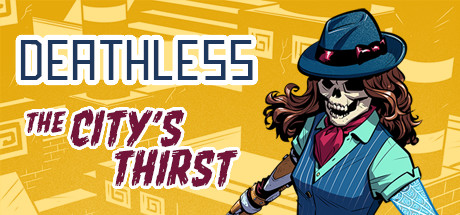
Deathless: The City’s Thirst (Max Gladstone)

citythirst.jpg

Disclaimer: I currently have a contract with Choice of Games. I bought this game with my own money, but I am not financially disinterested in Choice of Games projects. I am writing about this one because I particularly liked it, but you should take my views with an appropriately-sized grain of salt.

*

I first encountered Max Gladstone through his first Choice of Games piece, Choice of the Deathless — a work set in the Craft universe of necromantic lawyers which he’d already developed through several novels. I thought the game was good, but also that it did a handful of things that suggested (to me, anyway) an author not yet entirely at home with the mechanics of his medium. There were stats that didn’t seem to matter much; there were relationships that were interchangeable and made the characters consequently feel a bit less important.

Then I read the first of Gladstone’s novels, Three Parts Dead. (I have not read the rest, yet, but I’ll get to them.) The book was well-paced and fun, and I had more of a sense of an author at home in his medium. There was plenty of action, but some other elements as well: the Craft is used to make bargains between powers and institutions. A contract from a god might supply a city with heat, or water, or power its defenses. An arrangement of this sort has to be drawn up carefully, recorded publicly, and sometimes defended in court. It is, among other things, a fiction that’s good for talking about systemic arrangements and the deals we make in order to allow the world to function. (If you liked Cape for its themes, this might be of interest to you.)

Now Gladstone has come back to ChoiceScript with Deathless: The City’s ThirstIt’s more confident and better structured than Choice of the Deathless, and it is a standalone story in the same universe. It does a decent job of introducing the Craft universe — enough so that you could start here, if you wanted, without either getting lost or spoiling parts of the other works for yourself.

I recommend it; mild spoilers about its premise and themes after the break.

Continue reading “Deathless: The City’s Thirst (Max Gladstone)”

Recent IF for iOS

monstrMonstr (Laura Michet, Kent Sutherland, Meagan Trott, Emily So, Travis Ford DeCastro, Rachel Sala, and Rosstin Murphy) is a game in which you’re searching for the dating profile of a monster you saw at a bus stop. It’s made up primarily of spoof profiles and then short “chat” scripts that go horribly badly until you find the one monster who is right for you.

As far as I can tell, it’s largely a matter of luck when you will stumble on the correct monster, and the chats with wrong monsters usually go wrong because the protagonist is scripted to say something foolish or horrible. So it’s easy to build up a sense of the PC as a somewhat-awful being before you get through to a win condition.

On the other hand, the dating site satire is fun and some of the monsters seem rather sweet.

*

Wonderland is a new audio IF game by veteran IF developer Jim Munroe. It’s a mystery puzzle centered on Munroe’s own neighborhood in Toronto, and it has a hangman-like mechanic of puzzles where you can unlock additional letters by walking around with your phone.

I’ve been enjoying it, as far as I’ve gotten — though I haven’t finished yet. I think this game would be ideal for someone who spent a lot of time on rambling strolls. Right now, that’s not really me: Oxford is pretty drippy and forbidding this time of year, so most of my exercise happens indoors. But the game has a pleasant radio drama quality and the voice acting is well done.

(Disclosure: I received a free copy of this game.)

*

IMG_0210One Button Travel (The Coding Monkeys) is a Lifeline-genre game: you’re engaged in CYOA chat with one other character, and there are real-time delays spacing out your conversation. The app is skinned with a somewhat retro, Device 6-esque design.

Unlike Lifeline, its rather less successful sequel Lifeline 2, and its free-to-play imitator TimecrestOne Button Travel invents a premise in which, instead of aiding a mysterious stranger, you’re the person in danger (at least initially). Your correspondent is trying to assist you, though assisting you quickly involves them getting into trouble as well. They’re also able just occasionally to send you messages with photographs inside, which the Lifelines did not attempt.

So I was well-disposed when I started the game. However, the timing elements are really frustrating. There are a lot of pauses that run for 30-120 seconds, as far as I could tell. (I’m estimating: I didn’t keep a stopwatch on these.) Maybe the delays are meant to add to the realism of the situation, but they really annoyed me. They broke up the narrative just long enough that I put my iPad down and went to do something else, only to be interrupted with a notification just as I was settling into a different task — meaning that to make any significant progress on the game, I had to let this game fragment my attention and keep me from getting anything else done, even though it itself wasn’t keeping me continuously engaged. And it wasn’t necessarily signaled when my interlocutor was going to be gone for two minutes and when they were going to be gone for hours. Sometimes when I did respond to the notification, the result was another page of texts without any further choices for me to make at the end of it, so there was functionally no reason (other than perhaps a long-ago eroded sense of suspense?) not to have given me those additional messages right away.

Meanwhile, after the initial hook, I found myself increasingly detached from the story itself. Some of this is because that bitty, occasional level of interaction made it hard for me to connect. Some is because the world-building is so implausible — you are “helping” someone escape through, among other things, a really bizarre system of automated laundry handling that sounds like it was designed to be an amusement park ride. Some is down to lack of agency: it wasn’t until I’d been playing for something like a week of real time that I encountered a choice where it felt like that choice might have caused a significantly different outcome than if I’d picked the other option.

Anyway, I’m declaring bankruptcy on this one. I haven’t finished it, and I don’t plan to: it’s not giving me enough in exchange for my time.

(Disclosure: I played a copy of this game that I bought with my own money.)