Now that some time has elapsed since 2018 IF Comp has closed, a number of authors have followed up with post-mortems (and in some cases, there have also been a few game updates based on player feedback).
This is a tradition that has grown up over the past couple of years, and one that I really like: these posts in aggregate represent a pretty broad picture of the thinking around IF design and development at the moment, and one often hears from authors who don’t otherwise blog about their craft.
IF Comp saw a high number of entries, and there’s a lot to look at in the post–mortems. In fact, there’s more than I personally could track, but with the help of my new blog assistant (“Mort”), we’ve done a little curation on posts to call out some interesting content and sort them by subject covered.
Just as a reminder, these all link to posts that are riddled with spoilers, so consider this your warning on that score.
Presentation & User Experience – These post-mortems shed particular light on questions regarding user interface, design, and what the game would be like for the player.
Instruction Set (Jared Jackson). Jared wrote his entry with Scratch, which is fairly extraordinary given how very much Scratch is not a language designed for text presentation. The post-mortem explains a bit about why he took that approach, and what he learned from coming into IF Comp from a non-traditional direction using a different set of tools.
Abbess Otilia’s Life and Death (Arno von Borries). This piece invested heavily in presenting something that looked like a medieval manuscript, but that raised challenges and some players complained about readability. The post-mortem looks at the implementation challenges and trade-offs between readability and historical accuracy.
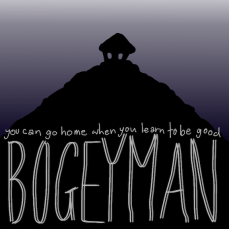 Bogeyman (Elizabeth Smyth) “The nature of those weekly life-or-death decisions remains at the core of the game. It’s the only choice you really get to make: good vs “good”; conscience vs authority; defiance vs submission; integrity vs survival. Almost every major choice is designed around that conflict.”
The 2018 runner-up Bogeyman has a wonderfully detailed post-mortem that delves into concept, design, character, and the Bogeyman himself. In the end, though, these elements were created in service to the choices in front of the player/character, as Elizabeth Smyth produced a game straightforward in its design, but emotionally resonant for those who experienced it.
Continue reading “IF Comp Post-Mortems”
 Reigns: Her Majesty



 Emily Short's Interactive Storytelling