New Release: Discernment

Discernment_promoI have a new story out!

Subscribers to Fallen London — that is to say, Exceptional Friends — can now play Discernment. Look for Salome’s soul, meet a Salon of devils and devilesses concerned with building the very best soul collections. You may also encounter some information on the moral perspective of mushrooms.

One of the things I enjoy about writing for Fallen London is being able to riff on assorted lore, connections, and player history from other stories. Without spoilers, I am especially pleased about how that worked out in this piece.

If you’re looking to get started, seek out the Burglary of a Cartographer’s Estate storylet.

Regency Games: Regency Love, Marrying Mr Darcy, Regency Solitaire, Fitzwilliam Darcy’s Dance Challenge

earlydia

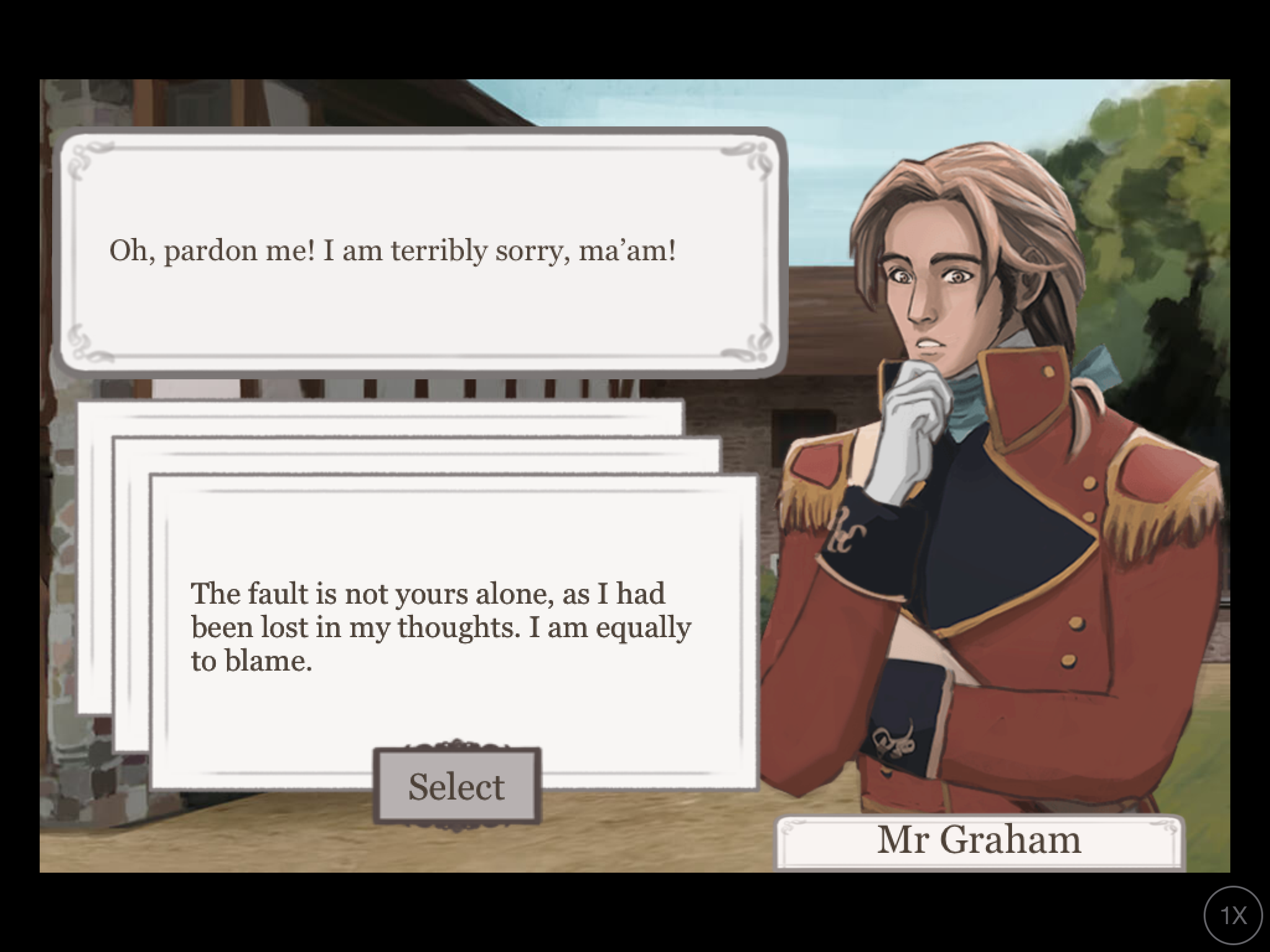
Regency Love is an iOS game set in a pseudo-Austen town; it is in the same general territory as a dating sim or visual novel, but with a structure that also owes something to roleplaying games.

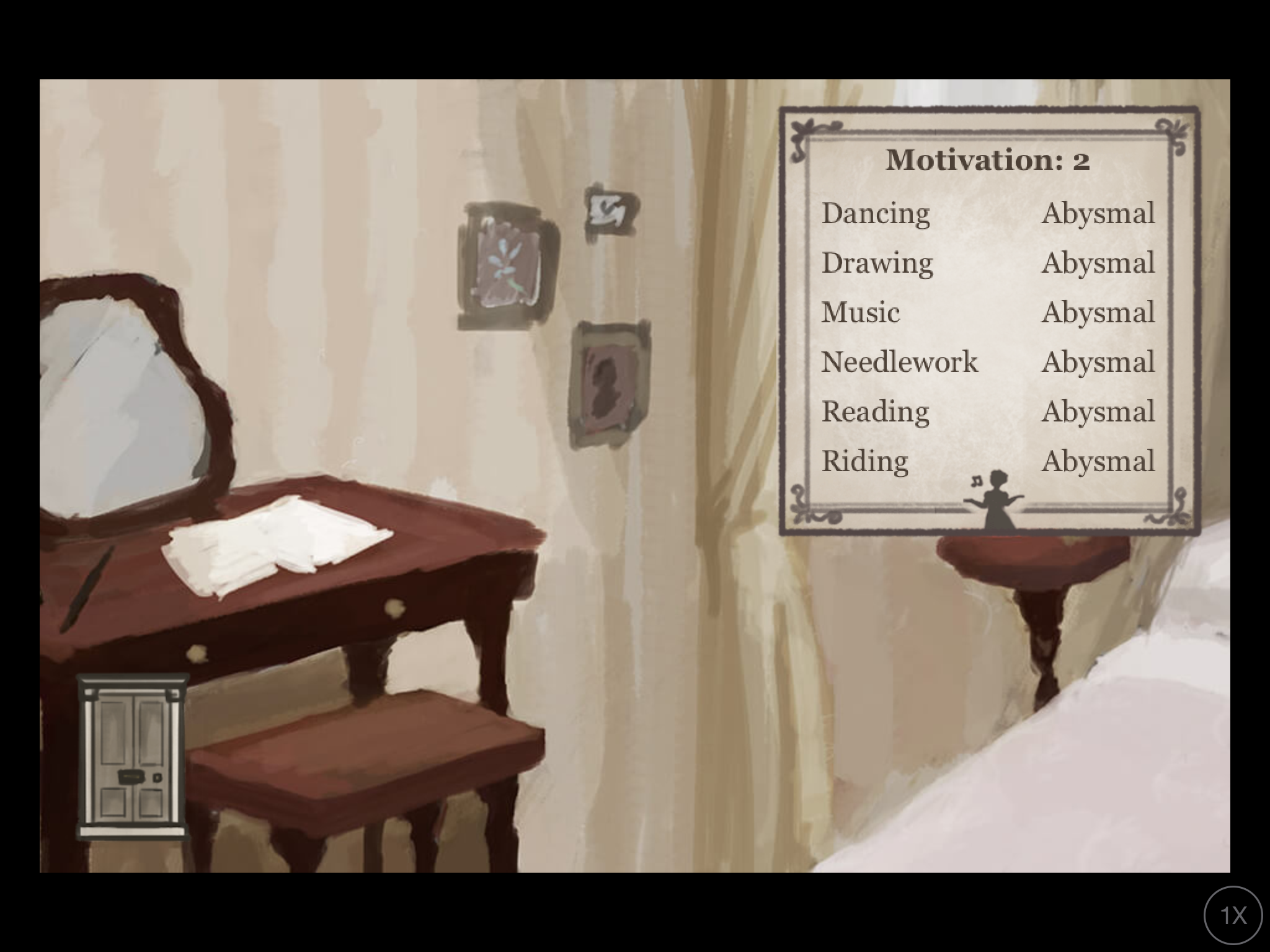
The core interaction loop is that the player can select a place from the map of Darlington, their town; the place may yield one or more possible activities. The activities can either be quizzes about Regency life (how long should you properly mourn a sister? how much did muslin cost?) or social interaction scenes that are primarily dialogue-driven. From time to time, there’s an opportunity to do another quiz-like activity, a game of hangman in which you’re trying to fill in a missing word from a famous quotation, mostly from Austen. Doing quizzes and hangman gains you motivation points which you can spend to raise your skill in one of six “accomplishments” — drawing, needlework, reading, dancing, riding, music (harp and pianoforte and singing are not distinguished). Some of the social activities depend on you having a certain accomplishment level in a certain area before they will unlock. Other social events depend on what has already happened.

Using a map to pick the next little story you want to participate in also reminded me a bit of StoryNexus, though whether the underlying engine relies on anything like quality-based narrative, I have no idea.

Before the game began I evidently paid NO attention to my governess.
I was never a great enthusiast for the quizzes and stats part of this game. The questions refer to information from Austen that is not provided internally, so you either already know the answers or you have to guess. There aren’t enough hangman sentences and quizzes to last the whole game, either, so you’ll see the same things repeat over and over again before you’re done. Meanwhile, your accomplishments are necessary enough that you can’t ignore this part of the system, but there’s not enough variety to what the stats do to make it an interesting choice which one you raise next. Somewhere between halfway and three quarters of the way through play I had maxed out all my accomplishments and could now afford to ignore the whole quiz-and-hangman ecosystem, which was a relief.

Based on your behavior, the game also tracks character traits, reflecting whether you’re witty, dutiful, etc. It displays what your traits are, but I never worked out exactly what was moving the dials. What I said in conversation must come into it, but I didn’t know which dialogue did what. Nor did I ever figure out how it mattered. Some events were plainly closed to people with less than 12 Needleworking, but I never saw an explicit flag that excluded people who weren’t witty. So the character trait system may have been doing important things, but it was opaque enough that eventually I started to ignore it.

What does that leave? Talking. Lots and lots of talking. I like talking games! This one made some slightly peculiar choices, though.

Continue reading “Regency Games: Regency Love, Marrying Mr Darcy, Regency Solitaire, Fitzwilliam Darcy’s Dance Challenge”

Prospero (Bruno Dias); Writing with Raconteur

Screen Shot 2015-09-15 at 3.02.45 PM

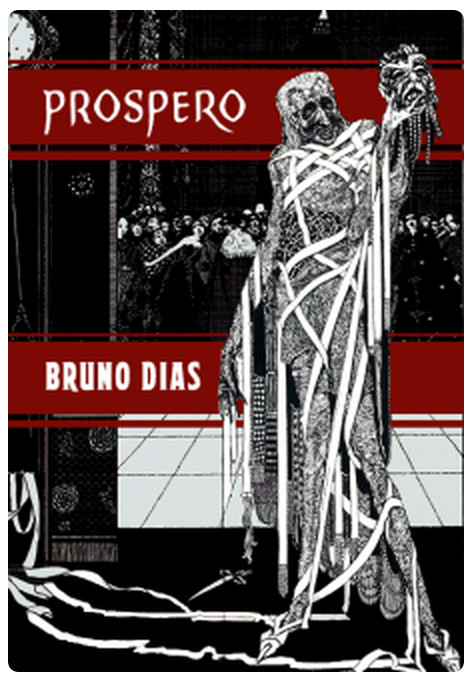
Prospero is Bruno Dias’ retelling of “The Masque of the Red Death”, implemented in Undum/Raconteur and published for Sub-Q Magazine.

As one might expect of both the author and the venue, Prospero is a typographically attractive piece of work, rendered in white text with red progression links. Links that merely expand the existing text appear in bold white, instead. The distinction between stretchtext links and movement links might be old in literary hypertext terms — I’m not certain — but it’s not consistent in the Twine and Undum world. I find it very useful to know whether the link I’m clicking is going to tell me a little more information or whether it’s going to move the whole story forward.

Prospero is also a beautifully textured piece at the level of prose. Dias has a gift for the specific detail — seen in Mere Anarchy in the variety of magical tools available to the protagonist, or here in Prospero in the scenery and the protagonist’s possessions.

The original Poe story goes like this: there’s a plague in the land, but the prince Prospero has a lot of money, so he walls himself up with his favorite courtiers and various resources, and they try to keep the plague at bay. (In contrast with the religious community in Vespers, he seems untroubled by the implications of shutting out the rest of the world.) During an elaborate party Prospero throws, a creepy masked figure attends, who turns out to be the embodiment of the plague. Despite their decadence and indifference to the world outside, the whole party dies. It is possibly a story about the inevitability of death, or possibly about the comeuppance of the wealthy classes.

Dias’ version keeps a great deal of that structure, but moves the action to something closer to the modern day, with cars and modern architecture and electric lighting. He casts the player as the Red Death, with the ability to choose the final outcome. This feels like a surprising choice, given that Poe’s version is so much about inevitability. And I think it would have been fatal to the concept of the original story to give Prospero any choice about whether he lived or died. As the Red Death, we can move among different parts of Prospero’s party, meet different party-goers, and decide whether to spare them all, or one or two favored exceptions, or no one.

Two of Dias’ previous projects, Mere Anarchy and Terminator Chaser, deal with resistance against wealth and power. Prospero raises some of the same issues, particularly the idea of the rich who imagine that they can remove themselves from the rules that apply to everyone else. In contrast with Mere Anarchy, it is comparatively merciful; it allows you to grant forgiveness, if you’re so moved. But I found that I didn’t entirely want to. Perhaps my own favorite ending was to spare one woman who seemed not to belong to the wealthy decadence around her: this suggested a universe with some moral discrimination.

If you like Prospero, you might also enjoy Peter Nepstad’s adaptation of stories by Lord Dunsany, or Caleb Wilson’s anachronistic gothic Six Gray Rats Crawl Up the Pillow.

*

Prospero was built with Raconteur, Dias’ system for creating Undum content. Undum builds beautiful hypertext with elegant typography and link transitions. However, it’s not particularly easy to use out of the box, so Raconteur provides a way to build for it without having to go direct to the javascript; and Dias has released the full source for Prospero as an example case. So in addition to reviewing Prospero, I’d like to take a moment to look at the experience of writing with Raconteur here.

Continue reading “Prospero (Bruno Dias); Writing with Raconteur”

Fast-Paced Parser Games

Most parser games tend to keep a pretty stately pace, allowing the player to move around and explore, and only ratcheting the plot forward in response to player actions. There are exceptions, though: a handful of pieces describe a world already and continuously in motion, or cut rapidly from one scene to another with just a few moves in each — presenting an experience paced more like a film than like Adventure.

Quite a few of these are by J. Robinson Wheeler, which is unsurprising given that that style is a bit of a specialty of his (perhaps reflecting the fact that he’s also a filmmaker and takes a cinematic approach to his IF stories).

moonbaseMoonbase Indigo, J. Robinson Wheeler. Inspired by Moore-era Bond, with a lot of the tropes you might expect in that context.

Centipede, J. Robinson Wheeler. A Starship-Troopers-esque reinterpretation of the classic arcade game.

The Tale of the Kissing Bandit, J. Robinson Wheeler. Playful, lightly romantic.

Being Andrew Plotkin, J. Robinson Wheeler. If Being John Malkovich where about zarf, instead. There are a fair number of community and classic IF in-jokes in this one, but also some entertaining riffs on different narrative styles.

Everybody Dies, Jim Munroe. Touches of both realism and mysticism, together with some excellent illustration.

Guilded Youth, Jim Munroe. Told through a series of vignettes that take place both on and off-line.

Dial C for Cupcakes, Ryan Veeder. There are some puzzles in this one, but also a fair amount of scene progression. As is typical for Veeder’s games, the puzzles are not tremendously hard.

Attack of the Yeti Robot Zombies, Øyvind Thorsby. The conceit of this game is that you’re meant to play once and never undo. If you commit to an action, you’re stuck with it.

Andromeda Dreaming, Joey Jones. Most of the games set in Marco Innocenti’s shared Andromeda world are fairly puzzle-based, but this one focuses more on an unfolding story.

If this sort of thing interests you, see also: IFDB poll for Autonomic Narration (where you can also add your own suggestions).

Games about Community: Ohmygod Are You Alright? (Anna Anthropy), Hana Feels (Gavin Inglis), Tusks (Mitch Alexander)

Screen Shot 2015-09-11 at 5.02.00 PMOhmygod Are You Alright? is a flash-augmented Twine piece by Anna Anthropy about the experience of being hit by a car and the recovery process afterward. The details of physical pain and the dehumanization of the hospital are unpleasant enough, though I suppose they could have been even worse.

But the game’s most lasting and unresolved pain pertains to how Anna feels about her community: lonely, cut off from support, no longer enjoying the energy and communal celebration of her earlier time with Twine. She touches on this in the ruleset for A Wish for Something Better, but Ohmygod goes into it more deeply. She mentions feeling surprised by the forlorn hope that being hit by a car will make people pay attention again. There’s wistfulness, too, about having been at the forefront of a movement that now contains a lot of other practitioners.

If games are not great at NPCs and individual relationships, they’re often downright terrible on communal responsibility and community formation, but Ohmygod made me think about two other games I’ve played recently that touch on the function of community in our lives.

Continue reading “Games about Community: Ohmygod Are You Alright? (Anna Anthropy), Hana Feels (Gavin Inglis), Tusks (Mitch Alexander)”

Contradiction (Pneuma Films)

denton

Contradiction is a murder mystery game set in a small English village. You control the movements of police inspector Jenks, who wanders around interviewing suspects, finding contradictory elements in their statements, and pressing them for more. Conceptually it’s akin to Detective Grimoire or (to a lesser degree) Phoenix Wright; the twist being that it’s interactive film, with live action segments for the interrogation scenes and for many of the transitions as Jenks wanders the village. It’s available for the iPad, and for Mac/PC via Steam. Though I have some criticisms of the design, I enjoyed it quite a bit; it is vastly better than Tender Loving Care.

Conceptually, this doesn’t stray that far from its graphical adventure inspirations: you run into locked doors and have to find the key elsewhere, or dark rooms that need a light, or so on. Most of these puzzles are pacing devices and aren’t tremendously difficult, though it’s possible to get stuck because you haven’t noticed a useful object.

That issue is compounded by the fact that the game is divided into one hour segments: “after 5 PM”, “after 6 PM”, and so on. The clock advances automatically when you’ve reached critical plot beats. This allows the game’s creators to move characters around, make the pub and houses open and close at different times, and give a sense of life to the village. There are sometimes new cut scenes when you go someplace you haven’t been already that hour, opening up new information. The downside is that this means you really need to revisit every location during every hour, even if Jenks doesn’t have a good reason to do so at the moment. Not realizing this is what got me a bit stuck several times in the early game. There is a TIPS panel you can open to get advice about what you’ve missed exploring recently, but I found it was occasionally buggy in the late game.

“Always nice to randomly find a key on the floor.” — Jenks’ voiceover, at one of the more credulity-stretching coincidences

Finally, the logic of the investigation is very much game-logic rather than real-world logic or even TV investigation logic. There are a lot of things that we discover simply because Jenks finds a set of keys and decides to do some warrantless searching. He has no compunctions about small acts of petty theft. Sometimes he decides that objects are interesting and worth pursuing even when they’re not yet of any obvious relevance to the investigation — a point that stands out the more because of the realism of the sets. In an animated graphical adventure, it feels semi-plausible that the protagonist interacts with the one object in the room that has a hotspot, especially if (as is often the case) the setting is otherwise a bit bare. In Contradiction, Jenks will often wander into a storage room crammed with objects, as storage rooms often are in the real world, and light on the one piece of paper that he has arbitrarily decided is going to matter, even if at first glance it says nothing about anyone involved in the case. And of course, he’s right — but it’s weird. One just has to suspend one’s disbelief.

The contradiction mechanic is also constrained, in that you can only ask people about contradictions in their own statements, not challenge them when you’ve heard some contradictory news from another character. This probably keeps the game within the bounds of playability — even as things stand, by the end of the game I was struggling to juggle all the things I was supposed to remember being told — but it means that some very obvious avenues of investigation are closed. A character admits having an affair with another character? Fine, but you can’t go asking that second character about the affair. You’re never even allowed to bring it up. I’m guessing that real police don’t operate that way.

Then there are restricted pieces of evidence. Jenks takes a loose view of property ownership, but he’s strict about keeping confidences. If a character has told him not to reveal something to another witness, you don’t have the opportunity to bring that up with said witness, even if it seems like it might be a good idea. This, again, is probably to avoid letting Jenks cause scenes that might branch the investigation plot, but it feels artificial.

But if the mechanics are only moderately innovative, the FMV presentation makes it distinctive. The village is rendered with lovely atmosphere and attention to detail, and many of the locations have idle loop film with a much stronger sense of presence than a still image. The live footage of rippling lake water and of the trees blowing in the wind makes the outlying areas of town both attractive and sinister. By the end of the game I was intimately familiar with the glass in the pub door, the steps to a character’s cottage, the gates around an out-of-town mansion.

There are no deeply absurd puzzles of the sort where you make a fishing rod from a rope and a banana, because anything that Jenks needs to do has to be filmed, and so the solutions can’t rely on physical impossibility. Perhaps the author wouldn’t have been inclined to include those types of puzzles anyway, but dedication to the FMV aspect provides limits. (Contrast the also-FMV Missing, which incorporates various unlikely actions and then just doesn’t film the actor performing the ones that would be hardest to replicate in real life. I didn’t finish the first episode of Missing because it was doing too much with hidden object mechanics and implausible puzzles, and not enough with convincing plot, characters, and setting.)

As for the character performances, they’re not realistic in style, but they are fun to watch. Jenks has a way of cartoonishly widening his eyes at people and exaggerating all his movements. Many of the witnesses are entertainingly passive-aggressive about being questioned. Some feel that Jenks is bugging them or wasting their time, and I can’t say I blame them, after I have knocked on their door for the fiftieth time to ask them about, say, a random business card I found on the ground. Paul Darrow’s performance is especially hammy and entertaining, as he plays a no-ethics businessman, unencumbered by tact, who has a snarky word to say about everyone. There’s a quality to these interactions that would be very hard to capture in animation and voice-over.

Per genre, Contradiction is the sort of story in which pretty much everyone is up to at least one or two things they shouldn’t be doing. There are some references to drug addiction, alcoholism, and mental illness, and these aren’t always handled tactfully by the characters, though the game itself doesn’t necessarily endorse the views of the witnesses. I’d like to say a little more about the plot, but since this is an entertaining piece of work that you might well want to play first, I’ll put that after spoiler space.

Disclosure: I played a copy of this game that I bought with my own money.

Continue reading “Contradiction (Pneuma Films)”