Deathless: The City’s Thirst (Max Gladstone)

citythirst.jpg

Disclaimer: I currently have a contract with Choice of Games. I bought this game with my own money, but I am not financially disinterested in Choice of Games projects. I am writing about this one because I particularly liked it, but you should take my views with an appropriately-sized grain of salt.

*

I first encountered Max Gladstone through his first Choice of Games piece, Choice of the Deathless — a work set in the Craft universe of necromantic lawyers which he’d already developed through several novels. I thought the game was good, but also that it did a handful of things that suggested (to me, anyway) an author not yet entirely at home with the mechanics of his medium. There were stats that didn’t seem to matter much; there were relationships that were interchangeable and made the characters consequently feel a bit less important.

Then I read the first of Gladstone’s novels, Three Parts Dead. (I have not read the rest, yet, but I’ll get to them.) The book was well-paced and fun, and I had more of a sense of an author at home in his medium. There was plenty of action, but some other elements as well: the Craft is used to make bargains between powers and institutions. A contract from a god might supply a city with heat, or water, or power its defenses. An arrangement of this sort has to be drawn up carefully, recorded publicly, and sometimes defended in court. It is, among other things, a fiction that’s good for talking about systemic arrangements and the deals we make in order to allow the world to function. (If you liked Cape for its themes, this might be of interest to you.)

Now Gladstone has come back to ChoiceScript with Deathless: The City’s ThirstIt’s more confident and better structured than Choice of the Deathless, and it is a standalone story in the same universe. It does a decent job of introducing the Craft universe — enough so that you could start here, if you wanted, without either getting lost or spoiling parts of the other works for yourself.

I recommend it; mild spoilers about its premise and themes after the break.

Continue reading “Deathless: The City’s Thirst (Max Gladstone)”

Recent IF for iOS

monstrMonstr (Laura Michet, Kent Sutherland, Meagan Trott, Emily So, Travis Ford DeCastro, Rachel Sala, and Rosstin Murphy) is a game in which you’re searching for the dating profile of a monster you saw at a bus stop. It’s made up primarily of spoof profiles and then short “chat” scripts that go horribly badly until you find the one monster who is right for you.

As far as I can tell, it’s largely a matter of luck when you will stumble on the correct monster, and the chats with wrong monsters usually go wrong because the protagonist is scripted to say something foolish or horrible. So it’s easy to build up a sense of the PC as a somewhat-awful being before you get through to a win condition.

On the other hand, the dating site satire is fun and some of the monsters seem rather sweet.

*

Wonderland is a new audio IF game by veteran IF developer Jim Munroe. It’s a mystery puzzle centered on Munroe’s own neighborhood in Toronto, and it has a hangman-like mechanic of puzzles where you can unlock additional letters by walking around with your phone.

I’ve been enjoying it, as far as I’ve gotten — though I haven’t finished yet. I think this game would be ideal for someone who spent a lot of time on rambling strolls. Right now, that’s not really me: Oxford is pretty drippy and forbidding this time of year, so most of my exercise happens indoors. But the game has a pleasant radio drama quality and the voice acting is well done.

(Disclosure: I received a free copy of this game.)

*

IMG_0210One Button Travel (The Coding Monkeys) is a Lifeline-genre game: you’re engaged in CYOA chat with one other character, and there are real-time delays spacing out your conversation. The app is skinned with a somewhat retro, Device 6-esque design.

Unlike Lifeline, its rather less successful sequel Lifeline 2, and its free-to-play imitator TimecrestOne Button Travel invents a premise in which, instead of aiding a mysterious stranger, you’re the person in danger (at least initially). Your correspondent is trying to assist you, though assisting you quickly involves them getting into trouble as well. They’re also able just occasionally to send you messages with photographs inside, which the Lifelines did not attempt.

So I was well-disposed when I started the game. However, the timing elements are really frustrating. There are a lot of pauses that run for 30-120 seconds, as far as I could tell. (I’m estimating: I didn’t keep a stopwatch on these.) Maybe the delays are meant to add to the realism of the situation, but they really annoyed me. They broke up the narrative just long enough that I put my iPad down and went to do something else, only to be interrupted with a notification just as I was settling into a different task — meaning that to make any significant progress on the game, I had to let this game fragment my attention and keep me from getting anything else done, even though it itself wasn’t keeping me continuously engaged. And it wasn’t necessarily signaled when my interlocutor was going to be gone for two minutes and when they were going to be gone for hours. Sometimes when I did respond to the notification, the result was another page of texts without any further choices for me to make at the end of it, so there was functionally no reason (other than perhaps a long-ago eroded sense of suspense?) not to have given me those additional messages right away.

Meanwhile, after the initial hook, I found myself increasingly detached from the story itself. Some of this is because that bitty, occasional level of interaction made it hard for me to connect. Some is because the world-building is so implausible — you are “helping” someone escape through, among other things, a really bizarre system of automated laundry handling that sounds like it was designed to be an amusement park ride. Some is down to lack of agency: it wasn’t until I’d been playing for something like a week of real time that I encountered a choice where it felt like that choice might have caused a significantly different outcome than if I’d picked the other option.

Anyway, I’m declaring bankruptcy on this one. I haven’t finished it, and I don’t plan to: it’s not giving me enough in exchange for my time.

(Disclosure: I played a copy of this game that I bought with my own money.)

ProcJam Entries, NaNoGenMo, and my Generated Generation Guidebook

ProcJam happened last month, pulling together lots of different awesome things:


Screen Shot 2015-11-26 at 3.47.25 PM

A procedural château generator (or perhaps you’d prefer a procedural Palladian façade generator). A Twitter bot that tweets about odd clothing combos.

Ordovician generates strange sea-creatures that swim across your screen:

Screen Shot 2015-11-26 at 4.37.57 PM

But I was most fascinated by the pieces that do procedural work with words. K Chapelier’s Stochastèmes generates new words based on the poetic corpora (such as thurweedlesoe when I picked Wordsworth, and woulders).

baladescreenshot

Balade is Windows-only, so I wasn’t able to play it, but the screenshots give a sense of the French cityscapes it generates through words: you can choose streets to travel and receive small descriptions of these places.

Paradise Generator uses random text combinations to suggest a variety of possible paradises: a fairly light level of procedural generation, but using some well-selected components. At least, my first couple of paradises were quite interesting.

Servitude plays a bit more like a traditional game, though it claims there are various randomized elements.

Or there’s Mainframe, a procedurally generated horror game by Liz England and Jurie Horneman. I didn’t manage to win it (maybe I just didn’t persist long enough; I’m not quite sure), but it combines the body horror and malevolent AI themes I associate with a lot of Liz’s stuff. (Maybe unfairly? Yes, maybe unfairly.)

*

Meanwhile, ProcJam was not the only place for a bit of procedural generation this month. NaNoGenMo was the full-month press to procedurally create 50,000 words – 50,000 words of anything, not necessarily guaranteed to make sense.

Carolyn VanEseltine used Markov techniques and a ChoiceScript grammar to make an interactive generated novel, complete with choices, chapters, and stats.

Nick Montfort created a generated poem about consumerist impulses, one that offers us 126 pages of possible purchases such as “a subtle indigo topcoat that is exclusively available here” or “an understated navy thong that is significantly reduced in price”.

Kevan.org created a work based on Around the World in 80 Days mashed up with information from Wikipedia, which produces many many paragraphs like this:

Moving on, we arrived at London South Bank University. If I remembered correctly, this was founded in 1892 as the Borough Polytechnic Institute. Passepartout asked me if it was chosen to be clerk to the Governing Body, but I did not know. Passepartout examined the training and demonstrating Centre for Efficient and Renewable Energy in Buildings (CEREB). Passepartout explained how it had been designed to include two Thames barges set above a pentagon surrounded by five other pentagons. We moved on, disappointed by stricter student visa requirements in the United Kingdom.

The full repository of other creations can be found at the NaNoGenMo 2015 site, coordinated by Darius Kazemi.

*

Exploring the resources associated with NaNoGenMo and ProcJam brought me to this forum on generative text, and from there this video by Kenneth Goldsmith on conceptual writing, which gives an above-average explanation of what’s interesting about procedural writing in its own right.

*

Not really part of either of those things, Caelyn Sandel and Carolyn VanEseltine have a game idea generator that randomly combines concepts they’ve had for their works into new concepts. And of course Juhana Leinonen’s IF Name Generator is a classic, but it has been newly updated with name lists from IF Comp 2015 to remix those titles.

*

So. I thought about doing NaNoGenMo or ProcJam or somehow sort of doing both. ProcJam is so open-ended with its “make a thing that makes things” concept that almost anything could probably be construed to be a part of that project. And I’ve also got several procedural text game projects that have been knocking around unfinished for ages. What I ultimately wound up doing was sort of related but in fact none of the above.

Parrigues1The Annals of the Parrigues (warning! PDF!) is a (mostly) procedurally generated guidebook to a fictional pseudo-English kingdom, along with a making-of commentary on the process of generation. There are also some portions of the code (though I’m not releasing the whole source at this point, and indeed it wouldn’t really be meaningful to do so, as you’ll see if you look at the thing). It’s not an interactive piece of fiction at all, though it was built with various tools including Inform. Rather, it’s a story I wrote with the machine. If you want to know where to find the biggest library in the kingdom, what type of meal to avoid at the Fenugreek and Sponge, or why people keep trying to assassinate the Duchess of Inglefunt, this one’s for you.


 

Parrigues2


6Quest and the Hungarian Gamebook Scene

6quest

6Quest is Hungarian interactive fiction based on a gamebook series. The creators are currently running a Kickstarter to have the app translated into English for a wider audience.

I was able to find this list of Hungarian gamebooks by Demian Katz, but I’m not even able to translate the titles, so I don’t have a huge amount to go on. So I asked Paul Muranyi to tell me a little more of the history of gamebooks in Hungary, as well as the current scene and their project.

Continue reading “6Quest and the Hungarian Gamebook Scene”

November Link Assortment

Upcoming events:

Boston, Dec 2: Purple Blurb at which Christian Bok will read from The Xenotext.

Copenhagen, Dec 2-4: ICIDS conference meets, with keynotes by Chris Crawford and Paul Mulholland. This is an academic conference in digital storytelling that in the past has looked at procedural narrative, character modeling, authoring tools, augmented reality experiences, interactive nonfiction, pedagogical applications of IF, and assorted related topics.

Boston, Dec 10: PR-IF meets.

SF Bay, Dec 12: Bay Area IF meetup.

London, Dec 12-13: AdventureX, a convention for adventure games including text adventures.

*

IF Comp is over, and that means lots of discussion, post-mortems, and additional reviews. There was an extensive post-mortem discussion at Euphoria, a new, still-in-development threaded chat space that includes a room for interactive fiction.

Here’s some of the authorial writing that has come out since the comp closed:

Astrid Dalmady on Arcane Intern (Unpaid)

Brendan Patrick Hennessy’s postmortem on Birdland

Piato’s postmortem for Duel

AvB’s postmortem for Gotomomi

Tia Orisney on Kane County (plus some questions about where to go on a post-comp release)

Katherine Morayati’s postmortem for Laid Off from the Synesthesia Factory

Glass Rat’s postmortem for Seeking Ataraxia.

Joey Jones’ five-part series on Sub Rosa [Planning, Puzzles, Cut Content, Setting, Wrap]

An interview with Chandler Groover about Taghairm and his postmortems for both Taghairm and Midnight. Swordfight.

*

The Windhammer Prize for gamebooks has also concluded, with first prize going to Felicity Banks for After the Flag Fell. I didn’t have a chance to play either of the Merit Award winners, but here’s Sam Ashwell’s review of Merit winner Sabrage.

*

Liza Daly writes about her NaNoGenMo project this year, a computer-generated cops and robbers script that uses some IF-style world-modeling.

*

The Games by Angelina blog is running posts summing up interesting recent work in game AI, including narrative AI — for instance, this piece about a knowledge representation system developed by a team at UCSC.

*

New York magazine collects a list of particularly entertaining Twitter bots, as recommended by other botmakers. Includes some interesting thoughts about what makes procedural juxtapositions fruitful or funny, even if it doesn’t mention Harry Giles’ @LilSpellbook, my personal favorite.

*

And meanwhile, here’s an IF game jam themed around that same idea, run by Jason Dyer.

*

Ryan Veeder has started a comp for games that will appeal to Ryan Veeder. It will be judged by Ryan Veeder and the prizes awarded by Ryan Veeder. An important rule is that you are not supposed to communicate with Ryan Veeder about his comp.

Even if you do not like this idea and do not want to enter it, it is worthwhile to view the video in order to see the costuming.

*

IF Comp author Marco Vallarino has written several other pieces, including an Inform piece in Italian designed to introduce students to the features of possible schools — this newspaper article covers the project and includes screenshots.

*

Here’s Bruno Dias (Cape, Mere Anarchy, et al) on Emily is Away, as part of the ZEAL project.

*

Adam Cadre has issued a complete rewrite of his novel Ready Okay!.

*

If you’re interested in writing German-language IF, the IF Grand Prix for 2016 has been announced and intents are being accepted through March 1 2016.

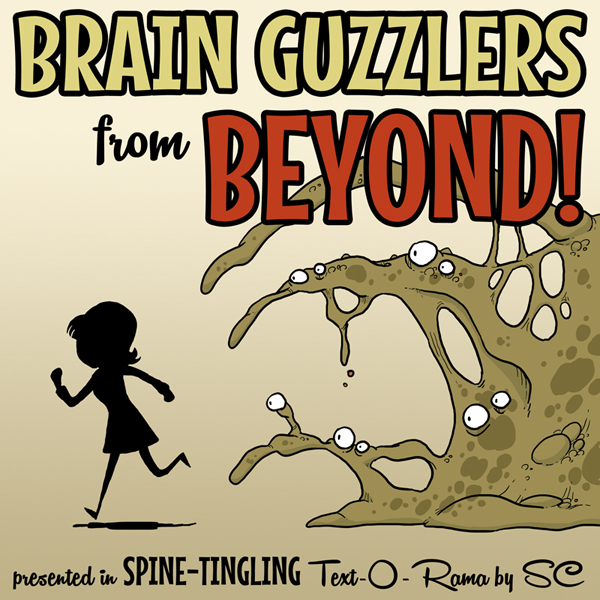
IF Comp 2015 Guest Post: Janice M. Eisen on Brain Guzzlers from Beyond!

brain_guzzlers_title

As part of the ongoing project to get new reviewers talking about IF Comp games, Janice M. Eisen has written about Brain Guzzlers from Beyond! Janice is a long-time player of parser IF who beta-tested for Infocom.

Continue reading “IF Comp 2015 Guest Post: Janice M. Eisen on Brain Guzzlers from Beyond!”