Mid-May Link Assortment

Events

logo.pngThe Nebula ConferenceMay 16-19 in Woodland Hills, CA, features multiple talks on interactive fiction by Mary Duffy (Choice of Games) and Stephen Granade (long-time IF Comp organizer and author of many games) among others; there will be a panel on consent in interactive stories.

The deadline to register for Narrascope is fast approaching. May 17 is the date listed on the site, so if you are planning to attend and haven’t yet signed up, now is the time. (More about the actual event below.)

May 18, the Baltimore / DC Area Meetup will discuss The Empty Chamber from Spring Thing.

E4GrZW8x.jpgMay 22, the London IF Meetup hears from Chris Gardiner about the narrative design of Sunless Skies.

The 2nd International Summer School on AI and Games will be held in New York City, May 27-31.  The event is organized by Georgios N. Yannakakis and Julian Togelius, who wrote the Artificial Intelligence and Games book.  More info can be found at the site.

June 1 will be the next San Francisco Bay Area IF Meetup.

June 8 and 9, the London IF Meetup has talks (the 8th) and a workshop (the 9th) on interactive fiction designed for audio devices. We’re welcoming some out of town guest speakers for this one, one of our most ambitious events yet.

June 9 is the deadline to exhibit a game or to speak at AdventureX, which is taking place November 2-3 at the British Library.

June 11 is the deadline for submitting Game Industry talk proposals to the IEEE Conference on Games (CoG).  The conference itself will be August 20-23 in London.

June 10-12 in London is the CogX Festival of AI and Emerging Technology, where I will be speaking about the work we’re doing at Spirit.

logo-512.pngNarrascope is set for June 14-16 in Boston, MA.  This is a new games conference that will support interactive narrative, adventure games, and interactive fiction by bringing together writers, developers, and players. Both Graham Nelson and I will be there and will speak; I’ll be on a panel about Bandersnatch, and Graham will be updating people on the current status of Inform. More information can be found on NarraScope’s home site.

ICCC 2019 takes place on June 17-21 in Charlotte, NC.  The event is in its tenth year and is organized by the Association for Computational Creativity.

July 2-5 will be the ACM IVA Conference, taking place in Paris.  IVA 2019’s special topic is “Social Learning with Interactive Agents”.

Announcements

unnamed.pngAdventureX will be back at the British Library November 2-3, for International Games Week. The event is currently seeking participants in the form of speakers or game submissions. It is free to exhibit a game as part of the event, and the deadline is June 9.

If you want to know more, AdventureX has posted talks from last year’s event to their YouTube Channel. You can get an idea for the format and content with this talk on dialogue by Jon Ingold (Heaven’s Vault).

Articles & Links

Here’s one on the experience of teaching Twine to young students.

Gamebook News posted a roundup for the the month of May, including profiles of a number of recently released gamebooks, as well as a few online games.

Mailbag: Multimedia in Spanish Text Parser IF

Hi Emily,

I thought you might be able to shed some light on this question:

Text parser IF tends to rely heavily on the text for narrative, and uses little by way of multimedia.  Until you get to Spanish parser IF… here, multimedia is much more common. Spanish-language games often incorporate video, pictures, or sound effects.  Is there a reason behind this (possibly due to Spanish-language games using different engines better suited to multimedia?).  Or is there another reason?  Can Inform and similar platforms support these elements as well?

[Ed note: at the request of the asker, the original question has been re-written from a longer, less anonymous format.]

Several points here. One: for a lot of English-speaking IF fans, the defining IF of the commercial age came from Infocom in the early to mid 1980s, and almost all of their work was without illustration. There were a handful of late exceptions, but they were generally not considered Infocom’s best work.

arthur-the-quest-for-excalibur_3.png
Arthur: The Quest for Excalibur (Infocom / Bob Bates, 1989)

In Spain, by contrast, the golden age of commercial IF came just a few years later, on different hardware. Adventuras AD was publishing illustrated interactive fiction and setting expectations somewhat differently for hobbyist fans to follow. So most likely there was a certain amount of founder effect at work, in terms of what interactive fiction fans wanted to build.

Perhaps as a result of this, or perhaps coincidentally, Spanish language IF games have been written with an overlapping set of tools to Inform. Superglus for instance is a tool that compiles to the Glulx virtual machine, but uses a different, non-Inform parser.

And, in fact, the French and Italian IF communities have also traditionally done more with multimedia parser games than the Anglophone community — I’ve put a few links about this below as well.

Can Inform and similar platforms support these elements as well?

Yes, they can, though historically it was quite a bit of effort to get them set up. That’s less true now.

Continue reading “Mailbag: Multimedia in Spanish Text Parser IF”

Metamorphic Texts (Talk)

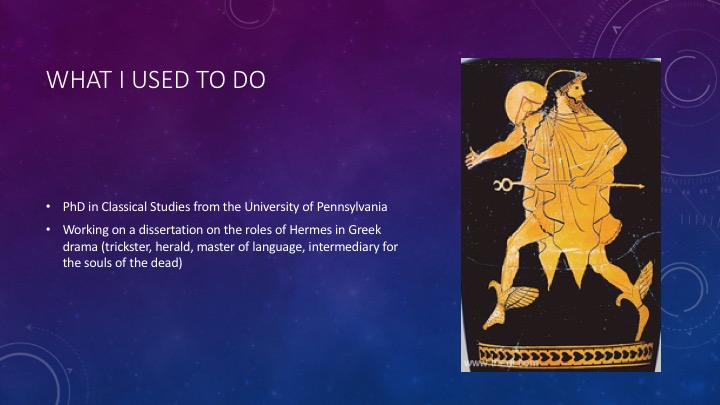
These are some slides and text based on the talk I gave at the British Library’s Off the Page: Chapter Two event on April 13. I was invited to speak about works of mine that make use of classical sources. It’s relatively rare that I get to give a talk actually about classics (even in the context of games) and I jumped at it.

Slide2Slide3.jpeg

What I’m talking about today connects those two points, because I’m going to be discussing three games I wrote that drew on classical poetry, history, and mythology. (I didn’t pitch it this way in the room, but this is partly a talk on classical reception, the field that looks at how work from the ancient world is recast by later authors, artists, playwrights and propagandists.)

Continue reading “Metamorphic Texts (Talk)”

Level Up! The Guide to Great Video Game Design (Scott Rogers)

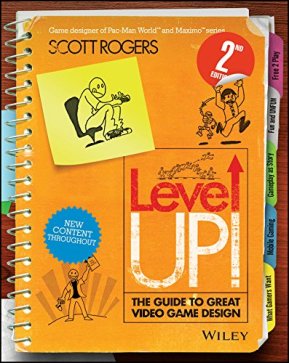
levelupcover.jpgLevel Up! is a book about game design and mechanics for would-be practitioners rather than academics. It’s by no means the only such book out there, but it enjoys pretty excellent reviews and has been recommended to me by a couple of designers I respect.

This won’t be quite a standard review, though, because I’m coming to the book with a particular question in mind. Namely: most of the game writing and narrative design books I’ve reviewed on this website have been somewhat or (in some cases) completely lacking in any discussion of how game mechanics interact with story.

So I’m curious: do I find more about the mechanics aspect of narrative design if I start with a book that’s explicitly into the mechanics? And even if Level Up! doesn’t talk about story-related mechanics as such, can I find general principles of mechanics design that also apply in the story space? For my friends who ask about learning more about the story-mechanics interface, can I point them at this book?

Continue reading “Level Up! The Guide to Great Video Game Design (Scott Rogers)”

End of April Link Assortment

Events

May 4 is the next San Francisco Bay Area IF Meetup, at the Museum of Art and Digital Entertainment.
May 5 is the next Seattle Area IF Meetup, at the University of Puget Sound in Tacoma.
May 10 I am speaking at the 10-Year Anniversary Event for State of Play, in Dublin, Ireland.

Screen Shot 2019-04-28 at 10.35.23 PM.png

May 14 is the deadline for submitting short papers to the IEEE Conference on Games (CoG).  The conference itself will be August 20-23 in London.

May 14 is the next Boston IF meetup.

May 18, the Baltimore / DC Area Meetup will discuss The Empty Chamber from Spring Thing.

May 22, the London IF Meetup hears from Chris Gardiner about the narrative direction of Sunless Skies — how the Failbetter team set a course for their content, how they developed it, and how/when they chose to course-correct.

cover-200x300.pngThe 2nd International Summer School on AI and Games will be held in New York City, May 27-31.  The event is organized by Georgios N. Yannakakis and Julian Togelius, who wrote the Artificial Intelligence and Games book.  More info can be found at the site.

Narrascope is set for June 14-16 in Boston, MA.  This is a new games conference that will support interactive narrative, adventure games, and interactive fiction by bringing together writers, developers, and players.

They’ve also just announced their keynote speaker, Natalia Martinsson. Both Graham and I will be speaking, Graham about the future of Inform.  More information can be found on NarraScope’s home site.

ICCC 2019 takes place on June 17-21 in Charlotte, NC.  The event is in its tenth year and is organized by the Association for Computational Creativity.

Articles and Podcastscover_The_Invader_Elizabeth_Smyth.jpg

Elizabeth Smyth gives readers a glimpse into her creative process, and her new game The Invader. (I’ve previously discussed Smyth’s work with her IFComp entry Bogeyman, listing it as one of my favorites of 2018.)

Bruno Dias discusses the theme of failure as it shows up in storytelling; particularly the different types of failure that frequently can be found in Interactive Fiction

Announcements

When Cryptozookeeper was originally released in 2011, it won five XYZZY awards as well as Best Game for writer Robb Sherwin. This month, Sherwin and Mantissa Ltd have come out with a mobile version of the classic text adventure, and is available for download here, for both Apple and Google Play.

Jobs

Wharton (yes, the business school) is hiring an interactive fiction coder to help with an educational narrative project. This is a full-time job with benefits.

Books

leadfrom.jpgOn the plane back from Albany a few days ago, I read Stacey Abrams’ Lead from the Outside. It’s not about games or much about writing — though Abrams is also a fiction writer, this book doesn’t get into that — but I was really impressed with what it has to say about leadership, purpose and self-knowledge, and self-assessment in a world that doesn’t always reflect us back accurately. Sometimes I talk about the need for more guidance in how leadership works for women. If you also feel that need, maybe read this book.

S. (J. J. Abrams, Doug Dorst)

sfeelies.jpgS is a puzzle-novel with feelies, imagined by J. J. Abrams and written by Doug Dorst. The premise is that there’s a novel, The Ship of Theseus, written by the mysterious VM Straka and edited by his devoted editor FX Caldeira. This novel is the object of considerable academic debate and political struggle.

There’s also an ambiguity about the true ending of the book: the Chapter 10 printed here is (fictionally) not the original written by the author, and the “true original” ending has been made available online.

The scholarly debate draws in two students, Eric and Jen, who start leaving one another notes in the margins of the book, and then get entangled in the struggle, and also entangled in one another’s lives. Jen and Eric’s story is organized semi-thematically rather than chronologically with the passing pages: they tend to come back to certain bits of the book to talk about certain subjects. Even the early pages of the book contain notes from late in their relationship. Conveniently, they change pen colors at a couple of key points, which at least tells you what era you’re looking at.

Between the pages, there are a number of other very lovingly made artifacts, including postcards, photographs, letters, and in one case a map hand-drawn on a café napkin. The book is also (for various reasons) full of ciphers and clues, some of which Eric and Jen solve themselves, and some of which have been discussed at great length by internet onlookers. The artifacts are amazing, and the whole book shows tremendous production values.

So it’s a piece that feels like a form of analog interactive fiction, or a classic Dennis Wheatley mystery dossier. Or, also/alternatively, a call-out to literary mystery/romance stories like Possession. I didn’t really find it satisfying either as puzzle or as novel, though, because what it communicates is in fact fairly thin relative to the number of pages and amount of work involved.

Continue reading “S. (J. J. Abrams, Doug Dorst)”